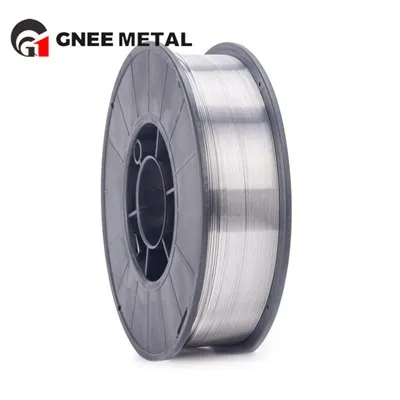

Applications and Properties of GR5 Titanium Alloy
Jan 15, 2026
What is GR5 titanium?
GR5 titanium alloy, also known as TC4 or Ti-6Al-4V, is the most widely used titanium alloy. When we refer to "titanium alloy" in general use, it typically means GR5. It offers excellent strength and elongation.
Titanium and its alloys are renowned for being lightweight, high-strength, heat-resistant, and corrosion-resistant. These outstanding properties have earned titanium the title of "metal of the future," making it a promising new structural material. Beyond its critical applications in aerospace and space industries, titanium has also been widely adopted in sectors such as chemical processing, petroleum, light industry, metallurgy, and power generation. Moreover, titanium resists corrosion in the human body and is biocompatible, making it suitable for use in medical and pharmaceutical industries. Due to its excellent gas absorption characteristics, titanium is also widely applied in electronic vacuum technology and high-vacuum systems.
Inquire about GR5 pricing and samples
Ten Key Properties of GR5 Titanium Alloy
1. Low Density and High Specific Strength
Titanium has a density of 4.51 g/cm³, which is higher than aluminum but lower than steel, copper, or nickel. However, its specific strength (strength-to-weight ratio) is among the highest of all metals.
2. Excellent Corrosion Resistance
Titanium is a highly reactive metal with a low equilibrium potential and a strong thermodynamic tendency to corrode. However, it forms a dense, adherent, and inert oxide film on its surface in air or oxygen-containing environments, which protects the underlying metal from corrosion. This passive oxide layer quickly self-heals when damaged, making titanium highly passivated and corrosion-resistant in oxidizing, neutral, and mildly reducing media. This protective property remains effective at temperatures below 315 degree .
To enhance corrosion resistance, various surface treatments have been developed, including oxidation, electroplating, plasma spraying, ion nitriding, ion implantation, and laser treatment. These methods strengthen the oxide film and improve corrosion performance. For challenging environments like sulfuric acid, hydrochloric acid, methylamine solutions, high-temperature wet chlorine, and hot chlorides, corrosion-resistant titanium alloys such as Ti-Mo, Ti-Pd, and Ti-Mo-Ni have been developed. Titanium castings may use Ti-32Mo for general corrosion, while Ti-0.3Mo-0.8Ni is effective against crevice and pitting corrosion, and Ti-0.2Pd alloy is often used locally in equipment. These alloys have demonstrated excellent results in practice.
3. Good Heat Resistance
Advanced titanium alloys can maintain long-term performance at temperatures up to 600 degree or higher.
4. Excellent Low-Temperature Performance
Low-temperature titanium alloys such as TA7 (Ti-5Al-2.5Sn), TC4 (Ti-6Al-4V), and Ti-2.5Zr-1.5Mo increase in strength as the temperature decreases, while retaining good ductility and toughness. They remain free from cold brittleness at cryogenic temperatures (−196 degree to −253 degree ), making them ideal for cryogenic vessels and storage tanks.


5. High Damping Capacity
Compared to steel and copper, titanium exhibits the longest vibration decay time when subjected to mechanical or electrical vibration. This property is useful in components such as tuning forks, ultrasonic medical devices, and diaphragms for high-end acoustic systems.
6. Non-Magnetic and Non-Toxic
Titanium is a non-magnetic metal and remains unmagnetized even in strong magnetic fields. It is also non-toxic and highly biocompatible with human tissue and blood, making it widely adopted in medical applications.
7. High Yield Ratio
8. Excellent Heat Exchange Performance
9. Low Elastic Modulus
At room temperature, titanium has an elastic modulus of approximately 106.4 GPa, which is about 57% that of steel. This contributes to its flexibility and energy absorption properties.
10. Strong Getter Property
Titanium is highly reactive at elevated temperatures and readily combines with many elements and compounds. Its gas absorption behavior primarily involves reactions with carbon, hydrogen, nitrogen, and oxygen, especially under high-temperature conditions.
Our product range
| Product Category | Product Form | Common Grades / Alloys | Applicable Standards (Examples) |
|---|---|---|---|
| Titanium Tubes | Seamless & Welded Tubes | • CP (Commercially Pure): Gr1, Gr2, Gr3 • Alloys: Ti-6Al-4V (Gr5), Ti-3Al-2.5V (Gr9) |
ASTM B337, B338 ASME SB338 DIN 17860, 17861 GB/T 3624, 3625 |
| Titanium Bars | Round, Hexagon, Square Bars | • CP: Gr1, Gr2, Gr4 • Alloys: Ti-6Al-4V (Gr5), Ti-6Al-4V ELI |
ASTM B348 ASME SB348 AMS 4928 GB/T 2965 |
| Titanium Plates/Sheets | Plates, Sheets, Strips | • CP: Gr1, Gr2, Gr3, Gr4 • Alloys: Ti-6Al-4V (Gr5), Ti-6Al-4V ELI, Ti-15V-3Cr-3Sn-3Al (Gr21) |
ASTM B265 ASME SB265 AMS 4911 GB/T 3621 |
| Titanium Wires | Coils, Straight Lengths | • CP: Gr1, Gr2, Gr4 • Alloys: Ti-6Al-4V (Gr5) • Specialty: Ti-Ni Shape Memory Alloy (on request) |
ASTM F67, B863 AMS 4954 GB/T 3623 |
| Titanium Foils | Thin Foils, Ultra-thin Strips | • CP: Gr1, Gr2 (most common) | ASTM B265 (for thinner gauges) Custom specifications |
Our factory

why choose our products
Our factory is a specialized and integrated manufacturer dedicated to titanium and titanium alloy products. Equipped with advanced precision forging, rolling, drawing, and heat treatment lines, we produce a complete range of forms including tubes, bars, plates/sheets, wires, and foils. We strictly adhere to international standards such as ASTM, ASME, and GB, utilizing grades from CP (Gr1, Gr2) to high-performance alloys like Ti-6Al-4V (Gr5). Our core strength lies in our stringent process control from raw material to finished product, supported by a fully-equipped in-house laboratory for metallurgical and mechanical testing. This integrated system ensures exceptional quality, consistency, and reliability for our customers in aerospace, medical, chemical processing, and other high-tech industries.