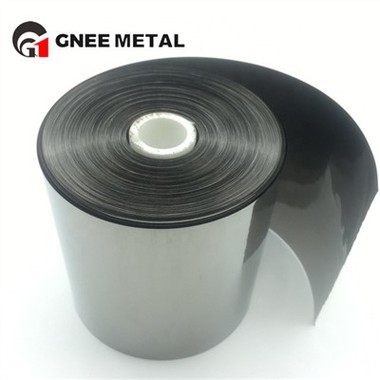

TA7 Titanium Alloy at Liquid Hydrogen Temperature
Nov 02, 2026
What Is TA7 Titanium Alloy?
TA7 is a single-alpha-phase titanium alloy with a nominal composition of Ti-5Al-2.5Sn. Aluminum and tin provide solid-solution strengthening, while the alpha-phase structure contributes to its metallurgical stability.
Compared with many conventional titanium alloys, TA7 is particularly associated with cryogenic applications because of its low-temperature mechanical performance and good weldability.
Chemical Composition of TA7 (GB/T 3620.1-2016)
|
Element |
Chemical Composition (wt.%) |
|---|---|
|
Titanium (Ti) |
Balance |
|
Aluminum (Al) |
4.0–6.0 |
|
Tin (Sn) |
2.0–3.0 |
|
Iron (Fe) |
≤0.50 |
|
Carbon (C) |
≤0.08 |
|
Nitrogen (N) |
≤0.05 |
|
Hydrogen (H) |
≤0.015 |
|
Oxygen (O) |
≤0.20 |
|
Other individual elements |
≤0.10 |
|
Other elements, total |
≤0.40 |
For TA7 ELI, the chemical composition requirements place particular emphasis on controlling interstitial elements such as oxygen, nitrogen, and hydrogen.
ELI means Extra Low Interstitial. It refers to a more restrictive interstitial-element composition than conventional Ti-5Al-2.5Sn.
TA7 vs. TA7 ELI: What Is the Difference?
The main difference between conventional TA7 and TA7 ELI is the control of interstitial elements.
Higher oxygen and nitrogen contents can increase strength but may reduce ductility and fracture toughness, particularly under demanding low-temperature conditions.
For applications involving liquid hydrogen, this difference is important because a component must tolerate not only high strength requirements but also crack initiation and propagation risks.
| Comparison | TA7 | TA7 ELI |
|---|---|---|
| Material designation | Ti-5Al-2.5Sn | Ti-5Al-2.5Sn ELI |
| Alloy type | Alpha titanium alloy | Extra-low-interstitial alpha titanium alloy |
| Interstitial element control | Conventional requirements | More restrictive requirements |
| Cryogenic toughness | Depends on composition and condition | Specifically valued for cryogenic toughness |
| Typical consideration | General structural applications | Demanding cryogenic applications |
TA7 ELI should be considered when fracture toughness at cryogenic temperatures is an important design requirement. However, the actual performance must be confirmed using the relevant material specification and test results.
For international procurement, buyers should distinguish between the Chinese designation TA7 ELI and international Ti-5Al-2.5Sn ELI specifications. These names should not automatically be treated as interchangeable without checking chemical composition, product form, mechanical properties, and delivery requirements.
Cryogenic Mechanical Properties of TA7 ELI at 20 K
One of the most important reasons for selecting Ti-5Al-2.5Sn ELI is its ability to maintain useful mechanical properties at extremely low temperatures.
Liquid hydrogen has a boiling temperature of approximately 20 K at atmospheric pressure. Material selection for this environment therefore requires more than room-temperature tensile data.
Tensile Strength at Low Temperatures
Like many titanium alloys, TA7 ELI generally experiences an increase in tensile and yield strength as temperature decreases.
This behavior is important for cryogenic pressure-bearing components because the material must withstand mechanical loads while operating at temperatures far below ambient conditions.
For material evaluation, buyers should distinguish between:
Ultimate tensile strength (UTS)
0.2% proof strength or yield strength
Elongation
Reduction of area
Fracture toughness
Room-temperature tensile strength alone cannot establish whether a titanium alloy is suitable for liquid hydrogen service.
For critical components, request low-temperature mechanical test data corresponding to the actual material product form, heat treatment condition, and specimen orientation.
Fracture Toughness and Notch Sensitivity
Fracture toughness is especially important for pressure-bearing structures.
Even when a material has sufficient tensile strength, a small manufacturing defect, machining mark, or geometric discontinuity may become a potential crack initiation point.
Research conducted on Ti-5Al-2.5Sn has shown that ELI material can provide substantially better cryogenic fracture toughness than conventional-interstitial material.
However, fracture toughness is not determined by chemical composition alone.
Important influencing factors include:
Oxygen and nitrogen content
Annealing temperature and cooling rate
Alpha-phase microstructure
Grain structure and crystallographic texture
Plate thickness and specimen orientation
A NASA study comparing conventional and ELI Ti-5Al-2.5Sn plates at room temperature, 77 K, and 20 K demonstrated the importance of both composition and heat treatment. The ELI material showed superior toughness in the investigated conditions.
For pressure-bearing applications, fracture toughness data should be evaluated together with yield strength, tensile strength, component geometry, and allowable defect size.
Fatigue Performance and Crack Propagation
Liquid hydrogen equipment may experience repeated pressure and temperature cycles during operation.
For example, a cryogenic valve or pump component may undergo repeated cooling, pressurization, operation, and warm-up.
These operating cycles introduce several possible failure mechanisms:
Fatigue crack initiation
Crack propagation under cyclic loading
Thermal stress caused by temperature changes
Local stress concentration around holes, threads, and transitions
NASA research on Ti-5Al-2.5Sn ELI fuel-pump applications investigated tensile properties, fracture toughness, and fatigue crack propagation at cryogenic temperatures.
The research also showed that fatigue crack growth behavior is influenced by temperature, stress intensity, and loading conditions.
For buyers, this means that a tensile test report should not be treated as a substitute for fatigue or fracture assessment when the component is exposed to repeated operating cycles.
Can TA7 ELI Be Used for Liquid Hydrogen Pressure-Bearing Components?
TA7 ELI is a potential material candidate for liquid hydrogen equipment because of its cryogenic mechanical properties and established aerospace-related research background.
However, whether it can be used for a specific pressure-bearing component depends on the complete engineering design and applicable qualification requirements.
Typical Applications
Liquid Hydrogen Storage Equipment
TA7 ELI may be evaluated for selected structural components in cryogenic storage systems where low-temperature strength and fracture resistance are required.
Cryogenic Valves
Machined titanium components may be considered for valve bodies, internal structural parts, and other components subject to cryogenic operating conditions.
Cryogenic Pumps
Ti-5Al-2.5Sn ELI has a research and application background in cryogenic aerospace pump components.
Low-Temperature Piping Systems
The alloy may be evaluated for selected pipe connections, flanges, and other structural components.
Pressure-Bearing Components
Forged or machined TA7 ELI components can be evaluated for pressure-bearing applications when their material properties and structural design meet the applicable engineering requirements.
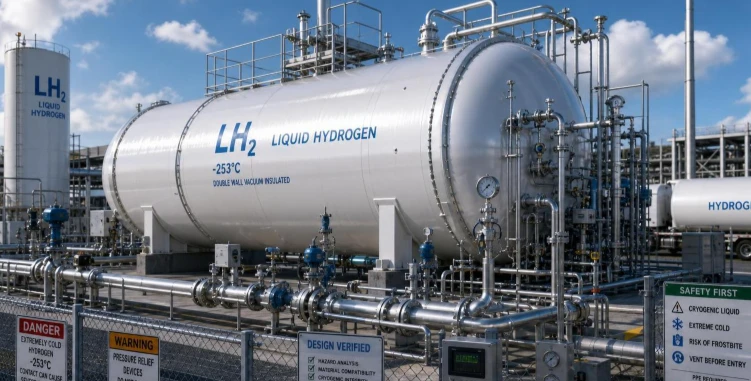
Cryogenic Liquid Hydrogen Storage and Transfer Equipment
Advantages of TA7 ELI for Cryogenic Components
1. Cryogenic Mechanical Performance
Its low-interstitial composition is associated with improved fracture toughness compared with conventional-interstitial Ti-5Al-2.5Sn in relevant research conditions.
2. High Strength at Low Temperatures
The increase in tensile and yield strength at cryogenic temperatures can be beneficial when designing lightweight structural components.
3. Good Weldability
TA7 ELI has good welding characteristics when appropriate titanium welding procedures and shielding protection are used.
4. Low Density
Titanium alloys offer a significant weight advantage over many traditional engineering metals, which can be useful in aerospace and specialized cryogenic equipment.
Engineering Limitations and Design Considerations
A material grade should never be approved for a pressure-bearing application based only on its general reputation for cryogenic performance.
Before selecting TA7 ELI, engineers should evaluate:
| Design Factor | What Needs to Be Evaluated |
|---|---|
| Operating temperature | Actual minimum and maximum temperatures |
| Design pressure | Maximum allowable operating and design pressure |
| Fracture toughness | Required toughness at the design temperature |
| Fatigue life | Number and severity of pressure and thermal cycles |
| Thermal contraction | Dimensional changes during cooling |
| Weld integrity | Joint qualification and weld inspection |
| Sealing performance | Surface finish, gasket compatibility, and leakage requirements |
| Hydrogen compatibility | Material condition, hydrogen exposure, and qualification evidence |
The final material selection must be supported by the applicable pressure equipment design code, material qualification, and component-level testing.
A titanium alloy with excellent laboratory properties is not automatically approved for every liquid hydrogen pressure vessel or valve application.
Hydrogen Compatibility: Does TA7 ELI Have a Hydrogen Embrittlement Risk?
Hydrogen compatibility is an important consideration when selecting titanium alloys for hydrogen-related equipment.
Titanium can absorb hydrogen under certain conditions. Excessive hydrogen uptake may lead to hydride formation and deterioration of mechanical properties.
For this reason, hydrogen content must be controlled during material production, fabrication, welding, and service qualification.
Hydrogen Absorption and Hydride Formation
Hydrogen can enter titanium through several possible routes:
Excessive hydrogen in the original material
Improper pickling or surface treatment
Moisture or contamination during fabrication
Inadequate shielding during welding
Exposure to hydrogen under conditions that promote absorption
If the hydrogen content exceeds acceptable limits, hydrides may form and affect ductility and fracture behavior.
ELI material reduces the initial interstitial-element content, but it does not make titanium immune to hydrogen absorption or hydrogen-related damage.
Is Liquid Hydrogen Temperature Enough to Prevent Hydrogen Embrittlement?
No. It is not appropriate to conclude that hydrogen embrittlement can be ignored simply because liquid hydrogen is extremely cold.
Hydrogen transport and absorption depend on temperature, pressure, surface condition, exposure time, and material microstructure.
The behavior of a material in liquid hydrogen also needs to be distinguished from its behavior in high-pressure gaseous hydrogen.
For critical applications, the engineering team should evaluate the actual service environment and obtain relevant compatibility data.
Hydrogen Control During Welding and Fabrication
Titanium is highly reactive at elevated temperatures.
During welding, contamination from oxygen, nitrogen, and hydrogen can adversely affect the weld and heat-affected zone.
Recommended manufacturing controls include:
Clean and dry welding surfaces before joining.
Use suitable high-purity argon shielding.
Protect the weld pool and hot weld area from atmospheric contamination.
Control moisture and other hydrogen sources.
Apply qualified welding procedures for the component geometry and material thickness.
Inspect the weld and heat-affected zone according to the project requirements.
For critical pressure-bearing components, welding procedure qualification and joint mechanical testing should be considered part of the material and manufacturing qualification process.
Manufacturing Considerations for TA7 ELI Cryogenic Components
Selecting the correct material grade is only the first step. The material must also be supplied in an appropriate product form and manufactured under controlled conditions.
Available TA7 and TA7 ELI Product Forms
Different component designs require different titanium product forms.
| Product Form | Typical Applications |
|---|---|
| TA7 ELI Plate | Machined structural parts, plates, and selected tank components |
| TA7 ELI Sheet | Thin-wall components and formed parts |
| TA7 ELI Round Bar | Valve parts, shafts, and CNC-machined components |
| TA7 ELI Forging | Pressure-bearing parts and complex structural components |
| TA7 ELI Billet | Further forging and machining operations |
When requesting a quotation, specify the required dimensions, product form, standard, delivery condition, and testing requirements.
For forged components, also clarify whether the required supply is an open-die forging, ring forging, or another specified forging form.
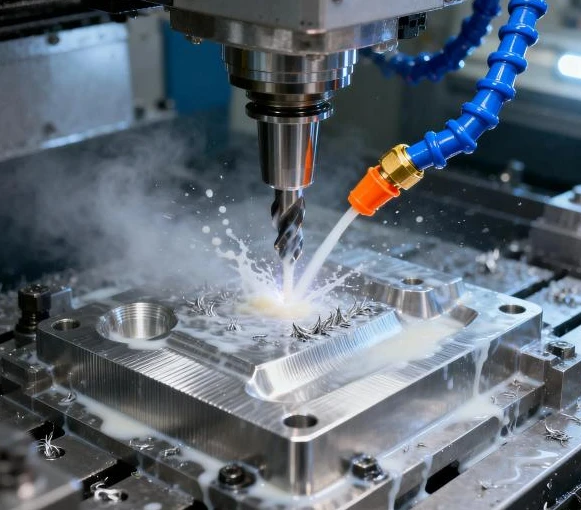
TA7 ELI Titanium Alloy Forgings and CNC Machined Components
Machining and Sealing Surface Quality
For cryogenic valve and pressure-bearing components, machining quality directly affects dimensional accuracy and sealing performance.
Important manufacturing considerations include:
Dimensional accuracy of mating surfaces
Flatness and parallelism of sealing faces
Surface roughness according to the engineering drawing
Thread dimensions and fit
Edge finishing and removal of machining burrs
Avoidance of scratches, sharp notches, and local surface damage
A sealing surface must be machined according to the specified gasket type, sealing structure, and drawing requirements.
For example, a metal gasket and a PTFE gasket may require different surface conditions and contact pressures.
A supplier should therefore receive the sealing-face requirements before machining rather than applying one generic roughness value to every component.
Welding Requirements
Welding is frequently involved in the manufacturing of titanium cryogenic structures.
The main concern is preventing atmospheric contamination during high-temperature welding.
For TA7 ELI components, the manufacturing plan should specify:
Welding process
Filler metal, if applicable
Joint preparation
Shielding gas and trailing protection
Interpass cleaning
Weld inspection method
Post-weld treatment, if required by the approved procedure
Weld qualification should be based on the applicable engineering standard and component design.
Heat Treatment and Residual Stress Control
TA7 ELI is generally supplied in an annealed condition for relevant applications.
Unlike heat-treatable alpha-beta titanium alloys, it is not strengthened through conventional solution treatment and aging.
However, heat treatment requirements still matter.
The material condition and manufacturing process can affect:
Microstructure
Mechanical properties
Residual stress
Dimensional stability
Fracture toughness
For components involving heavy machining, forming, or welding, stress-relief treatment may be considered when justified by the manufacturing procedure and material specification.
Do not assume that every machined TA7 ELI component requires the same stress-relief treatment. The treatment temperature, duration, and cooling method must be compatible with the specified material condition and engineering requirements.
Inspection and Testing Requirements for TA7 ELI Pressure-Bearing Components
For critical cryogenic components, material documentation and inspection records are important parts of supplier evaluation.
Buyers should establish inspection requirements before placing an order, particularly when components will operate at 20 K.
Chemical Composition Inspection
Verify the actual chemical composition of the supplied material.
Important elements include:
Aluminum (Al)
Tin (Sn)
Oxygen (O)
Nitrogen (N)
Hydrogen (H)
Iron (Fe)
Carbon (C)
The chemical composition report should be traceable to the relevant material heat or batch.
Do not accept a generic product brochure as a replacement for the actual material test report.
Mechanical Property Testing
Typical mechanical tests include:
| Test | Purpose |
|---|---|
| Tensile Test | Verify tensile strength, yield strength, and elongation |
| Hardness Test | Check material hardness where specified |
| Low-Temperature Tensile Test | Evaluate mechanical performance at the required temperature |
| Fracture Toughness Test | Evaluate resistance to crack propagation |
| Fatigue Test | Assess performance under repeated loading when required |
For liquid hydrogen applications, testing at 20 K may be required by the project specification.
A 77 K liquid nitrogen test is not automatically a substitute for a 20 K liquid hydrogen test.
Non-Destructive Testing
For forged and machined components, non-destructive testing may be specified to identify internal or surface defects.
| Inspection Method | Main Purpose |
|---|---|
| Ultrasonic Testing (UT) | Detect internal discontinuities |
| Liquid Penetrant Testing (PT) | Detect surface-breaking defects |
| Radiographic Testing (RT) | Evaluate weld or component discontinuities where applicable |
| Visual Inspection | Check surface condition and visible defects |
| Dimensional Inspection | Verify dimensions against drawings |
UT and PT are commonly considered for critical titanium components, while the final inspection methods must follow the product specification and approved inspection plan.
Magnetic particle testing is not an appropriate default method for non-ferromagnetic titanium alloy components.
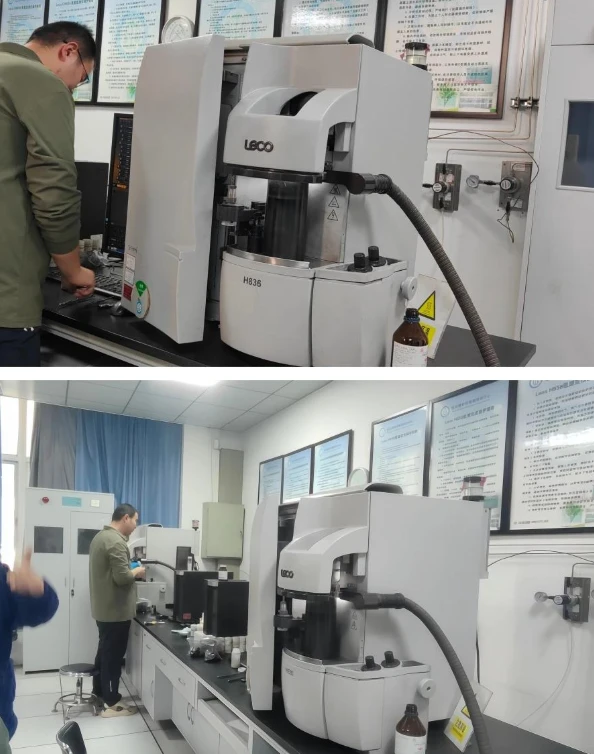
Inspection of Titanium Alloy Materials
How to Select and Purchase TA7 ELI for Liquid Hydrogen Applications
For international buyers, choosing the correct material is not simply a matter of asking for a quotation for TA7 ELI.
The supplier needs enough technical information to identify the appropriate product form, specification, and testing requirements.
Confirm the Material Standard
First, identify the exact material designation and applicable standard.
Possible references include:
GB/T 3620.1 for Chinese titanium alloy designations and chemical composition
Applicable ASTM titanium product standards
Applicable AMS specifications for Ti-5Al-2.5Sn ELI
For international procurement, it is important to verify that the selected AMS or ASTM specification actually covers the required product form.
For example, specifications for plate and sheet are not necessarily interchangeable with specifications for bars and forgings.
Specify the Product Form and Dimensions
The quotation request should include:
| Purchasing Information | Example |
|---|---|
| Material Grade | TA7 ELI / Ti-5Al-2.5Sn ELI |
| Product Form | Plate, bar, forging, or tube |
| Thickness / Diameter | Required dimensions |
| Length | Required length or cutting size |
| Quantity | Pieces or total weight |
| Delivery Condition | Annealed or other specified condition |
| Applicable Standard | GB, ASTM, AMS, or project specification |
Define the Mechanical and Inspection Requirements
For liquid hydrogen applications, the purchase specification should clearly identify:
Required room-temperature mechanical properties
Required cryogenic test temperature
Fracture toughness requirements, if applicable
Hydrogen content limits
Ultrasonic inspection requirements
Surface quality and dimensional tolerances
Traceability and documentation requirements
If the material is intended for a pressure-bearing component, provide the component design requirements and relevant technical specification before material production.
This helps the supplier determine whether the requested material form and delivery condition can meet the project requirements.
Request a TA7 ELI Material Quotation
FAQ
Q: Is TA7 ELI the same as Ti-5Al-2.5Sn ELI?
A: TA7 ELI is the Chinese designation commonly associated with Ti-5Al-2.5Sn ELI.
However, buyers should verify the applicable chemical composition and product specification before treating materials from different standard systems as equivalent.
Q: Can TA7 ELI be used at -253°C?
A: Ti-5Al-2.5Sn ELI has been investigated and used in cryogenic engineering applications, including testing at approximately 20 K.
Its low-temperature strength and fracture toughness make it an important candidate for certain liquid hydrogen applications.
However, the suitability of a specific product must be verified through material testing and engineering design assessment.
Q: Is TA7 ELI suitable for cryogenic pressure vessels?
A: It can be evaluated for selected pressure-bearing applications.
The final decision depends on the applicable pressure vessel code, design pressure, temperature, material qualification, fracture toughness, fatigue requirements, and manufacturing process.
The alloy designation alone does not establish pressure vessel approval.
Q: What is the difference between 20 K and 77 K testing?
A: 77 K corresponds approximately to liquid nitrogen temperature, while 20 K corresponds approximately to liquid hydrogen temperature.
Mechanical behavior can differ significantly between these conditions.
When a component is designed for liquid hydrogen service, 20 K test data may be necessary if required by the engineering specification.
Q: What documents should I request when buying TA7 ELI?
A: At a minimum, clarify the requirements for:
Material Test Report
Chemical composition
Mechanical properties
Heat treatment condition
Non-destructive testing
Dimensional inspection
For demanding cryogenic applications, additional low-temperature mechanical testing and fracture toughness documentation may be required.
Q: Can TA7 ELI be supplied as forged and CNC-machined components?
A: Yes, TA7 ELI can be considered for forged blanks and subsequent machining operations, subject to available manufacturing capability and project requirements.
Buyers should provide drawings, dimensions, tolerances, material specifications, and inspection requirements so that the manufacturing route can be evaluated before ordering.
Are you developing a liquid hydrogen storage system, cryogenic valve, pump, or pressure-bearing component?
Send us your technical drawings or material specifications. We can review the required titanium grade, product form, dimensions, machining scope, and inspection requirements to help prepare a suitable material supply proposal.