The difference and relationship between GR5 titanium and GR23 titanium
Jan 20, 2026
Gr5 titanium alloy is a titanium alloy successfully developed by the United States in 1954. It contains 6% -stabilizing elements and 4% -stabilizing elements V. The nominal composition of Gr5 titanium alloy is 7.0 aluminum equivalent, 2.9 molybdenum equivalent. and contains 10%-15% beta phase in the annealed state. Al improves the room temperature strength and thermal strength properties of the alloy by strengthening the Ti-Al-V system phase with solid solution, and V is one of the few alloying elements in titanium alloys that can increase strength and improve plasticity. The beneficial effect of V on the plasticity of titanium alloys is that it does not increase the c/a axis ratio of the -state lattice like most alloying elements, but reduces the ratio, thereby improving the phase formation and preventing long-term use. During the process, embrittlement of the alloy occurs.
The main characteristics of Gr5 titanium alloy are excellent comprehensive properties and good process performance. Gr5 titanium alloy has moderate strength at room temperature and high temperature, good creep resistance and thermal stability, high fatigue resistance and crack propagation resistance in seawater, as well as satisfactory fracture toughness and resistance to thermal salt stress corrosion cracking. It is also less sensitive to hydrogen than TC2 and TC1 alloys, and is suitable for the manufacture of various parts operating in a wide temperature range of -196~450 degrees, especially for those parts designed on the principle of limiting damage tolerance. Gr5 titanium alloy also has excellent process plasticity and superplasticity, and is suitable for forming by various pressure processing methods and various welding and machining methods.
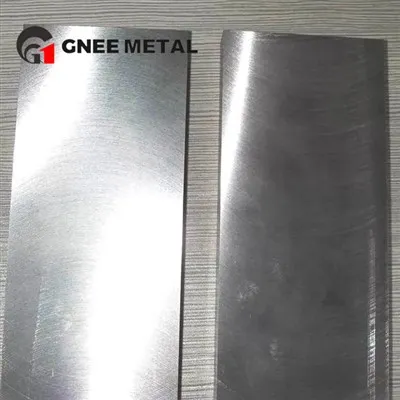
The main semi-finished products of Gr5 titanium alloy are rods, square discs, discs, thin plates, thick plates, profiles and wires, etc., which are also used in castings (ZGr5).


Gr5ELI is an improved version of Gr5. Its main difference is the different Al content and lower content of intermediate elements Fe, N, H and O.
Gr5ELI titanium alloy has become a medical surgical implant due to its good biocompatibility, low elastic modulus, low density, good anti-corrosion properties, non-toxicity, high yield strength, long fatigue life, high plasticity at room temperature and easy molding. ideal material for things. Medical Gr5ELI titanium alloy plates are mainly used for skull repair, bone grafting, etc., which have higher requirements for strength, fatigue, plasticity, etc.
Titanium alloy is an alloy composed of titanium as the base and other added elements. Titanium has two isomorphic crystals: titanium is an isomer with a melting point of 1668 degrees. It has a close-packed hexagonal lattice structure below 882 degrees, which is called -titanium; it is a body-centered cubic structure above 882 degrees. The structures are called beta-titanium. By using the different properties of the above two titanium structures, adding appropriate alloying elements to gradually change the phase transition temperature and component content, titanium alloys with different structures are obtained.
Gr5 ELI titanium alloy is based on Gr5 alloy and reduces the content of interstitial elements C, O, N and the addition element Fe. The strength is reduced, but the toughness can be greatly improved. Gr5 ELI has good plasticity, toughness, good welding performance and low temperature performance, and is widely used in important fields such as cryogenic engineering, medical care, ships and aircraft.
Gr5 alloy can be used in normal or high temperature environments, and Gr5ELI alloy can be used in ultra-low temperature environments.
Titanium alloy Gr5 and Gr5ELI titanium alloy are of similar quality: T-6A-4V/grade 5 (American grade), BT6 (Russian grade), IMI318 (British grade), TiAI6V4 (German grade).
Medical device manufacturing: For bone and joint injuries caused by trauma and tumors in the human body, titanium and titanium alloys are used to make artificial joints, bone plates and screws, which are now widely used in clinical applications. Also used in hip joints (including femoral heads), knee joints, elbow joints, metacarpophalangeal joints, interphalangeal joints, mandibles, artificial vertebrae (spinal orthoses), pacemaker shells, artificial hearts (heart valves), artificial dental implants, titanium. nickel orthodontics and titanium mesh in skull plastic surgery, etc.
Titanium and titanium alloys are receiving increasing attention due to their high specific strength, biocompatibility, and good corrosion resistance to body fluids.
Ti 6Al-4V ELI is a grade of Ti 6Al-4V with smaller structural gaps, which can achieve maximum toughness and is suitable for seawater and low temperature environments. This alloy grade is usually used in the annealed state. Ti 6Al-4V is a superior material in the field of medical implants.
Our factory
My factory is a high-quality titanium and titanium alloy materials manufacturer specializing in the international trade sector. Our product line comprehensively covers titanium tubes, titanium rods, titanium plates, titanium wires, and titanium strips. We possess full-process production capabilities from melting to deep processing, with core equipment including Vacuum Arc Remelting (VAR) furnaces, multi-function fast forging presses, precision hot/cold rolling mills, high-speed wire rod rolling mills, and high-precision straightening and cutting equipment. Leveraging advanced machinery and technology, we are committed to providing customers in global sectors such as aerospace, medical implants, high-end chemical processing, marine engineering, and sports consumer goods with high-performance, dimensionally precise, and consistently reliable titanium products and customized processing solutions.

Titanium product packaging
To ensure that each titanium product meets the highest quality standards, we have established a comprehensive quality inspection system covering raw materials, production processes, and finished goods. Equipped with advanced testing instruments, such as Optical Emission Spectrometers (OES), universal material testing machines, metallographic microscopes, ultrasonic flaw detectors (UT), and corrosion testing equipment, we are capable of precisely analyzing material composition, mechanical properties, microstructure, internal defects, and corrosion resistance. Every batch of products undergoes rigorous testing in strict compliance with international standards such as ASTM, ASME, and AMS, and authoritative third-party inspection reports are provided. Our laboratory maintains complete traceability records, ensuring that every step from order to delivery is verifiable and traceable. This guarantees that we deliver high-standard titanium materials with reliable quality and comprehensive performance data.

Request Technical Consultation