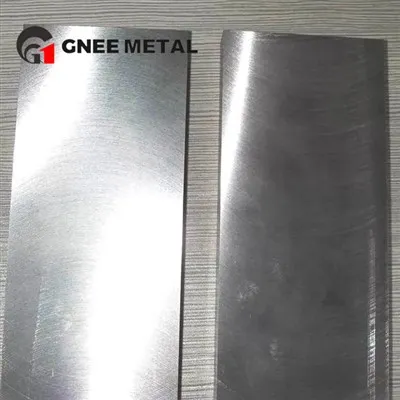

Titanium GR1 (Titanium Grade 1, 3.7025, UNS R50250)
May 15, 2026
GR1 titanium pipe is made of high-quality, multi-functional, high-purity, lightweight, and corrosion-resistant titanium metal. GR1 titanium tube has excellent mechanical properties, with tensile strength of 240MPa and yield strength of 170MPa. Titanium grade 1 density is as low as 4.51g/cm³, making it one of the lightest industrial metals.

Advantages of GR1 Titanium Pipe
GR1 titanium pipe offers many advantages over other materials such as stainless steel and aluminum:
| Advantage | Benefit |
|---|---|
| High strength-to-weight ratio | Ideal for applications where weight reduction is critical |
| Lightweight | Titanium grade 1 density = 4.51g/cm³ |
| Low coefficient of thermal expansion | Dimensional stability across temperature ranges |
| Excellent corrosion resistance | Long-term durability in harsh environments |
| Biocompatibility | Suitable for medical and dental implants |
| High purity | GR1 grade ensures suitability for applications requiring high metal purity |
| Good processability | Easy to form into different shapes and sizes |
| Chemical stability | Performs well in various extreme environments |
Chemical Composition of GR1 Titanium Tube
GR1 titanium chemical composition limits:
| Element | Max % |
|---|---|
| Fe | 0.20 |
| C | 0.08 |
| N | 0.03 |
| H | 0.015 |
| O | 0.18 |
| Ti | Balance |
| Each residual element | 0.1 |
| Total residuals | 0.4 |
Mechanical Properties of GR1 Titanium Pipe
| Property | Value |
|---|---|
| GR1 titanium yield strength (0.2% offset) | 170 MPa (min) / 130-310 MPa (range) |
| Tensile strength | 240 MPa (min) |
| Elongation | 24% (min) |
| Titanium grade 1 density | 4.51 g/cm³ |
| Grade 1 titanium hardness | ~70 HRB |
GR1 titanium yield strength is the lowest among pure titanium grades, making GR1 titanium forming/bending and GR1 titanium for deep drawing excellent choices for complex shapes.
Preparation Process of GR1 Titanium Tube
| Step | Process Description |
|---|---|
| 1. Raw material refining | Refining high-purity titanium from natural titanium ore (beneficiation, reduction, chlorination) |
| 2. Smelting and casting | High-purity titanium is smelted and cast into billets |
| 3. Heat treatment | Adjusts crystal structure; improves strength and toughness by controlling temperature and time |
| 4. Rolling / Tube forming | Rolled through mill and formed into GR1 titanium tube |
Product Testing Methods
| Test Method | Purpose |
|---|---|
| Chemical composition analysis | Ensure GR1 titanium chemical composition meets established standards |
| Dimensional and thickness inspection | High-precision measurement to ensure product meets specifications |
| Surface quality inspection | Visual inspection or microscope to ensure no obvious defects or damage |
| Mechanical property testing | Tensile testing to verify strength, ductility, GR1 titanium yield strength |
Key Features of GR1 Titanium Tube
| Feature | Description |
|---|---|
| High purity | GR1 grade ensures suitability for applications requiring high metal purity |
| Lightweight and high strength | Excellent strength-to-weight ratio – titanium grade 1 density = 4.51g/cm³ |
| Corrosion resistance | Highly stable against acids, alkalis, salt water; excellent performance in harsh environments |
| Good processability | Easy to process into different shapes and sizes for complex structures |
| Chemical stability | Superior stability in various extreme environments |
| Biocompatibility | Suitable for medical and dental implants |
GR1 titanium pipe has high corrosion resistance in many corrosive environments, including salt water, acidic solutions, and alkaline solutions. This makes it ideal for applications where exposure to corrosive environments is a consideration.
GR1 Titanium Pipe Specifications
| Parameter | Value |
|---|---|
| Standard | ASTM B338 (Pipe), ASTM B861 (Seamless Tube) |
| Grade | GR1 |
| Ti Content (Min) | 99.5% |
| Wall thickness range | 0.3mm – 5.0mm (based on material capabilities) |
| Diameter (OD) | Custom per customer requirement |
| Length | Cut according to customer requirements |
| Surface treatment | Rolled smooth / bright |
| Production process | Hot rolling, cold rolling |
| Condition | Annealed |
Applications of GR1 Titanium Tube
| Industry | Application |
|---|---|
| Aerospace | Aircraft structures, missile casings – lightweight and high strength |
| Chemical industry | GR1 titanium for chemical processing – reactors, GR1 titanium heat exchanger tubes, corrosion-resistant equipment |
| Medical field | Medical grade 1 titanium – artificial joints, dental implants (ASTM F67 grade 1) |
| Electronic technology | Conductive properties – capacitors, electromagnetic shielding |
| Petroleum | Corrosion-resistant piping |
| Precision manufacturing | High-precision components |
| Aviation | Structural and fluid handling systems |
GR1 titanium heat exchanger tubes and GR1 titanium reactor components benefit from the material's excellent corrosion resistance and thermal properties.
Grade Comparison: GR1 vs GR2 vs GR5
| Property | GR1 | GR2 | GR5 (Ti-6Al-4V) |
|---|---|---|---|
| Purity | 99.5% min | 99.2% min | Alloy |
| Oxygen max (%) | 0.18 | 0.25 | 0.20 |
| GR1 titanium yield strength | 170 MPa | 275 MPa | 827 MPa |
| Tensile strength | 240 MPa | 345 MPa | 896 MPa |
| Elongation | 24% | 20% | 10% |
| Corrosion resistance | Excellent | Excellent | Good |
| Formability | Best | Good | Poor |
| Biocompatibility | Excellent | Excellent | Good |
Difference between pure titanium GR1 and GR2: GR1 has lower oxygen content, giving higher ductility and lower strength. Titanium grade 1 vs grade 2 selection depends on whether formability (GR1) or strength (GR2) is the priority.
How to Weld GR1 Titanium Pipe
| Parameter | Recommendation |
|---|---|
| How to weld GR1 titanium | GTAW (TIG) with ERTi-1 filler metal |
| Argon shielding | Required on both sides (root and cover) |
| Preheat | Not required |
| Post-weld heat treatment | Not required for most applications |
| Key precaution | Prevent contamination – titanium reacts with oxygen, nitrogen, hydrogen at high temperatures |
FAQ
Q1: What is GR1 titanium pipe?
A: GR1 titanium pipe is made of high-quality, high-purity, lightweight, and corrosion-resistant titanium metal. GR1 titanium tube has excellent mechanical properties with tensile strength of 240MPa and yield strength of 170MPa. GR1 titanium is one of the lightest industrial metals with density of 4.51g/cm³.
Q2: What is the UNS number for ASTM B861 grade 1 titanium tube?
A: The UNS number for ASTM B861 grade 1 titanium tube is R50250. ASTM B338 grade 1 titanium pipe also uses UNS R50250. Medical grade 1 titanium (ASTM F67 grade 1) uses the same UNS number with additional biocompatibility requirements.
Q3: What is the density of titanium grade 1 pipe?
A: Titanium grade 1 density is 4.51g/cm³. This makes GR1 titanium pipe one of the lightest industrial metals. Its high strength-to-weight ratio makes it ideal for applications where weight reduction is critical.
Q4: What is the chemical composition of GR1 titanium tube?
A: GR1 titanium chemical composition limits are: Fe ≤0.20%, C ≤0.08%, N ≤0.03%, H ≤0.015%, O ≤0.18%, Ti balance. Each residual element ≤0.1%, total residuals ≤0.4%. GR1 titanium has minimum 99.5% purity.
Q5: What is the yield strength of GR1 titanium pipe?
A: The minimum GR1 titanium yield strength (0.2% offset) is 170 MPa, with a typical range of 130-310 MPa. Tensile strength is 240 MPa minimum. Elongation is 24% minimum. GR1 titanium yield strength is the lowest among pure titanium grades.
Q6: Is GR1 titanium pipe suitable for chemical processing?
A: Yes, GR1 titanium for chemical processing is a primary application. GR1 titanium pipe has high corrosion resistance in many corrosive environments including salt water, acidic solutions, and alkaline solutions. GR1 titanium heat exchanger tubes and GR1 titanium reactor components are widely used in the chemical industry.
Q7: What are the testing methods for GR1 titanium tube?
A: GR1 titanium tube undergoes: (1) chemical composition analysis to ensure standards, (2) dimensional and thickness inspection with high-precision tools, (3) surface quality inspection via visual or microscope, (4) mechanical property testing including tensile testing for strength and ductility.
Q8: Can GR1 titanium pipe be used for medical applications?
A: Yes, medical grade 1 titanium conforming to ASTM F67 grade 1 is used for artificial joints, dental implants, and other biological applications. GR1 titanium is biocompatible and suitable for medical devices where corrosion resistance and biocompatibility are critical.
Q9: What is the preparation process for GR1 titanium tube?
A: The preparation process for GR1 titanium tube includes: (1) refining high-purity titanium from ore, (2) smelting and casting into billets, (3) heat treatment to adjust crystal structure, (4) rolling and tube forming through mills. GR1 titanium tube uses VAR melting equipment and is supplied in annealed condition.
Q10: What are the advantages of GR1 titanium pipe over stainless steel?
A: GR1 titanium pipe offers: (1) titanium grade 1 density (4.51g/cm³) is 43% lower than stainless steel (8.0g/cm³), (2) excellent corrosion resistance in salt water, acids, and alkalis, (3) high strength-to-weight ratio, (4) biocompatibility, (5) low coefficient of thermal expansion, (6) good processability for complex shapes.