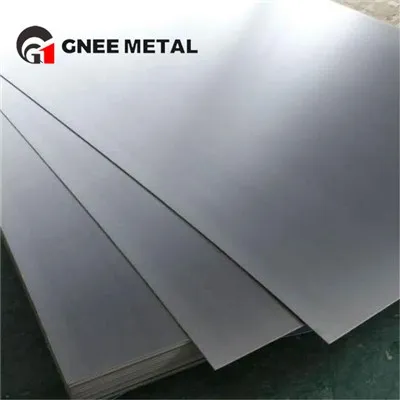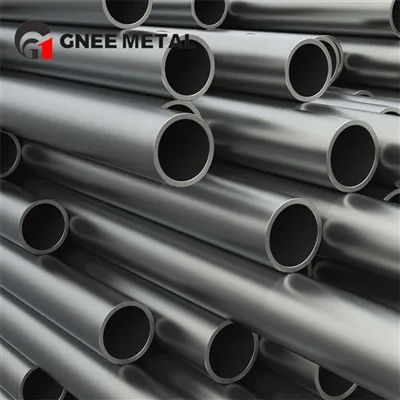

Titanium grade 1 Material number 3.7025
May 18, 2026
GR1 titanium pipe is one of the most ductile and soft titanium grades with excellent corrosion resistance, weldability, and formability. By composition, GR1 titanium is among the purest grades of titanium, with a composition of 99.5% pure titanium. All these features make it malleable, easily manipulated into complex forms while retaining strength and stability.
GR1 titanium pipe is particularly appreciated for its capability to give performance in highly corrosive or harsh environments. Not only its purity enhances its flexibility, but also stability under extreme conditions is guaranteed, which is a much-needed feature in many industrial purposes. Moreover, its biocompatibility is excellent for medical uses, since it is non-reactive with human tissues and bodily fluids.

What Are the Key Properties of GR1 Titanium Pipe?
| Property | Description |
|---|---|
| Corrosion resistance | Excellent – capable of withstanding environments such as saltwater and other corrosive materials. Unlike metals that rust or degrade, GR1 titanium maintains its integrity over time. |
| High melting point | Maintains structural stability under extremely high temperatures – a go-to material for jet engines and industrial furnaces. |
| Non-magnetic nature | Suitable for applications in electronics and MRI equipment. Lack of magnetic interference is vital in maintaining the accuracy of sensitive instruments. |
| Low density | Titanium grade 1 density is 4.51 g/cm³ – considerably lighter than steel. |
| Ductility | Can stretch up to 24% – excellent for GR1 titanium for deep drawing. |
How Is GR1 Titanium Pipe Used in Industry?
| Industry | Application |
|---|---|
| Aerospace | Due to high strength-to-weight ratio, used for high altitude and temperature difference applications. Corrosion resistance helps aircraft that come into contact with environmental pollutants. |
| Chemical processing | Equipment like GR1 titanium heat exchanger, tanks, and pipelines where material must be resistant to corrosive chemicals. GR1 titanium reactor components are common. |
| Marine / Desalination | Seawater environments, especially desalination plants. Toughness against saltwater corrosion is valuable in infrastructures with constant seawater exposure – less maintenance and longer service life. |
| Medical | Medical grade 1 titanium – hip replacements, dental implants, pacemaker casings (ASTM F67 grade 1). |
| Shipbuilding | Ship fittings, propeller shafts, underwater pipelines – resistance to biofouling inhibits growth of algae and other organisms. |
What Makes GR1 Titanium Pipe Corrosion-Resistant?
GR1 titanium pipe owes its exceptional corrosion resistance to a naturally forming oxide layer on its surface. When exposed to oxygen, this layer develops as a protective shield, preventing further oxidation or corrosion. This self-restoration characteristic is specific to titanium, ensuring long-term durability in competitive environments.
| Environment | Resistance |
|---|---|
| Chloride-induced corrosion | Excellent – common in marine and coastal areas. Used for offshore platforms and ship hulls. |
| Acids, alkalis, industrial solvents | Valuable in chemical handling. Preserves structural integrity over time, minimizing maintenance and replacement costs. |
| Seawater | Highly resistant – prevents biofouling. |
How Does GR1 Titanium Pipe Compare to Other Titanium Grades?
| Property | GR1 | GR5 (Ti-6Al-4V) |
|---|---|---|
| Softness and ductility | Higher – easier to process and shape | Lower |
| Strength | Lower | Higher (alloyed with aluminum and vanadium) |
| Corrosion resistance | Better | Good |
| Flexibility | Better | Moderate |
| Cost | Less expensive than alloyed grades | Higher |
| Purity | High purity (99.5% Ti) | Alloyed |
Mechanical Properties of GR1 Titanium Pipe
| Property | Value |
|---|---|
| Tensile strength (min) | 240 MPa |
| GR1 titanium yield strength (min) | 170 MPa |
| Elongation | Up to 24% |
| Titanium grade 1 density | 4.51 g/cm³ |
| Grade 1 titanium hardness | Low – softest titanium grade |
GR1 titanium pipe represents the softest grade of titanium. Its excellent ductility enables it to stretch up to 24%, making this grade fit for applications where flexibility is required rather than maximum strength.
Why Is GR1 Titanium Pipe Ideal for Medical and Marine Applications?
| Application Area | |
|---|---|
| Medical | Biocompatibility – no adverse reactions in human body. Medical grade 1 titanium (ASTM F67 grade 1) used for hip replacements, dental implants, pacemaker casings. Hypoallergenic and non-toxic. |
| Marine | Resistance to seawater corrosion – indispensable. Used in ship fittings, propeller shafts, underwater pipelines. Resistance to biofouling inhibits growth of algae and other organisms. |
How Is GR1 Titanium Pipe Processed?
| Step | Process Description |
|---|---|
| 1. Ore extraction | Titanium ore is extracted and converted into titanium sponge through the Kroll process (reduction of titanium tetrachloride with magnesium). |
| 2. Melting | Titanium sponges are melted in a vacuum arc furnace (VAR) to produce pure titanium ingots. |
| 3. Forming | Ingots are rolled and forged into various shapes – GR1 titanium pipe, tube, sheet, bar. |
| 4. Shaping | Due to excellent ductility, GR1 titanium for deep drawing and GR1 titanium forming/bending are used to create complicated shapes. |
| 5. Annealing | Manufacturers anneal the material to increase ductility and remove residual stresses. |
| 6. Surface treatment | Surface treatments like sandblasting and pickling improve the oxide layer, increasing corrosion resistance. |
Quality Control Measures During Processing
Raw material verification – Purity of titanium sponge confirmed before melting
Ingot composition analysis – Ensures GR1 titanium chemical composition meets 99.5% purity standard
Dimensional inspection during rolling – OD, wall thickness, length verified
Annealing temperature monitoring – Ensures proper ductility (up to 24% elongation)
Surface quality inspection – Checks for defects after pickling/sandblasting
Final testing before dispatch – Tensile, yield, and hardness verification

Packaging
Plastic end caps on both ends of each GR1 titanium tube – prevents thread damage and debris ingress
VCI (Vapor Corrosion Inhibitor) paper inner wrap – prevents surface oxidation during transit
Plastic shrink wrap over VCI paper – additional moisture protection
Steel strap bundling – 3-4 straps per bundle, with edge protectors
Wooden crate or heavy-duty pallet – for sea or air freight
Labeling – grade (GR1), standard (ASTM B338/B861), dimensions, heat number, quantity
Documentation pouch – waterproof pouch with packing list and mill test certificate

Manufacturing Equipment for GR1 Titanium Pipe
Kroll process equipment – For titanium sponge production (raw material)
Vacuum Arc Remelting (VAR) furnace – For high-purity titanium ingot melting
Extrusion press – Forms GR1 titanium pipe hollows from billet
Cold pilger mill – Reduces diameter and wall thickness of GR1 titanium tube
Annealing furnace – For heat treatment (removes residual stresses, increases ductility)
Pickling line – Removes oxide scale from GR1 titanium surface
Sandblasting equipment – Surface treatment to improve oxide layer
Straightening machine – Corrects bending of GR1 titanium pipe
Cutting machine (CNC) – Precision length cutting
Welding equipment – For welded GR1 titanium tube (ASTM B862)
Ultrasonic tester – Non-destructive inspection for internal flaws
Eddy current tester – Surface defect detection
Hydrostatic tester – Pressure integrity verification
Tensile testing machine – Mechanical property verification (240 MPa tensile, 170 MPa yield)
Optical Emission Spectrometer – In-house chemical analysis for 99.5% purity verification

FAQ
Q1: What is GR1 titanium pipe?
A: GR1 titanium pipe is one of the most ductile and soft titanium grades with excellent corrosion resistance, weldability, and formability. It has 99.5% pure titanium composition, making it malleable and easily manipulated into complex forms while retaining strength and stability. GR1 titanium tube is prized for its impressive strength-to-weight ratio.
Q2: What is the UNS number for GR1 titanium tube?
A: The UNS number for GR1 titanium tube is R50250. ASTM B861 grade 1 titanium tube and ASTM B338 grade 1 titanium pipe both use UNS R50250. Medical grade 1 titanium uses ASTM F67 Grade 1.
Q3: What is the density of titanium grade 1 pipe?
A: Titanium grade 1 density is 4.51 g/cm³ – considerably lighter than steel. The light weight coupled with sufficient durability makes GR1 titanium pipe ideal for industries looking to cut down on weight without sacrificing safety or reliability.
Q4: What are the mechanical properties of GR1 titanium pipe?
A: GR1 titanium pipe has minimum tensile strength of 240 MPa, minimum GR1 titanium yield strength of 170 MPa, elongation up to 24%, and titanium grade 1 density of 4.51 g/cm³. GR1 titanium represents the softest grade of titanium.
Q5: Is GR1 titanium pipe corrosion resistant?
A: Yes, GR1 titanium pipe owes its exceptional corrosion resistance to a naturally forming oxide layer on its surface. When exposed to oxygen, this layer develops as a protective shield, preventing further oxidation or corrosion. This self-restoration characteristic is specific to titanium, ensuring long-term durability in competitive environments including seawater, acids, alkalis, and industrial solvents.
Q6: Is GR1 titanium pipe non-magnetic?
A: Yes, GR1 titanium pipe has a non-magnetic nature that makes it suitable for applications in electronics and MRI equipment. Lack of magnetic interference is vital in maintaining the accuracy of sensitive instruments, making GR1 titanium reliable in specialized technological applications.
Q7: What is the difference between GR1 and GR5 titanium pipe?
A: The difference between pure titanium GR1 and GR5 – GR1 is softer, more ductile, and has better corrosion resistance and flexibility. GR5 (Ti-6Al-4V) is alloyed with aluminum and vanadium, offering higher strength and heat tolerance but lower ductility. GR1 is less expensive than alloyed grades and is preferred when corrosion resistance and workability are priorities.
Q8: Is GR1 titanium pipe suitable for medical applications?
A: Yes, medical grade 1 titanium (ASTM F67 grade 1) is used for hip replacements, dental implants, and pacemaker casings. GR1 titanium is biocompatible – it does not cause adverse reactions in the human body and is hypoallergenic and non-toxic.
Q9: Is GR1 titanium pipe suitable for marine applications?
A: Yes, GR1 titanium pipe is widely used in marine applications including ship fittings, propeller shafts, and underwater pipelines. Its resistance to seawater corrosion is excellent, and it prevents biofouling (inhibits growth of algae and other organisms).
Q10: How is GR1 titanium pipe processed?
A: Processing involves: (1) Titanium ore extraction, (2) Kroll process to produce titanium sponge, (3) VAR furnace melting to produce ingots, (4) Rolling and forging into shapes, (5) GR1 titanium for deep drawing and GR1 titanium forming/bending for complex shapes, (6) Annealing to increase ductility, (7) Surface treatments (sandblasting, pickling) to improve oxide layer.
Q11: How to weld GR1 titanium pipe?
A: How to weld GR1 titanium – use GTAW (TIG) with ERTi-1 filler metal. Proper argon shielding on both sides is critical to prevent contamination. No preheat or post-weld heat treatment is required for most applications. GR1 titanium has excellent weldability.
Q12: Is GR1 titanium pipe suitable for chemical processing?
A: Yes, GR1 titanium for chemical processing is common. Applications include GR1 titanium heat exchanger tubes, tanks, and pipelines where material must be resistant to corrosive chemicals. The protective oxide layer preserves structural integrity over time, minimizing maintenance and replacement costs.