


What Is Gr1 Titanium?
Apr 14, 2026
In industries where corrosion resistance, flexibility, and long-term reliability are critical, Grade 1 titanium stands out as a top-performing material.
With a purity of approximately 99.5% titanium, Grade 1 offers a unique combination of excellent ductility, superior corrosion resistance, and outstanding formability – making it the preferred solution across demanding applications worldwide.
Why Choose Grade 1 Titanium?
✔ Exceptional Corrosion Resistance
Grade 1 titanium naturally forms a stable oxide layer that protects it from aggressive environments, including seawater, chlorides, acids, and industrial chemicals. This makes it a trusted material for long-term use with minimal maintenance.
✔ Outstanding Formability & Weldability
As the softest and most ductile titanium grade, it can be easily fabricated into complex shapes without compromising performance – ideal for custom-engineered components.
✔ Lightweight Yet Durable
With a density of only 4.51 g/cm³, it delivers excellent durability while significantly reducing overall system weight.
✔ Non-Magnetic & Biocompatible
Its non-magnetic nature ensures reliability in sensitive electronic environments, while its biocompatibility makes it safe for medical applications.


Engineered for Demanding Industries
| Industry | Application Characteristics |
|---|---|
| Aerospace | Designed to perform under extreme conditions, offering reliability in environments with temperature fluctuations and exposure to harsh elements |
| Chemical Processing | Widely used in heat exchangers, storage tanks, and piping systems, ensuring long service life when handling corrosive media |
| Marine & Offshore | Perfect for seawater applications, desalination plants, and offshore structures, thanks to unmatched resistance to chloride corrosion |
| Medical Applications | Trusted for implants and medical devices, offering excellent biocompatibility and long-term safety |
Performance That Matters
| Property | Value |
|---|---|
| Tensile Strength | ≥ 240 MPa |
| Yield Strength | ≥ 170 MPa |
| Elongation | ≥ 24% |
| Density | ~4.51 g/cm³ |
While not the strongest titanium grade, Grade 1 excels where corrosion resistance, flexibility, and reliability are the priority.
Grade 1 vs. Grade 5 Titanium: Which One Do You Need?
If your application requires maximum strength, Grade 5 (Ti-6Al-4V) may be the better choice.
But if you prioritize corrosion resistance, formability, and cost efficiency, Grade 1 titanium is the clear winner.
A Smart Investment for Long-Term Performance
Choosing Grade 1 titanium means investing in:
Lower maintenance costs
Extended service life
Reliable performance in harsh environments
FAQ
Q1: What is the difference between Grade 1 titanium (3.7025 / UNS R50250) and Grade 2 titanium (3.7035 / UNS R50400)?
A: Grade 1 has lower oxygen content (max 0.18%) and is the softest and most ductile commercially pure grade, with tensile strength of 240 MPa and 24% elongation. Grade 2 has higher oxygen content (max 0.25%) and higher tensile strength (345 MPa) with 20% elongation. Grade 1 is preferred for maximum formability; Grade 2 for balanced strength and formability.
Q2: What is the difference between Grade 1 titanium (UNS R50250) and Grade 5 titanium (Ti-6Al-4V / UNS R56400)?
A: Grade 1 is commercially pure (99.5% Ti) with 240 MPa tensile strength, excellent formability, and corrosion resistance. Grade 5 (Ti-6Al-4V) is an alloy containing 6% aluminum and 4% vanadium, with tensile strength of 900-1000 MPa. Grade 5 is much stronger and more heat resistant, but less ductile and more expensive. Choose Grade 1 for formability and corrosion resistance; choose Grade 5 for maximum strength.
Q3: What are the equivalent standards for Grade 1 titanium?
A: Grade 1 titanium is equivalent to UNS R50250, DIN 3.7025, ASTM B265 Grade 1, ASME SB265, ASTM F67, ISO 5832-2 Grade 1, and Chinese GB/T TA1.
Q4: Why is Grade 1 titanium considered the most formable titanium grade?
A: Grade 1 titanium has the lowest oxygen content (max 0.18%) among all commercially pure titanium grades, which results in the lowest strength and highest ductility (≥24% elongation). This combination makes it the softest and most ductile titanium grade, allowing it to be easily formed, deep drawn, and bent without cracking.
Q5: What is the corrosion resistance of Grade 1 titanium in seawater?
A: Grade 1 titanium naturally forms a stable oxide layer that provides excellent protection against seawater corrosion, including resistance to pitting, crevice corrosion, and stress corrosion cracking. It is virtually immune to chloride attack and is widely used in desalination plants, offshore platforms, and marine hardware.
Q6: Is Grade 1 titanium biocompatible for medical implants?
A: Yes, Grade 1 titanium is biocompatible and meets ASTM F67 and ISO 5832-2 standards for surgical implant applications. It is used for orthopedic implants, bone plates, dental implants, and medical devices due to its non-toxicity and compatibility with human tissue.
Q7: Can Grade 1 titanium be welded?
A: Yes, Grade 1 titanium has excellent weldability using GTAW (TIG) or GMAW (MIG) methods. However, strict argon shielding is required on both the weld zone and root side to prevent oxygen contamination and embrittlement. Post-weld heat treatment is generally not required.
Q8: Is Grade 1 titanium magnetic?
A: No, Grade 1 titanium is completely non-magnetic. This property makes it suitable for applications where magnetic interference must be avoided, such as in MRI rooms, electronic equipment housings, and sensitive instrumentation.
Q9: What is the density of Grade 1 titanium compared to steel?
A: Grade 1 titanium has a density of approximately 4.51 g/cm³, which is about 45% lighter than steel (steel density is approximately 7.85 g/cm³). This lightweight property combined with good strength makes it ideal for weight-sensitive applications.
Q10: What are the main industrial applications of Grade 1 titanium?
A: Grade 1 titanium is widely used in aerospace (airframes, hydraulic tubing), chemical processing (heat exchangers, storage tanks, piping), marine & offshore (desalination plants, seawater cooling systems), and medical applications (implants, surgical instruments).
Our Testing Capability
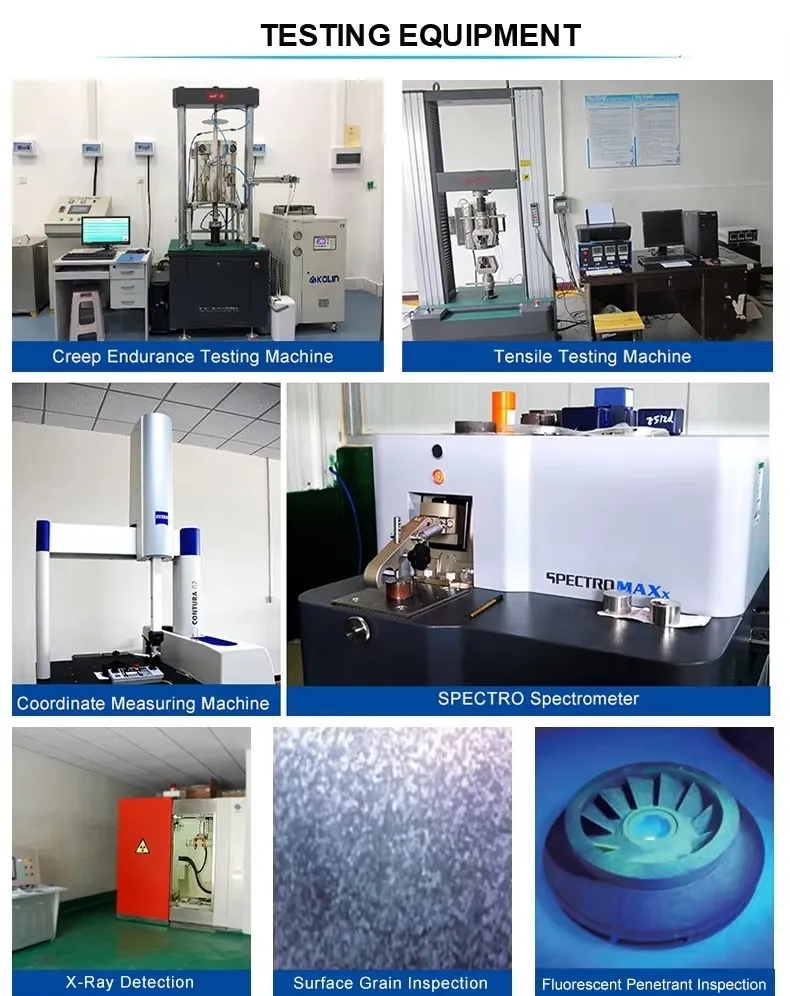
Our Testing Capability
We back every titanium shipment with comprehensive in-house testing. Our laboratory is equipped with a Spectro spectrometer for precise chemical composition analysis, tensile and creep endurance testing machines for mechanical property verification, X-ray and fluorescent penetrant inspection for internal and surface defect detection, and coordinate measuring machines for dimensional accuracy. Every batch is tested before release, ensuring full traceability and compliance with applicable ASTM standards (such as B265, B338, B348, etc.). You don't just get titanium - you get documented quality.
Our factory

Our factory
Our factory is equipped with core processing machinery for titanium products. For melting and forming, we use vacuum arc remelting (VAR) furnaces and a 2,500-ton hydraulic press. The billet processing line includes a high-temperature rolling mill and a radial forging machine capable of producing bars and rods from 8mm to 300mm in diameter. For seamless titanium tubes, we operate three-roll piercing mills and cold pilger rolling mills (LG-60, LG-90). Titanium plates and strips are produced on a four-high cold rolling mill with an online annealing furnace. For wires, we have a continuous wire drawing line with in-line degreasing and spooling units. All key equipment is CNC-controlled, ensuring consistent dimensional accuracy and surface finish for tubes, plates, bars, wires, and strips.


