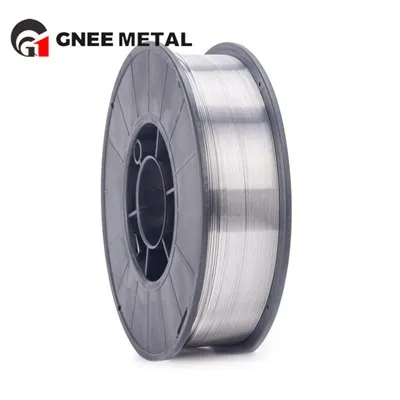
Comprehensive Comparison of Industrial Pure Titanium Grades: GR1, GR2, GR3, GR4, GR7
May 18, 2026
GR1 titanium pipe is the softest commercially pure titanium grade, offering excellent ductility and formability. For general industrial needs, GR2 is the most cost-effective. For strongly corrosive conditions like hydrochloric acid or wet chlorine, GR7 is essential.
Material Type
| Grade | Type | Main Composition | Pd Added | Key Characteristics |
|---|---|---|---|---|
| GR1 | CP-Ti (softest) | Ti ≥ 99.5% | ❌ | Excellent ductility, lowest strength |
| GR2 | Standard CP-Ti | Ti ≥ 99.2% | ❌ | Balanced strength and formability |
| GR3 | High-strength CP-Ti | Ti ≥ 99.0% | ❌ | Higher strength, reduced ductility |
| GR4 | Strongest CP-Ti | Ti ≥ 98.8% | ❌ | Highest strength, limited formability |
| GR7 | Modified CP-Ti | Ti + 0.12–0.25% Pd | ✅ | Superior corrosion resistance in harsh media |
Difference between pure titanium GR1 and GR2: GR1 has higher purity (99.5% vs 99.2%) and lower oxygen content, giving higher ductility and lower strength. Titanium grade 1 vs grade 2 selection depends on whether formability or balanced strength is the priority.

Mechanical and Physical Properties
| Property | GR1 | GR2 | GR3 | GR4 | GR7 |
|---|---|---|---|---|---|
| Tensile strength (MPa) | ≥ 240 | ≥ 345 | ≥ 450 | ≥ 550 | ≥ 345 |
| GR1 titanium yield strength (MPa) | ≥ 170 | ≥ 275 | ≥ 380 | ≥ 483 | ≥ 275 |
| Elongation (%) | ≥ 24 | ≥ 20 | ≥ 18 | ≥ 15 | ≥ 20 |
| Grade 1 titanium hardness (HB) | ~70 | ~80 | ~100 | ~120 | ~80 |
| Elastic modulus (GPa) | ~105 | ~105 | ~110 | ~110 | ~105 |
| Titanium grade 1 density (g/cm³) | 4.51 | 4.51 | 4.51 | 4.51 | 4.51 |
GR1 titanium yield strength is the lowest (≥170 MPa), making GR1 titanium for deep drawing the best choice. GR7 has similar strength to GR2 but with palladium addition for enhanced corrosion resistance.
Corrosion Resistance Profile
| Environment | GR1 | GR2 | GR3 | GR4 | GR7 |
|---|---|---|---|---|---|
| Oxidizing acids | ★★★★☆ | ★★★★☆ | ★★★★☆ | ★★★★☆ | ★★★★★ |
| Reducing acids (e.g., HCl) | ★★☆☆☆ | ★★☆☆☆ | ★★☆☆☆ | ★★☆☆☆ | ★★★★★ |
| Wet chlorine | ★★☆☆☆ | ★★☆☆☆ | ★★☆☆☆ | ★★☆☆☆ | ★★★★★ |
| Sodium hypochlorite | ★★☆☆☆ | ★★☆☆☆ | ★★☆☆☆ | ★★☆☆☆ | ★★★★★ |
| Seawater | ★★★★☆ | ★★★★☆ | ★★★★☆ | ★★★★☆ | ★★★★★ |
GR7 is the only grade among CP titanium that offers long-term reliability in chloride-heavy and acidic environments. GR1 titanium for chemical processing is suitable for oxidizing acids and seawater, but not recommended for reducing acids like HCl.
Processing and Weldability
| Attribute | GR1 | GR2 | GR3 | GR4 | GR7 |
|---|---|---|---|---|---|
| Cold formability | Excellent | Very good | Good | Fair | Very good |
| How to weld GR1 titanium | Excellent | Good | Good | Moderate | Excellent |
| GR1 titanium machinability | Moderate | Moderate | Poor | Poor | Moderate |
| GR1 titanium for deep drawing | Excellent | Very good | Fair | Limited | Very good |
Price Comparison
| Grade | Price Range (RMB/kg) | Notes |
|---|---|---|
| GR1 | ¥140–180 | High purity, easy processing |
| GR2 | ¥160–220 | Balanced cost-performance |
| GR3 | ¥180–240 | Strength-focused, limited supply |
| GR4 | ¥200–260 | High load-bearing applications |
| GR7 | ¥180–300 | Pd content affects pricing significantly |
Applications
| Application Area | Recommended Grade | Why |
|---|---|---|
| Medical devices | GR1, GR2 | Biocompatibility, formability |
| GR1 titanium heat exchanger | GR2, GR3 | Balance of strength and corrosion resistance |
| Pressure vessels | GR3, GR4 | Higher strength required |
| General chemical equipment | GR2–GR4 | Cost-effective corrosion resistance |
| Chloride/acidic environments | GR7 only | Palladium addition – superior resistance |
| Electroplating fixtures | GR7 preferred, GR2 for mild duty | Extreme corrosion resistance |
FAQ
Q1: What is the difference between GR1 and GR2 titanium pipe?
A: GR1 titanium pipe has higher purity (≥99.5% vs ≥99.2%) and lower oxygen content, giving higher ductility (24% vs 20% elongation) and lower yield strength (≥170 MPa vs ≥275 MPa). Titanium grade 1 vs grade 2 selection depends on whether formability (GR1) or balanced strength (GR2) is the priority. GR2 is the most cost-effective for general industrial needs.
Q2: What is the difference between GR1 and GR7 titanium tube?
A: GR1 titanium tube is pure titanium with excellent ductility and formability. GR7 adds 0.12–0.25% palladium, significantly enhancing corrosion resistance in reducing acids (HCl), wet chlorine, and sodium hypochlorite. For strongly corrosive conditions, GR7 is essential. For general corrosive environments, GR1 is sufficient.
Q3: What is the yield strength of GR1 titanium pipe?
A: The minimum GR1 titanium yield strength is 170 MPa. GR2 has 275 MPa, GR3 has 380 MPa, GR4 has 483 MPa, and GR7 has 275 MPa. GR1 titanium has the lowest yield strength, which directly enables its excellent formability for GR1 titanium for deep drawing.
Q4: What is the density of titanium grade 1 pipe?
A: Titanium grade 1 density is 4.51 g/cm³ – same for GR1 through GR7. Elastic modulus is approximately 105-110 GPa. Hardness increases with grade: GR1 ~70 HB, GR2 ~80 HB, GR3 ~100 HB, GR4 ~120 HB, GR7 ~80 HB.
Q5: Which titanium grade is best for heat exchangers?
A: GR1 titanium heat exchanger tubes are suitable for oxidizing acids and seawater. For general chemical processing, GR2 or GR3 offer a good balance of strength and corrosion resistance. For chloride-heavy or acidic environments (e.g., HCl, wet chlorine), GR7 is the only CP grade that provides long-term reliability.
Q6: Is GR1 titanium pipe suitable for medical applications?
A: Yes, GR1 titanium pipe and GR2 are recommended for medical devices due to their biocompatibility and formability. Medical grade 1 titanium conforms to ASTM F67 grade 1. GR1 titanium is widely used for surgical instruments and implants where high ductility is beneficial.
Q7: Can GR1 titanium tube be used for deep drawing?
A: Yes, GR1 titanium for deep drawing is excellent. GR1 has the highest ductility (≥24% elongation) and lowest yield strength among CP grades. GR2 is very good, GR3 is fair, and GR4 has limited deep drawing capability. GR7 is very good.
Q8: How does corrosion resistance compare between GR1 and GR7?
A: Both GR1 and GR7 have excellent resistance in oxidizing acids and seawater (★★★★☆ vs ★★★★★). However, in reducing acids (e.g., HCl), wet chlorine, and sodium hypochlorite, GR1 has poor resistance (★★☆☆☆) while GR7 has excellent resistance (★★★★★). The palladium addition in GR7 makes it the only CP-grade suitable for these harsh environments.
Q9: What is the chemical composition difference between GR1 and GR7?
A: GR1 titanium chemical composition is Ti ≥99.5%, Fe ≤0.20%, O ≤0.18%, N ≤0.03%, C ≤0.08%, H ≤0.015%. GR7 has the same base composition plus 0.12–0.25% palladium (Pd). This small Pd addition dramatically improves corrosion resistance in reducing and chloride-rich environments.
Q10: Which titanium grade is most cost-effective for general use?
A: GR2 is the most cost-effective for general industrial needs due to its balanced strength and formability, wide availability, and moderate price (¥160–220 RMB/kg). GR1 (¥140–180) is better when formability is critical. GR7 (¥180–300) is necessary only for severe corrosive conditions.
Q11: How to weld GR1 titanium pipe?
A: How to weld GR1 titanium – GR1 and GR7 have excellent weldability. GR2 and GR3 have good weldability. GR4 has moderate weldability. Use GTAW (TIG) with matching filler metal (ERTi-1 for GR1, ERTi-2 for GR2, ERTi-7 for GR7). Proper argon shielding on both sides is critical. No preheat is required.