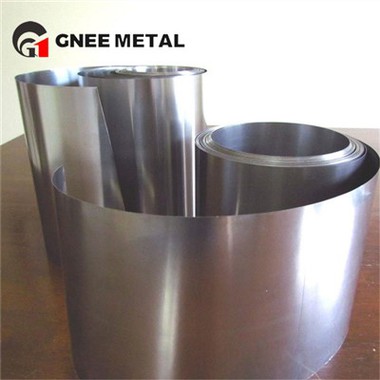

Grade 1 Titanium Strips Vs. Grade 2 Titanium Strips
Nov 26, 2025
The most popular titanium strips grades in the market are the grade 1 titanium strips and the grade 2 titanium strips. But what's the difference?
Titanium strip is a very common transitional metal that is mainly used in the manufacture of a wide variety of products such as tennis racks, surgical tools and jewelry.
Titanium's strength is almost equal to that of stainless steel strip at half weight. It is two times stronger than aluminum.
These features together with its high resistance to corrosion make it one of the most sought after metals for manufacture of different products.
There are different titanium grades in the market. The grades are mainly categorized depending on their purity.
Purity of titanium is mainly determined by the amount of iron and other types of impurities it has.
What Are Grade 1 Titanium Strips?
Grade 1 titanium strips are known to be commercially pure and one of the most ductile and safest titanium grades that exhibit great formability.
It is an unalloyed titanium grade that has high resistance to corrosion, great weldability and can be used in different applications.
The grade 1 titanium strip is popularly used in chemical industries and marine where most of the parts are always subjected to harsh conditions.
What Are Grade 2 Titanium Strips?
Grade 2 titanium strips characteristics are almost similar to Grade 1 Titanium Strips characteristics but are a bit stronger.
This Grade 2 titanium strip does offer a great balance of ductility and strength.
It is also resistant to corrosion and very oxidizing.
Just like the grade 1 titanium strips, this grade 2 titanium strips also have excellent weldability.
Grade 2 titanium strip is unalloyed titanium with the best weight to strength ratio to resist any form of corrosion.
Its features make it excellent for use in offshore oil installation, heat exchangers, bleaching plants in the paper industry, water pipe lines and contender tubing.
Grade 2 titanium strips are excellent for use in applications that require oxidation resistance of 600 ° F and strengths of 400 ° F.


Grade 1 Titanium Strips vs. Grade 2 Titanium Strips Comparison
Grade 1 titanium strip is very popular as it comprises of 0.7% iron, 0.5% vanadium, 0.5% nickel, 0.2% manganese, 0.5% chromium and 0.1% cobalt. The grade 2 titanium strips are known to be slightly lower in purity as it comprises of 0.7 % and 0.2 % impurities.
Surgical Application: Both grade 1 titanium strips and grade 2 titanium strips has similar properties. The grade 2 titanium strips however has a higher strength which makes it a perfect choice for use in surgical applications. The high anti-corrosion resistance and yield strength of the grade 2 titanium strips allows it to perform well in manufacture of prosthetics pins and rods, surgical equipment's and dental implant instruments.
Cost: Despite both the grade 1 and grade 2 titanium strip having same properties, the grade 2 titanium strips are the warhorse and the most abundant grade. The alloys available in grade 2 titanium strips cost less when compared to the grade 1 titanium strips. The grade 2 titanium strip is mainly available in rates between $15 and $17 while the grade 1 titanium strips cost between $16 and $18 per kg.
Weight: Grade 2 titanium strip is slightly lighter when compared to the Grade 1 titanium strip. Grade 1 titanium strip weighs between 9 and 10 grams while grade 2 titanium weighs between 3.5 and 4.5.
Melting Point: Grade 1 titanium strips have a melting point of 4,200°F while the titanium grade 2 has a melting point of 5,000°F. Grade 1 titanium strips suits applications that need a wider temperature range. Grade 2 titanium strips are suitable for applications that need a narrow temperature range.
What are the Grade 1 Titanium Strips and Grade 2 Titanium Strips Applications?
Titanium metal is known to be an ideal material for use in aerospace and marine applications thanks to its resistance to corrosion, lightweight and strength features.
Titanium is as strong as the steel although it is 45% lighter. Since titanium is biocompatible, it is an excellent metal for creation of artificial joints, use in implant medical services, repair and setting of bones.
Grade 1 Titanium Strips Applications
Since grade 1 titanium strip comprises of a great formability and has high impact toughness and high levels of corrosion resistance, it is an excellent metal for use where formability is needed. Grade 1 titanium is mainly used in:
Chlorate manufacturing
Automotive parts
Desalination
Chemical processing
Architecture
Airframe structure
Marine industry
Medical industry
Dimensional stable anodes
Grade 2 Titanium Strips Applications
The Grade 2 titanium strips is known to possess great ductility, strength, formability and weldability. This makes grade 2 titanium strip an excellent choice for several field applications. Some of the popular applications where grade 2 titanium strip is used include:
Marine industry
Power generation
Exhaust pipe sounds
Hydro-carbon processing
Which One Between Grade 1 Titanium Strip And Grade 2 Titanium Strip Is Better?
Grade 2 titanium strip is the most used titanium grade when compared to grade 1 titanium strip.
The grade 2 titanium exhibits a low density and is suitable for use in several applications where weight is of a major concern.
This titanium grade 2 strip has a great melting point which makes it a perfect alloy for higher temperature applications.
Grade 1 titanium strip is the softest material with the best ductility.
Grade 2 titanium strip is stronger and moldable.
Titanium grade 2 has a great tensile strength which makes it a great option for high temperature and high pressure systems.
The titanium grade 1 has a great impact strength and is not capable of withstanding high temperatures and pressures like the titanium grade 2 strip.
about us
We are a leading manufacturer and exporter specializing in Titanium and Titanium Alloy products. Our company is dedicated to providing a comprehensive range of high-quality titanium solutions for demanding global industries such as Aerospace, Chemical Processing, Medical, Marine Engineering, Power Generation, and Sports Equipment.
Our core export portfolio encompasses the full spectrum of wrought titanium products, including:
Titanium Tubes & Pipes: From precision Thin-Walled Titanium Tubes for heat exchangers to robust Thick-Walled Titanium Pipes for high-pressure applications.
Titanium Plates & Sheets: Supplied as Titanium Plates for heavy-duty construction and Titanium Sheets / Titanium Foils for precise manufacturing.
Titanium Bars & Rods: We supply Titanium Bars, Titanium Rods, and Titanium Wires in various diameters and finishes.
Titanium Fasteners: A complete range of Titanium Fasteners including bolts, nuts, and studs.
We expertly process all common grades to meet diverse operational requirements, including:
Commercially Pure Titanium: Gr1, Gr2
Titanium Alloys: Gr5 (Ti-6Al-4V), Gr7, Gr9 (Ti-3Al-2.5V), Gr12
Our production and quality assurance strictly adhere to international standards such as ASTM B265, ASTM B337, ASTM B338, ASTM B348, ASME SB-363, and AMS 4902, ensuring superior performance, excellent corrosion resistance, and high strength-to-weight ratio in every product.
Leveraging our advanced manufacturing expertise and stringent quality control, we are your trusted global partner for reliable, high-performance titanium materials.