


Titanium Grade 1 / Ti Grade 1 / R50250
May 14, 2026
What Is Ti Grade 1?
GR1 titanium pipe is manufactured from Titanium Grade 1, also known as Ti Grade 1 or CP-Ti Grade 1 (Commercially Pure). GR1 titanium is the softest and most ductile of all commercially pure titanium grades. It is an unalloyed titanium that offers the greatest formability and highest purity among the CP grades (Grades 1, 2, 3, and 4).
The properties of GR1 titanium tube are defined by its high purity and the strict control of interstitial elements, particularly its very low oxygen content. ASTM B338 grade 1 pipe is the best choice for applications that need high purity, lightweight construction, and long-lasting strength in corrosive or high-performance settings.

GR1 Titanium Key Characteristics
| Characteristic | Description |
|---|---|
| Best ductility and formability | Lowest yield strength and highest elongation among CP grades; can be easily cold-formed, deep-drawn, bent, and stamped without cracking |
| Excellent corrosion resistance | Outstanding resistance in oxidizing environments (nitric acid) and chloride-containing solutions (seawater, brines); often exceeds stainless steel performance |
| Excellent weldability | Readily weldable using standard procedures; weld joints maintain good ductility and toughness |
| High impact toughness | Retains excellent impact toughness even at cryogenic temperatures; no ductile-to-brittle transition like carbon steels |
| Low strength | Lowest tensile and yield strength of all titanium grades – not suitable for high-load applications |
| Biocompatibility | Highly biocompatible; not rejected by the human body – suitable for medical applications |
GR1 Titanium Pipe Chemical Composition
The properties of GR1 titanium are achieved by strictly limiting interstitial (impurity) elements, most importantly Oxygen (O).
| Element | Symbol | Max. Content (%) |
|---|---|---|
| Oxygen | O | 0.18 |
| Iron | Fe | 0.20 |
| Carbon | C | 0.08 |
| Nitrogen | N | 0.03 |
| Hydrogen | H | 0.015 |
| Titanium | Ti | Balance |
GR1 Titanium Pipe Mechanical Properties
GR1 titanium tube mechanical properties (typical minimums per ASTM):
| Property | Value |
|---|---|
| Tensile strength | 240 MPa (min) |
| GR1 titanium yield strength (0.2% offset) | 170 MPa (min) |
| Elongation (in 2 in. or 50 mm) | 24% (min) |
| Titanium grade 1 density | 4.51 g/cm³ |
These properties quantify the low-strength, high-ductility nature of GR1 titanium. Grade 1 titanium hardness is approximately 70 HRB.
GR1 titanium yield strength is the lowest among CP grades, which directly enables GR1 titanium for deep drawing and complex forming operations.
GR1 vs GR2 vs GR3 vs GR4 Comparison
| Grade | Oxygen Max (%) | Yield Strength (MPa) | Tensile Strength (MPa) | Elongation (%) | Key Characteristic |
|---|---|---|---|---|---|
| GR1 | 0.18 | 170 | 240 | 24 | Softest, most ductile |
| GR2 | 0.25 | 275 | 345 | 20 | Balance of strength and formability |
| GR3 | 0.35 | 380 | 450 | 18 | Higher strength |
| GR4 | 0.40 | 485 | 550 | 15 | Highest strength among CP grades |
Applications of GR1 Titanium Tube
| Industry | Application |
|---|---|
| Chemical processing | GR1 titanium for chemical processing – piping, reactor components |
| Marine environments | Seawater systems, offshore structures – chloride corrosion resistance |
| Heat exchangers | GR1 titanium heat exchanger tubes |
| Desalination systems | Piping and tube bundles |
| Medical equipment | Medical grade 1 titanium – ASTM F67 grade 1 surgical instruments and implants |
| Aerospace | Lightweight components requiring formability |
How to Weld GR1 Titanium Pipe
How to weld GR1 titanium – GR1 is readily weldable using standard welding procedures:
| Parameter | Recommendation |
|---|---|
| Process | GTAW (TIG) preferred |
| Filler metal | ERTi-1 |
| Argon shielding | Required on both sides (root and cover) |
| Preheat | Not required |
| Post-weld treatment | Not required for most applications |
| Result | Weld joints maintain good ductility and toughness |
FAQ
Q1: What is GR1 titanium pipe?
A: GR1 titanium pipe is manufactured from Titanium Grade 1, also known as Ti Grade 1 or CP-Ti Grade 1 (Commercially Pure). GR1 titanium is the softest and most ductile of all commercially pure titanium grades. It is an unalloyed titanium that offers the greatest formability and highest purity among CP grades (Grades 1, 2, 3, and 4).
Q2: What is the UNS number for ASTM B861 grade 1 titanium tube?
A: The UNS number for ASTM B861 grade 1 titanium tube is R50250. ASTM B338 grade 1 titanium pipe also uses UNS R50250. Medical grade 1 titanium (ASTM F67 grade 1) uses the same UNS number with additional biocompatibility requirements.
Q3: What is the density of titanium grade 1 pipe?
A: Titanium grade 1 density is 4.51 g/cm³. This low density gives GR1 titanium pipe lightweight construction with long-lasting strength in corrosive or high-performance settings.
Q4: Is GR1 titanium pipe corrosion resistant to seawater?
A: Yes, GR1 titanium pipe exhibits outstanding resistance to corrosion in seawater and brines. GR1 titanium is very resistant to chlorides, oxidizing media, and industrial chemicals. GR1 titanium tube performance often exceeds that of stainless steels in marine environments.
Q5: What is the elongation percentage of GR1 titanium tube?
A: GR1 titanium tube has minimum elongation of 24%. This is the highest among CP titanium grades. GR1 titanium for deep drawing and GR1 titanium forming/bending can be easily performed without cracking due to this high ductility.
Q6: What is the yield strength of ASTM B338 grade 1 titanium pipe?
A: The minimum GR1 titanium yield strength for ASTM B338 grade 1 titanium pipe is 170 MPa (0.2% offset). This is the lowest yield strength among all titanium grades, which is the trade-off for its high purity and superior ductility. GR1 titanium pipe is not suitable for high-load applications.
Q7: Is GR1 titanium pipe biocompatible for medical applications?
A: Yes, medical grade 1 titanium conforming to ASTM F67 grade 1 is highly biocompatible and is not rejected by the human body. GR1 titanium is suitable for medical equipment, surgical instruments, and implants.
Q8: What is the maximum oxygen content in GR1 titanium tube?
A: The maximum oxygen content in GR1 titanium tube is 0.18%. This is the lowest of all CP grades. For comparison, GR2 allows up to 0.25% oxygen. This small difference is directly responsible for GR1 titanium's superior softness and ductility.
Q9: What is the difference between GR1 and GR2 titanium pipe?
A: The difference between pure titanium GR1 and GR2 is primarily oxygen content. GR1 titanium pipe has 0.18% oxygen max, while GR2 has 0.25% oxygen max. Titanium grade 1 vs grade 2 comparison shows GR1 has higher ductility (24% vs 20% elongation) and lower strength (170 MPa vs 275 MPa yield strength).
Q10: Can GR1 titanium be welded easily?
A: Yes, how to weld GR1 titanium is well established. GR1 titanium pipe is readily weldable using all standard welding procedures. The resulting weld joints maintain good ductility and toughness. Use GTAW (TIG) with ERTi-1 filler metal and proper argon shielding.
Inspection
| Test | Purpose |
|---|---|
| Chemical analysis | Verify GR1 titanium chemical composition (O, Fe, C, N, H limits) |
| Tensile testing | Confirm tensile strength (≥240 MPa), GR1 titanium yield strength (≥170 MPa), elongation (≥24%) |
| Hardness testing | Verify grade 1 titanium hardness |
| Corrosion testing | Verify resistance to seawater, chlorides, oxidizing media |
| Dimensional inspection | Check OD, wall thickness, length |
| Surface inspection | Check for defects |
| Ultrasonic testing | Detect internal flaws in GR1 titanium pipe |
| Eddy current testing | Surface defect detection on GR1 titanium tube |
| Impact testing | Verify high impact toughness at various temperatures |

Packaging
| Packaging Step | Description |
|---|---|
| 1. End protection | Plastic end caps on both ends of each GR1 titanium tube |
| 2. Inner wrapping | Plastic paper / VCI paper wrapped around GR1 titanium pipe |
| 3. Bundling | Steel straps securing bundles of GR1 titanium tube |
| 4. Wooden case | Suitable for long-distance transport by air or sea shipping |
| 5. Labeling | Grade (GR1), standard (ASTM B338/B861), dimensions, heat number, quantity |
| 6. Documentation pouch | Waterproof pouch with packing list and mill test certificate |

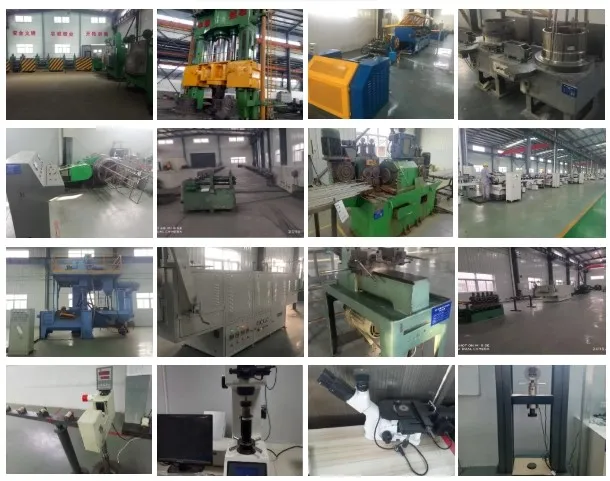
Factory Equipment
| Equipment | Function |
|---|---|
| VAR furnace | Vacuum Arc Remelting for high-purity titanium ingot |
| Extrusion press | Forms GR1 titanium pipe hollows from billet |
| Cold pilger mill | Reduces diameter and wall thickness of GR1 titanium tube |
| Annealing furnace | Stress relief – annealing, pickling, surface cleaning available |
| Pickling line | Removes oxide scale from GR1 titanium surface |
| Straightening machine | Corrects bending of GR1 titanium pipe |
| Cutting machine (CNC) | Precision length cutting with strict tolerances |
| Welding equipment | For welded GR1 titanium tube (ASTM B862) |
| Ultrasonic tester | Non-destructive inspection of GR1 titanium tube |
| Eddy current tester | Surface defect detection |
| Hydrostatic tester | Pressure testing of each pipe length |
| Tensile testing machine | Mechanical property verification |
Discuss Your Project Requirements


