
What's the Difference between Grade 5 (Ti-6Al-4V) VS grade 23 (Ti-6Al-4V ELI)
Jan 19, 2026
Titanium alloys are known for their excellent strength, corrosion resistance, light weight, and biocompatibility. They are widely used in the aerospace, medical, and chemical industries. Grade 5 (Ti-6Al-4V) and Grade 23 (Ti-6Al-4V ELI) are the most widely used, but they do have some small differences. In this article, we will explore the differences between these two titanium alloys and provide guides about which one to choose for your specific needs.
Grade 5 and Grade 23: Similar Chemical Composition
Both Grade 5 (Ti-6Al-4V) and Grade 23 (Ti-6Al-4V ELI) belong to the Ti-6Al-4V alloy family, which means that they are both primarily titanium (Ti) and contain approximately 6% aluminum (Al) and 4% vanadium (V). These elements give the alloy excellent overall properties:
Titanium (Ti): As a matrix, it provides good strength, corrosion resistance, and biocompatibility.
Aluminum (Al): Improves the alloy's strength, heat, and oxidation resistance.
Vanadium (V): Improves strength, toughness, and workability of alloys.
Grade 23, also known as Ti-6Al-4V ELI (Extra Low Interstitial), is a purer version of Grade 5 with lower levels of oxygen, nitrogen, carbon, and iron. There are some small differences in the amount of impurity elements:
| Elements | Grade 5 (wt.%) | Grade 23 (wt.%) |
| A | ≤ 0.20 | ≤ 0.13 |
| N | ≤ 0.05 | ≤ 0.03 |
| C | ≤ 0.08 | ≤ 0.08 |
| Fe | ≤ 0.40 | ≤ 0.25 |
Key Differences Between Grade 5 and Grade 23
The lower impurity content, especially oxygen content, gives Grade 23 better performance than Grade 5:
Higher fracture toughness: Grade 23 shows better resistance to crack growth at low temperatures, which means it is less prone to brittle fracture.
Better fatigue performance: Grade 23 exhibits longer service life under cyclic loads, which is critical for components subjected to alternating stresses.
Better biocompatibility: Lower impurity levels reduce the risk of adverse reactions after implantation, making Grade 23 Titanium ideal for orthopedic implants.
However, the strength of Grade 23 is slightly lower than that of Grade 5 because of the role of oxygen in solid solution strengthening in titanium alloys. These gap elements make them show differences in performance and application.
Typical Applications of Grade 5 (Ti-6Al-4V)
Aerospace: Used in the manufacture of aircraft engine components, turbine blades, fuselage structures and landing gear.
Automotive Industry: High-performance vehicle parts like suspension systems and exhaust systems.
Marine Applications: Propeller shafts, underwater equipment, and offshore components. Chemical: Used to manufacture corrosion-resistant chemical equipment like heat exchangers, pressure vessels, and reaction vessels. Sports Equipment: Lightweight frames, bicycle parts, and golf clubs.
Medical: Used in the manufacture of orthopedic implants and dental instruments.
Typical Applications of Grade 23 (Ti-6Al-4V ELI)
Medical: Widely used in the manufacture of long-term implants, such as artificial joints, bone fixation devices, and dental implants.
Dental Applications: Abutments, crowns, and orthodontic devices.
Surgical Instruments: Scalpels, forceps, and other high-precision tools.
Biomedical Devices: Pacemaker cases, defibrillator housings, and various prosthetic devices.
Cryogenic Applications: Components used in low-temperature environments.


The key difference is shown in the following table:
| Property | Grade 5 (Ti-6Al-4V) | Grade 23 (Ti-6Al-4V ELI) |
| Composition | Standard | Extra Low Interstitial |
| Strength | Higher | Slightly Lower |
| Ductility | Lower | Higher |
| Corrosion Resistance | High | Slightly Higher |
| Applications | Aerospace components, marine parts, sports equipment, and chemical processing | Medical implants, surgical tools, dental implants, and cryogenic applications |
| Cost | Generally Lower | Generally Higher |
Therefore, when choosing titanium alloy materials, strength and toughness need to be balanced according to your specific requirements: Grade 5 is needed for high strength, excellent corrosion resistance, or working on industrial or aerospace applications where cost efficiency is important. However, if you need enhanced toughness and better biocompatibility and are working with medical or cryogenic applications where purity is critical, choose Grade 23.
Ti-6Al-4V (Grade 5) and Ti-6Al-4V ELI (Grade 23) exhibit similar chemical compositions and offer remarkable properties. However, their performance characteristics and application domains differ significantly due to variations in interstitial element content. Grade 5 is extensively used in the aerospace and chemical industries, owing to its superior strength and excellent corrosion resistance. In contrast, Grade 23 is predominantly favored in medical and high-end engineering applications for its outstanding biocompatibility and enhanced toughness. A comprehensive understanding of the distinctions between these two alloys facilitates the selection of the most suitable material for specific application contexts, ultimately leading to optimized product performance and extended service life.
Our factory
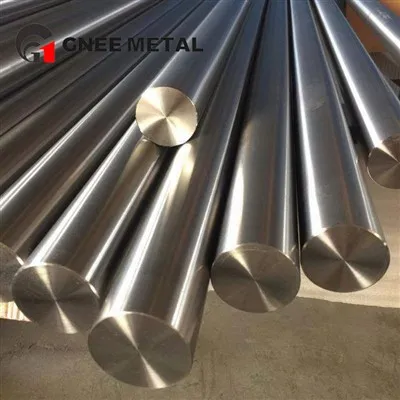
We are a specialized manufacturer engaged in the deep processing of titanium and titanium alloys, offering a full product range including titanium tubes, plates, bars, wires, and foils. Our facility is equipped with modern, dedicated production lines featuring heavy-duty reversing hot rolling mills for thick plates and multi-roll cold rolling mills for precision sheets and foils. Tube manufacturing utilizes precision cold pilger mills and seamless tube production lines, while bar and wire products are formed through high-speed bar/wire rolling mills and continuous drawing equipment. Critical processes are supported by vacuum annealing furnaces for precise heat treatment, and finishing is handled by CNC machining centers, laser cutting systems, and precision leveling machines. With a comprehensive quality control system overseeing the entire process from raw material to finished product, we are committed to providing high-performance, precision titanium solutions for industries such as aerospace, medical devices, chemical processing, and high-end consumer goods.

Titanium product packaging
We implement industrial-grade protective standards, providing customized packaging solutions for each titanium product: tubes and bars are individually secured with anti-rust VCI lining within reinforced wooden crates; plates and foils are interleaved with anti-scratch PE film and packed in heavy-duty corrugated boxes; wires are precision-wound on industrial reels. All packages include desiccant and feature clear product labeling with traceability codes, ensuring that your precision titanium materials are protected from moisture, impact, and abrasion during storage and global logistics, arriving safely at your production line.

Request Technical Consultation