


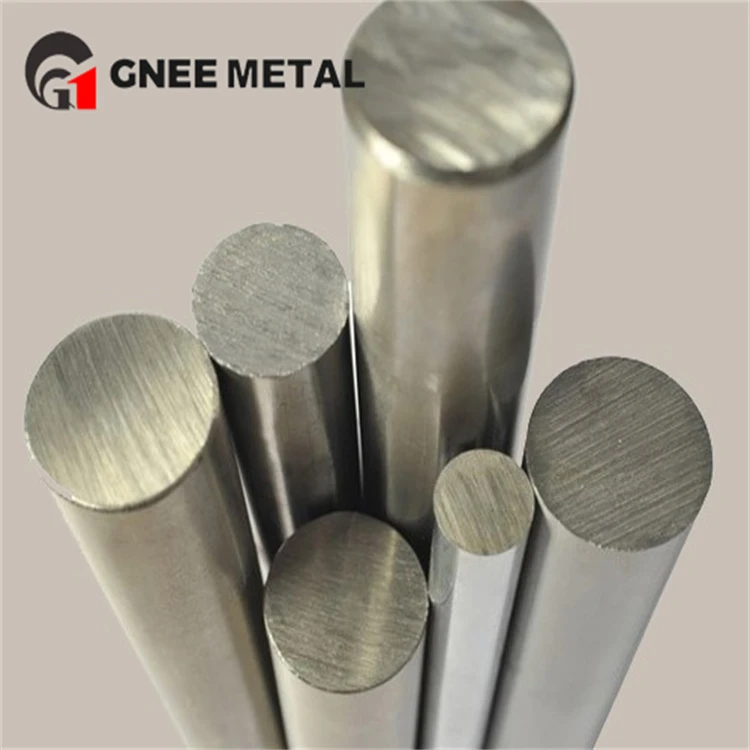
Titanium Bar For Fastener
Material: Commercially pure titanium and titanium alloys.
Common Grades: Grade 2, Grade 4, Grade 5, Grade 7, and Grade 9.
Product Shape: Solid round bar.
Diameter Reference: Ø5–100 mm for common fastener-bar requirements.
Length Reference: 2–6 m.
Standard: ASTM B348/B348M.
Surface: Hot rolled, pickled, cold drawn, turned, or ground.
Inspection: Chemical composition, mechanical properties, dimensions, and surface quality.
Description
Titanium bars are widely used as raw materials for manufacturing bolts, screws, nuts, studs, threaded rods, and other precision fasteners. Compared with conventional steel fasteners, titanium fasteners offer a high strength-to-weight ratio, excellent corrosion resistance, and good performance in demanding industrial environments.
We supply titanium bar materials for fastener manufacturers, CNC machining companies, and industrial component producers. Available material options include Grade 1, Grade 2, Grade 4, Grade 5, Grade 7, Grade 9, and Grade 12, with different diameters, lengths, and surface conditions.
The right bar material depends on how the fastener will be manufactured. CNC machining, cold heading, warm heading, and thread rolling have different requirements for material condition, dimensional accuracy, and surface quality.
Send Your Titanium Bar Specifications
Titanium Bar for Fastener Manufacturing
Titanium bar for fasteners refers to solid titanium and titanium alloy bar stock used to manufacture threaded and non-threaded fastening components.
Depending on the production method, the bar can be cut into blanks for CNC machining or processed into smaller sections for heading and thread-forming operations.
Finished Titanium Fasteners
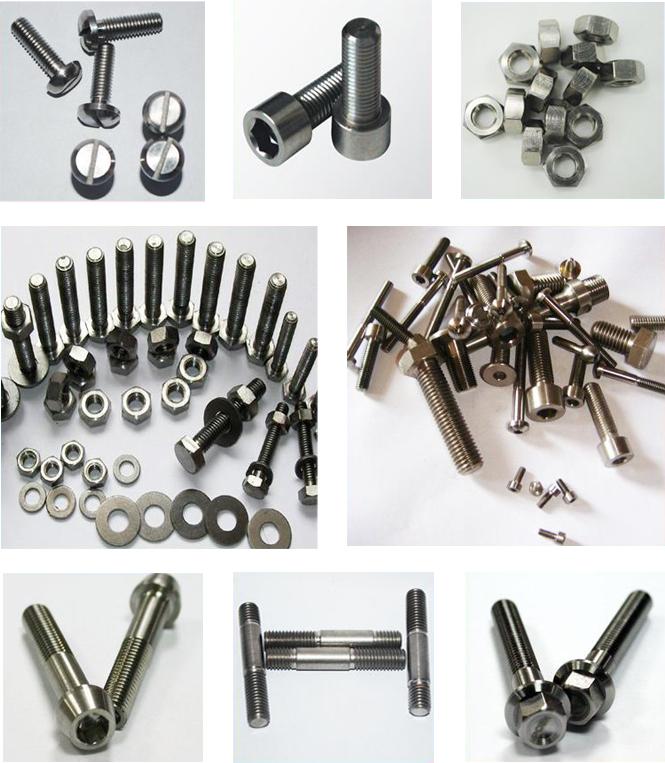
Common Fasteners Manufactured from Titanium Bars
| Fastener Type | Typical Manufacturing Process | Common Material Considerations |
|---|---|---|
| Titanium Bolts | CNC machining, heading, thread rolling or cutting | Strength, thread quality, dimensional accuracy |
| Titanium Screws | CNC machining, cold or warm forming | Surface quality, head forming, thread accuracy |
| Titanium Studs | Turning, cutting, thread rolling | Straightness, diameter consistency, tensile properties |
| Titanium Nuts | CNC machining, drilling, internal thread cutting | Machinability, hardness, thread dimensions |
| Titanium Pins | Turning, grinding, precision machining | Diameter tolerance, surface finish, straightness |
| Titanium Threaded Rods | Turning, thread rolling or cutting | Bar straightness, thread consistency, material strength |
Titanium Bar Specifications for Fasteners
| Specification | Available Options / Procurement Reference |
|---|---|
| Product Form | Solid round bar |
| Material Grades | Grade 1, Grade 2, Grade 3, Grade 4, Grade 5, Grade 7, Grade 9, Grade 12 |
| Common Fastener Grades | Grade 2, Grade 4, Grade 5, Grade 7 |
| Diameter | Ø5–100 mm as a common fastener-bar procurement range |
| Larger Diameter Reference | Ø100–200 mm for larger machined components and special orders |
| Standard Commercial Length | 2,000–6,000 mm |
| Cut Length | 500–2,000 mm |
| Main Bar Standard | ASTM B348/B348M |
| Manufacturing Routes | Hot rolled, forged, cold drawn, or machined |
| Delivery Conditions | Annealed, hot worked, or cold worked, as specified |
| Surface Conditions | Hot rolled, descaled, pickled, turned, or ground |
| Inspection | Chemical analysis, tensile testing, hardness, dimensional and surface inspection |
| Documentation | Material Test Certificate (MTC) and agreed inspection reports |
These dimensions are procurement reference ranges, not a guarantee that every grade and surface condition is available in every size. Cold-finished bar and hot-rolled bar also have different dimensional capabilities.
Available Titanium Grades for Fasteners
Different titanium grades provide different combinations of strength, ductility, corrosion resistance, and machinability. The selection should reflect the fastener's service environment and manufacturing method.
| Grade | Material Designation | Main Characteristics | Typical Fastener Applications |
|---|---|---|---|
| Grade 1 | Commercially Pure Titanium | High ductility and good corrosion resistance | Low-load corrosion-resistant fasteners |
| Grade 2 | Commercially Pure Titanium | Balanced strength, ductility, and corrosion resistance | Marine and chemical equipment fasteners |
| Grade 3 | Commercially Pure Titanium | Higher strength than Grades 1 and 2 | Industrial fastening components |
| Grade 4 | Commercially Pure Titanium | Highest strength among common CP grades | Higher-strength industrial fasteners |
| Grade 5 | Ti-6Al-4V | High strength-to-weight ratio | Aerospace and high-strength bolts |
| Grade 7 | Titanium with Palladium | Improved corrosion resistance in certain reducing environments | Chemical processing fasteners |
| Grade 9 | Ti-3Al-2.5V | Good strength and formability | Lightweight mechanical fasteners |
| Grade 12 | Ti-0.3Mo-0.8Ni | Improved resistance to certain corrosion conditions | Chemical equipment fasteners |
Equivalent Grades of Titanium Bars for Fasteners
| Material | ASTM Grade | UNS Designation | Common GB Reference | JIS Reference |
|---|---|---|---|---|
| Commercially Pure Titanium | Grade 1 | R50250 | TA1 | Class 1 |
| Commercially Pure Titanium | Grade 2 | R50400 | TA2 | Class 2 |
| Commercially Pure Titanium | Grade 3 | R50550 | TA3 | Class 3 |
| Commercially Pure Titanium | Grade 4 | R50700 | TA4 | Class 4 |
| Ti-6Al-4V | Grade 5 | R56400 | TC4 | Class 60 |
| Ti-0.2Pd | Grade 7 | R52400 | TA9 | - |
| Ti-3Al-2.5V | Grade 9 | R56320 | TC2 | - |
| Ti-0.3Mo-0.8Ni | Grade 12 | R53400 | TA10 | - |
Which Titanium Grade Should You Choose?
Grade 2 – For General Corrosion-Resistant Fasteners
Grade 2 is a common choice for industrial titanium fasteners where corrosion resistance and formability are important. It is suitable for many marine, chemical, and general industrial applications.
Grade 4 – For Higher-Strength Commercially Pure Titanium Fasteners
Grade 4 offers higher strength than Grades 1–3. It can be considered when a commercially pure titanium grade is required but Grade 2 strength is insufficient.
Grade 5 – For High-Strength Fasteners
Grade 5 Ti-6Al-4V is widely used where high strength and low weight are important. It is a common material choice for aerospace and high-performance mechanical fasteners.
Grade 7 – For Specific Corrosive Environments
Grade 7 contains palladium, which improves corrosion resistance in certain reducing environments. It is suitable for selected chemical-processing applications.
Grade 9 – For a Balance of Strength and Formability
Grade 9 Ti-3Al-2.5V offers a combination of strength and formability. It can be considered for lightweight mechanical components and specialized fasteners.
Grade 12 – For Selected Chemical Equipment Applications
Grade 12 contains molybdenum and nickel. It is considered when the service environment requires improved corrosion resistance compared with commercially pure titanium.
Discuss Your Fastener Material Selection
Chemical Composition of Common Titanium Fastener Grades
Chemical composition determines the grade and affects mechanical performance, corrosion resistance, and forming behavior.
| Element | Grade 1 | Grade 2 | Grade 4 | Grade 5 | Grade 7 | Grade 9 | Grade 12 |
|---|---|---|---|---|---|---|---|
| Carbon, max. | 0.08 | 0.08 | 0.08 | 0.08 | 0.08 | 0.08 | 0.08 |
| Nitrogen, max. | 0.03 | 0.03 | 0.05 | 0.05 | 0.03 | 0.03 | 0.03 |
| Hydrogen, max. | 0.015 | 0.015 | 0.015 | 0.015 | 0.015 | 0.015 | 0.015 |
| Iron, max. | 0.20 | 0.30 | 0.50 | 0.40 | 0.30 | 0.25 | 0.30 |
| Oxygen, max. | 0.18 | 0.25 | 0.40 | 0.20 | 0.25 | 0.15 | 0.25 |
| Aluminum | - | - | - | 5.5–6.75 | - | 2.5–3.5 | - |
| Vanadium | - | - | - | 3.5–4.5 | - | 2.0–3.0 | - |
| Palladium | - | - | 0.12–0.25 | - | 0.12–0.25 | - | - |
| Molybdenum | - | - | - | - | - | - | 0.2–0.4 |
| Nickel | - | - | - | - | - | - | 0.6–0.9 |
Why Do These Elements Matter?
Aluminum and Vanadium: The principal alloying elements in Grade 5. They contribute to its high strength.
Palladium: Added to Grade 7 to improve corrosion resistance in certain environments.
Molybdenum and Nickel: The principal alloying additions in Grade 12.
Oxygen: An important interstitial element that affects strength and ductility.
Hydrogen: Must be controlled because excessive hydrogen can cause embrittlement-related problems.
Mechanical Properties of Titanium Bar Materials
| Grade | Tensile Strength, min. | Yield Strength, min. | Elongation, min. |
|---|---|---|---|
| Grade 1 | 240 MPa | 138 MPa | 24% |
| Grade 2 | 345 MPa | 275 MPa | 20% |
| Grade 3 | 450 MPa | 380 MPa | 18% |
| Grade 4 | 550 MPa | 483 MPa | 15% |
| Grade 5 | 895 MPa | 828 MPa | 10% |
| Grade 7 | 345 MPa | 275 MPa | 20% |
| Grade 9 | 620 MPa | 483 MPa | 15% |
| Grade 12 | 483 MPa | 345 MPa | 18% |
Grade 2 has higher minimum elongation than Grade 5, making ductility an important consideration when evaluating forming applications.
Grade 5 has substantially higher minimum tensile and yield strength, making it suitable for many high-strength fastener designs.
Grade 4 provides higher strength than Grade 2 among commercially pure titanium grades.
Grade 9 provides an intermediate strength level between Grade 2 and Grade 5.
Standards for Titanium Bars and Finished Fasteners
When purchasing titanium bar for fastener production, distinguish between the standard for the raw material and the standard for the finished fastener.
| Standard | Product Scope | Relevance |
|---|---|---|
| ASTM B348/B348M | Titanium and titanium alloy bars and billets | Raw material specification |
| ASTM B381 | Titanium and titanium alloy forgings | Forged raw material or components |
| ASTM F468 | Nonferrous bolts, hex cap screws, socket head cap screws, and studs | Finished fastener requirements |
| ASTM F467 | Nonferrous nuts for general use | Finished nut requirements |
| ASTM F606/F606M | Mechanical testing of fasteners and related products | Finished fastener mechanical testing |
Titanium Bar Requirements for Fastener Manufacturing
A titanium bar that meets the material grade requirement may still be unsuitable for a particular fastener production line. Diameter consistency, surface condition, internal quality, and mechanical properties all affect downstream production.
Diameter and Dimensional Accuracy
Diameter affects cutting, blank preparation, turning allowances, and the consistency of the finished fastener shank.
For fastener production, consider the following procurement reference:
| Bar Diameter | Typical Procurement Use | Dimensional Consideration |
|---|---|---|
| Ø5–10 mm | Small screws, pins, and small threaded components | Close diameter control is important |
| Ø10–20 mm | Small and medium bolts and studs | Diameter consistency and straightness |
| Ø20–40 mm | Medium bolts, studs, and machined fasteners | Surface and machining allowance |
| Ø40–60 mm | Large bolts and special fastening components | Turning allowance and ovality |
| Ø60–100 mm | Large machined fastener blanks | Straightness, internal quality, and machining stock |
For precision machining, specify a cold-finished or machined diameter rather than assuming an as-rolled bar will meet a close tolerance.
Example procurement target: For a Ø20 mm precision-machined fastener blank, a buyer may request a finished bar diameter tolerance of ±0.10 mm. This is a proposed purchase requirement, not a universal ASTM B348 tolerance.
Titanium Bar for Different Fastener Manufacturing Methods
The manufacturing route determines which properties matter most when purchasing the raw material.
CNC Machining
CNC machining is widely used to produce titanium bolts, screws, studs, nuts, and custom fastening components.
Typical process:
Cut the titanium bar into blanks.
Turn the shank and head.
Drill or machine internal features.
Cut or roll the threads.
Perform finishing and inspection.
Bar requirements:
Consistent diameter.
Suitable machining allowance.
Good surface condition.
Stable mechanical properties.
Appropriate grade and delivery condition.
For CNC-machined fasteners, cold-drawn or precision-machined bars may reduce the amount of stock removal and help maintain dimensional consistency.
Cold Heading
Cold heading forms a fastener head by applying compressive force to a bar or wire blank at or near room temperature.
The material undergoes significant local deformation. If the material is too hard, has insufficient ductility, or contains surface defects, cracking may occur during heading.
Bar requirements:
Suitable ductility and forming condition.
Consistent diameter.
Clean surface without harmful seams or cracks.
Controlled material properties.
Verified suitability for the intended reduction and heading ratio.
Warm Heading
Warm heading uses controlled heating to improve the formability of titanium before deformation.
This method may be considered for titanium alloys that require additional forming assistance.
Bar requirements:
Grade and heat treatment suitable for the selected forming temperature.
Controlled heating conditions.
Surface condition suitable for forming.
Consistent material response between batches.
Thread Rolling and Thread Cutting
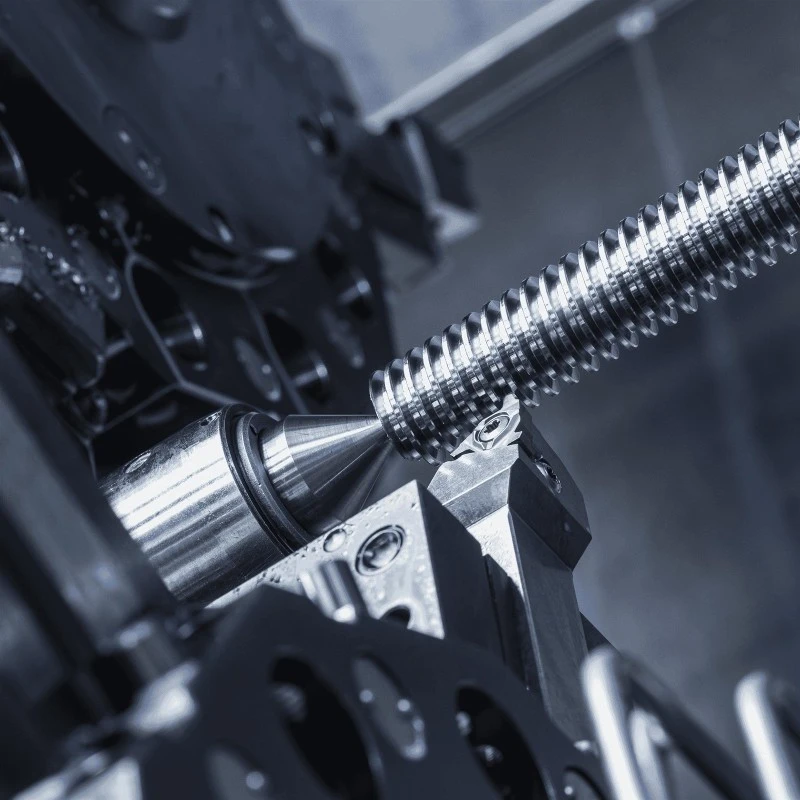
External threads can be produced by rolling or cutting.
| Comparison | Thread Rolling | Thread Cutting |
|---|---|---|
| Process | Plastic deformation using thread dies | Material removed by cutting tools |
| Material Removal | No chip removal from the thread profile | Produces chips |
| Grain Flow | Material flows along the thread profile | Grain flow is interrupted by cutting |
| Tooling | Requires suitable dies and material response | Requires suitable cutting tools and parameters |
| Application | Suitable for compatible materials and fastener designs | Suitable for a wider range of geometries and smaller production runs |
Purchasing conclusion: Thread rolling can be advantageous when the material and fastener design are suitable for plastic deformation. Thread cutting is more flexible for custom dimensions and machining-based production. The bar grade, condition, and finished-thread requirements must be evaluated together.
Thread Forming Process
Applications of Titanium Fasteners
Titanium fasteners are selected where weight reduction, corrosion resistance, or specific mechanical properties justify their use.

Aerospace Fasteners
Grade 5 and other specified titanium alloys are used in selected aircraft structural and equipment fasteners.
Typical components include bolts, screws, studs, and special fastening parts.
Selection point: Aerospace applications require strict control of material specification, traceability, manufacturing route, and finished-fastener inspection. The project specification must determine the acceptable material and process.
Marine Fasteners
Titanium fasteners are used in selected marine equipment and structures exposed to seawater.
Typical applications include pump assemblies, marine equipment, and corrosion-resistant connections.
Selection point: Evaluate galvanic compatibility with connected metals, service temperature, loading, and seawater conditions.

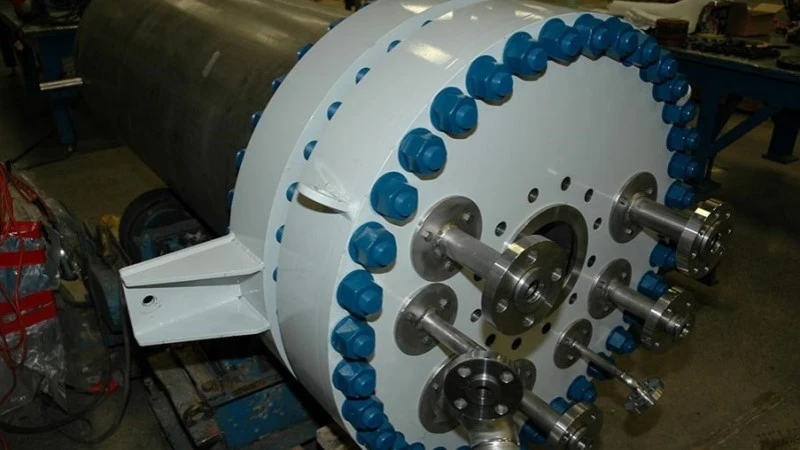
Chemical Processing Fasteners
Grade 2, Grade 7, and Grade 12 may be considered for fastening components in chemical-processing equipment.
Typical applications include equipment connections, valve assemblies, pump components, and selected heat exchanger structures.
Selection point: Confirm the chemical medium, concentration, temperature, and crevice conditions before selecting the titanium grade.
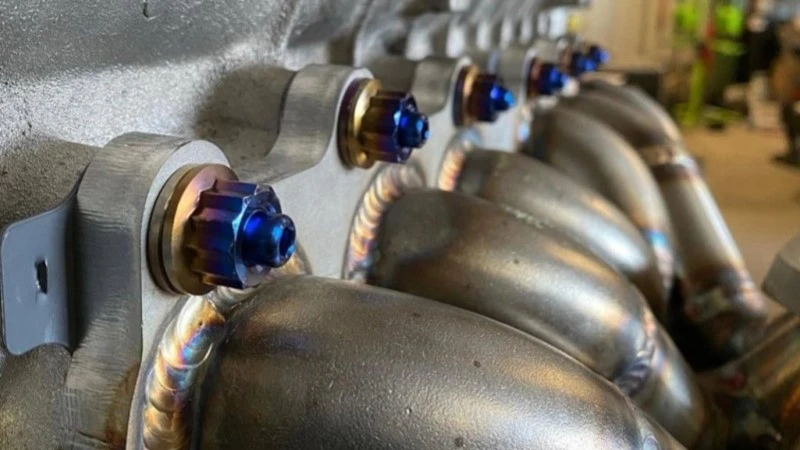
Automotive and Motorsport Fasteners
Grade 5 titanium fasteners are used in selected performance-oriented automotive and motorsport components where weight reduction and strength are important.
Typical components include bolts, studs, and specialized mounting hardware.
Selection point: Check the actual load, temperature, vibration, fatigue requirements, and installation torque.
Medical and Precision Equipment Fasteners
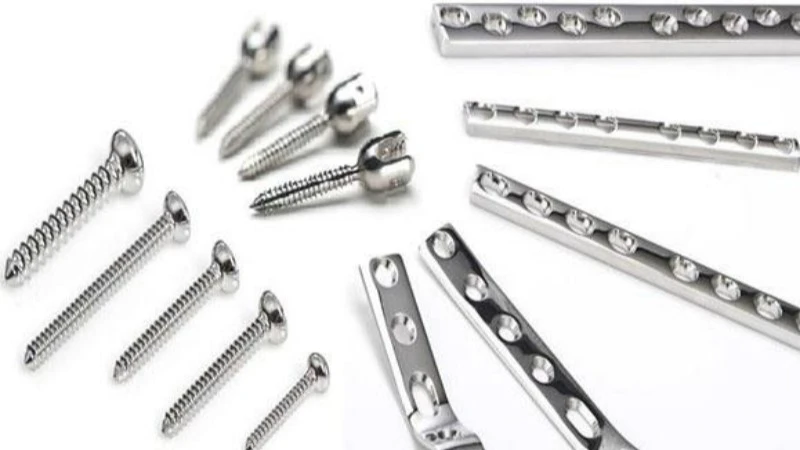
Selected titanium materials are used in precision equipment and medical-related applications.
Selection point: If the fastener is intended for a regulated medical application, the required implant-grade or medical-device material specification must be stated separately. Ordinary ASTM B348 Grade 5 bar should not automatically be represented as implant-grade material.
Industrial Machinery
Grade 2 and Grade 5 titanium fasteners can be considered for selected industrial machinery where corrosion resistance or weight reduction is required.
Selection point: Compare the cost of titanium with the actual operating benefit. For ordinary indoor machinery without weight or corrosion constraints, conventional steel fasteners may be more economical.
Quality Inspection and Testing

Chemical Composition Analysis

Dimensional Inspection

Dimensional Inspection

Tensile Test

Ultrasonic Testing
| Inspection Item | What Is Checked | Why It Matters |
|---|---|---|
| Chemical Composition | Titanium grade and alloying elements | Confirms material identity |
| Tensile Testing | Tensile strength, yield strength, elongation | Confirms raw-material mechanical properties |
| Hardness Testing | Material hardness | Helps assess condition consistency |
| Diameter Inspection | Diameter and ovality | Controls blank size and machining allowance |
| Straightness Inspection | Bar deviation over a defined length | Supports automatic feeding and machining |
| Surface Inspection | Cracks, seams, laps, scratches, and scale | Reduces forming and machining defects |
| Metallographic Examination | Microstructure and internal condition, when specified | Supports additional material-quality requirements |
| Ultrasonic Testing | Internal discontinuities, when specified | Provides additional internal quality control |
| Traceability | Heat number and batch identification | Links material to inspection records |
Request Material Test Documents
Packaging and Lead Time
Estimated Delivery Time
| Order Type | Estimated Lead Time |
|---|---|
| Available Standard Stock | 7–15 working days |
| Standard Grade, Made-to-Order Bars | 30–45 calendar days |
| Special Grade or Non-Standard Diameter | 45–60 calendar days |
| Large Quantity or Multiple Production Lots | 45–75 calendar days |
| Additional Inspection or Special Processing | Allow an additional 5–10 working days |
Lead time should be calculated from order confirmation and technical approval. The quotation should identify whether the stated period covers production only or includes inspection and packing.
Export Packaging
Titanium bars should be protected against surface damage, contamination, and movement during transport.

Protective Packaging for Titanium Bars

Titanium Bars with Wooden Crate Packaging

Titanium Bars Wrapped for Export

Titanium Bars Wrapped in Plastic Film

Titanium Round Bars in Wooden Export Crates
Typical export packing includes:
Bars bundled by grade and diameter.
Protective wrapping between bars where required.
Clear labels showing grade, dimensions, quantity, and heat number.
Wooden crates or export pallets.
Packing lists and material documents.
Why Choose Our Titanium Bars for Fastener Manufacturing
Choosing raw material for fastener production requires attention to more than price and nominal grade. Material consistency and processing compatibility directly affect production efficiency and finished-product quality.
We can coordinate the following requirements for your titanium bar inquiry:
Multiple Titanium Grades: Commercially pure titanium and titanium alloy options.
Round Bar Supply: Different diameters and lengths for fastener production.
Surface Options: Hot rolled, pickled, turned, cold drawn, or ground conditions, subject to availability.
Material Traceability: Heat-number identification and corresponding inspection documentation.
Quality Inspection: Chemical composition, mechanical testing, dimensional inspection, and additional testing as agreed.
Technical Coordination: Review bar dimensions, material condition, and machining or forming requirements before quotation.
Export Packaging: Protective packing and product identification for overseas shipments.
For repeat fastener production, we recommend confirming the grade, bar diameter, delivery condition, surface requirements, and inspection criteria together rather than treating them as separate purchasing items.
FAQ
Q: 1. Which Titanium Grade Is Best for Fastener Manufacturing?
A: Grade 2 is commonly considered for general corrosion-resistant fasteners, while Grade 5 is selected for many high-strength applications. Grade 4, Grade 7, Grade 9, and Grade 12 may be considered for specific strength or corrosion requirements.
The correct choice depends on the final fastener specification and service environment.
Q: 2. Is Grade 5 Titanium Suitable for High-Strength Bolts?
A: Yes. Grade 5 Ti-6Al-4V is widely used for high-strength titanium fasteners. However, the finished bolt must meet the mechanical requirements of the applicable fastener specification. Raw bar tensile strength alone does not establish finished-bolt compliance.
Q: 3. Can Titanium Bars Be Used for Cold Heading?
A: Some titanium materials can be used in heading operations, but suitability depends on grade, material condition, ductility, blank dimensions, and the amount of deformation.
Do not assume that every titanium round bar is suitable for cold heading. Confirm the intended heading process and forming requirements before ordering.
Q: 4. Are Hot Rolled or Cold Drawn Titanium Bars Better for Fasteners?
A: Hot rolled bars are suitable for general machining blanks and applications where further surface removal is acceptable. Cold drawn bars generally offer better dimensional consistency and a smoother surface, making them useful for precision bar applications.
Choose cold drawn bars when incoming dimensional accuracy is important; choose hot rolled bars when the machining allowance and surface condition are acceptable.
Q: 5. What ASTM Standard Applies to Titanium Bar Stock?
A: ASTM B348/B348M is the main ASTM product specification for titanium and titanium alloy bars and billets. The specific grade, edition, and delivery condition must be included in the purchase order.
Q: 6. What Is the Difference Between ASTM B348 and ASTM F468?
A: ASTM B348/B348M covers the titanium bar and billet raw material. ASTM F468 covers certain finished nonferrous bolts, cap screws, and studs.
A bar meeting ASTM B348 does not automatically mean the finished fastener meets ASTM F468.
Q: 7. Can You Supply Titanium Bars with MTC and Inspection Reports?
A: The required documentation should be confirmed before order placement. Buyers commonly request an MTC showing the grade, heat number, chemical composition, and mechanical test results. Additional dimensional or UT reports can be specified where required.
Q: 8. Can Titanium Bars Be Cut to Specific Lengths?
A: Cut-to-length bars can be included in the inquiry. State the required cut length, length tolerance, quantity per size, and whether the ends need additional machining.
Q: 9. What Information Is Needed for a Titanium Fastener Bar Quotation?
A: Please provide:
Titanium grade.
Applicable material standard.
Bar diameter.
Required length.
Quantity or total weight.
Surface and delivery condition.
Manufacturing method: CNC machining, cold heading, or warm heading.
Inspection and certification requirements.
Request a Quote for Titanium Bars for Fasteners
We supply titanium bar materials for fastener manufacturers and industrial machining companies.
To help us evaluate your requirements and prepare an accurate quotation, please provide the following details:
| Required Information | Example |
|---|---|
| Material Grade | Grade 2 / Grade 5 |
| Standard | ASTM B348/B348M |
| Bar Diameter | Ø20 mm |
| Length | 3,000 mm |
| Quantity | 500 kg |
| Manufacturing Method | CNC Machining / Cold Heading |
| Surface Condition | Cold Drawn / Pickled |
| Inspection | MTC / UT, if required |
| Application | Bolts / Screws / Studs |
Have a technical drawing or existing material specification? Send it to us for review.
Hot Tags: titanium bar for fastener, China titanium bar for fastener manufacturers, suppliers, factory, titanium, heat resistant titanium rod, Medical Grade Titanium Rod, Tig Welding Titanium Filler Rod, Titanium Rectangle Bar, Titanium Rectangular Bar, titanium rod for tee making


