


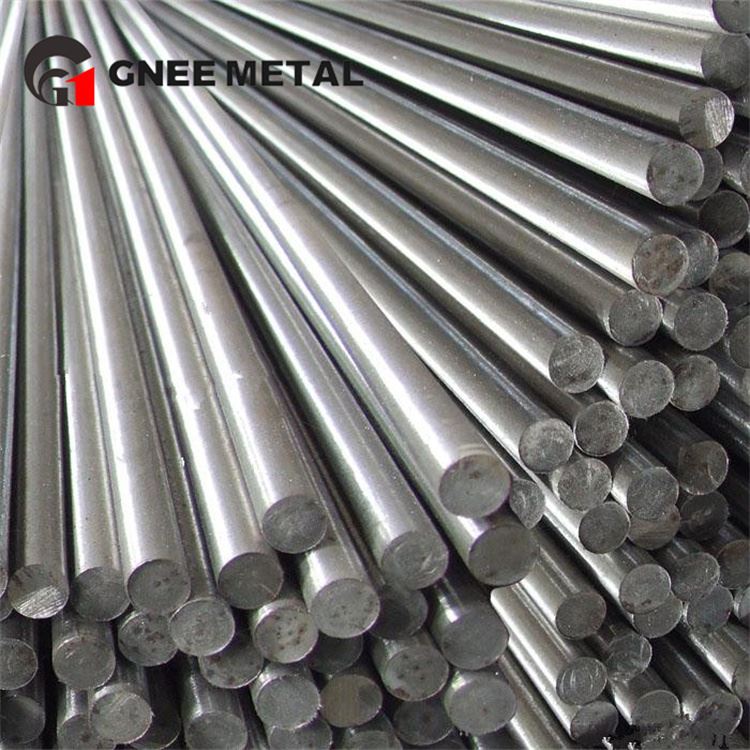
Hot Rolled Titanium Bar
Material: Commercially pure titanium and titanium alloys.
Common Grades: Grade 2, Grade 5, Grade 9, and Grade 12.
Diameter Reference: Ø10–200 mm.
Standard Stock Length Reference: 2–6 m.
Shape: Solid round bar.
Standard: ASTM B348/B348M.
Surface: Hot rolled, descaled, or machined.
Inspection: Chemical composition, tensile properties, dimensions, and surface condition.
Description
What is a hot-rolled titanium bar?
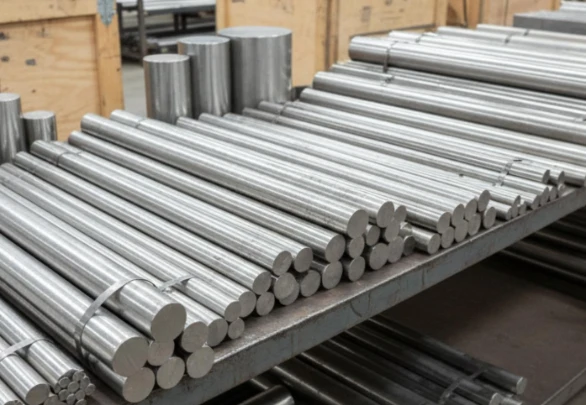
We supply hot rolled titanium bars for industrial machining, chemical processing, marine engineering, and mechanical component manufacturing. Available materials include commercially pure titanium and titanium alloys such as Grade 1, Grade 2, Grade 3, Grade 4, Grade 5, Grade 7, Grade 9, and Grade 12.
Hot rolled titanium bars are produced by heating titanium billets and reducing their cross-section through rolling passes. This process is suitable for producing solid bar stock in a range of diameters and lengths for subsequent machining and fabrication.
We can coordinate material selection, dimensional requirements, surface finishing, and inspection documentation according to your purchase specifications.
Hot Rolled Titanium Bar Specifications
| Specification | Common Procurement Reference |
|---|---|
| Product Shape | Round bar |
| Material Grades | Grade 1, 2, 3, 4, 5, 7, 9, 12, 23 |
| Diameter | Ø10–200 mm |
| Length | 2,000–6,000 mm |
| Manufacturing Process | Billet heating and hot rolling |
| Applicable Product Standard | ASTM B348/B348M |
| Delivery Condition | Hot worked; annealed condition when specified |
| Surface Condition | As-rolled, descaled, rough turned, or machined |
| Inspection Documents | Mill Test Certificate (MTC), chemical analysis, mechanical test results |
Available Titanium Grades
Different titanium grades are selected according to strength, corrosion resistance, ductility, and operating conditions. The following grades are commonly considered for industrial bar applications.
| Titanium Grade | Material Designation | Main Characteristics | Typical Applications |
|---|---|---|---|
| Grade 1 | Commercially Pure Titanium | Highest ductility among common CP grades; good corrosion resistance | Chemical equipment, formed components |
| Grade 2 | Commercially Pure Titanium | Balanced strength, formability, and corrosion resistance | Chemical processing, marine equipment |
| Grade 3 | Commercially Pure Titanium | Higher strength than Grades 1 and 2 | Industrial equipment and machined parts |
| Grade 4 | Commercially Pure Titanium | Highest strength among the four common CP grades | High-strength industrial components |
| Grade 5 | Ti-6Al-4V | High strength-to-weight ratio | Aerospace and mechanical components |
| Grade 7 | Titanium with Palladium | Improved corrosion resistance in reducing environments | Chemical processing equipment |
| Grade 9 | Ti-3Al-2.5V | Good strength and formability | Tubing-related components and lightweight structures |
| Grade 12 | Ti-0.3Mo-0.8Ni | Improved resistance to crevice corrosion in certain environments | Heat exchangers and chemical equipment |
| Grade 23 | Ti-6Al-4V ELI | Extra-low interstitial version of Grade 5 | Applications requiring enhanced fracture toughness |
Equivalent Grades of Hot Rolled Titanium Bars
| Material | ASTM Grade | UNS | ISO Grade Reference | GB Grade Reference | JIS Grade Reference |
|---|---|---|---|---|---|
| Commercially Pure Titanium | Grade 1 | R50250 | Grade 1 | TA1 | Class 1 |
| Commercially Pure Titanium | Grade 2 | R50400 | Grade 2 | TA2 | Class 2 |
| Commercially Pure Titanium | Grade 3 | R50550 | Grade 3 | TA3 | Class 3 |
| Commercially Pure Titanium | Grade 4 | R50700 | Grade 4 | TA4 | Class 4 |
| Ti-6Al-4V | Grade 5 | R56400 | Grade 5 | TC4 | Class 60 |
| Ti-0.2Pd | Grade 7 | R52400 | Grade 7 | TA9 | - |
| Ti-3Al-2.5V | Grade 9 | R56320 | Grade 9 | TC2 | - |
| Ti-0.3Mo-0.8Ni | Grade 12 | R53400 | Grade 12 | TA10 | - |
| Ti-6Al-4V ELI | Grade 23 | R56407 | Grade 23 | TC4 ELI-related designation requires specification verification | - |
Which Titanium Grade Should You Choose?
Choose Grade 2 when general corrosion resistance, good formability, and weldability are important.
Choose Grade 5 when high strength and weight reduction are key design requirements.
Choose Grade 7 when the service environment requires the enhanced corrosion resistance provided by palladium.
Choose Grade 9 when you need a balance of strength and formability.
Choose Grade 12 for certain chemical-processing environments where improved crevice corrosion resistance is required.
Choose Grade 23 when the extra-low interstitial composition and corresponding mechanical requirements are specified.
Send Your Required Titanium Grade and Dimensions
Chemical Composition of Common Titanium Grades
| Element | Grade 1 | Grade 2 | Grade 5 | Grade 7 | Grade 9 | Grade 12 | Grade 23 |
|---|---|---|---|---|---|---|---|
| Carbon, max. | 0.08 | 0.08 | 0.08 | 0.08 | 0.08 | 0.08 | 0.08 |
| Nitrogen, max. | 0.03 | 0.03 | 0.05 | 0.03 | 0.03 | 0.03 | 0.03 |
| Hydrogen, max. | 0.015 | 0.015 | 0.015 | 0.015 | 0.015 | 0.015 | 0.0125 |
| Iron, max. | 0.20 | 0.30 | 0.40 | 0.30 | 0.25 | 0.30 | 0.25 |
| Oxygen, max. | 0.18 | 0.25 | 0.20 | 0.25 | 0.15 | 0.25 | 0.13 |
| Aluminum | - | - | 5.5–6.75 | - | 2.5–3.5 | - | 5.5–6.5 |
| Vanadium | - | - | 3.5–4.5 | - | 2.0–3.0 | - | 3.5–4.5 |
| Palladium | - | - | - | 0.12–0.25 | - | - | - |
| Molybdenum | - | - | - | - | - | 0.2–0.4 | - |
| Nickel | - | - | - | - | - | 0.6–0.9 | - |
For Grade 5, aluminum and vanadium are the principal alloying elements. For Grade 9, the lower aluminum and vanadium contents provide a different strength and formability balance. Grade 7 uses palladium to improve corrosion resistance, while Grade 12 contains molybdenum and nickel.
Mechanical Properties
| Grade | Tensile Strength, min. | Yield Strength, min. | Elongation, min. | Reduction of Area, min. |
|---|---|---|---|---|
| Grade 1 | 240 MPa | 138 MPa | 24% | 30% |
| Grade 2 | 345 MPa | 275 MPa | 20% | 30% |
| Grade 3 | 450 MPa | 380 MPa | 18% | 30% |
| Grade 4 | 550 MPa | 483 MPa | 15% | 25% |
| Grade 5 | 895 MPa | 828 MPa | 10% | 25% |
| Grade 7 | 345 MPa | 275 MPa | 20% | 30% |
| Grade 9 | 620 MPa | 483 MPa | 15% | 25% |
| Grade 12 | 483 MPa | 345 MPa | 18% | 25% |
| Grade 23 | 828 MPa | 759 MPa | 10% | 15% |
Grade 2 offers a lower strength level than Grade 5 but provides higher minimum elongation.
Grade 5 is suitable when higher tensile and yield strength are required.
Grade 9 offers a middle ground between commercially pure titanium and Grade 5.
Grade 12 is considered when corrosion performance and moderate strength are both important.
Grade 23 has extra-low interstitial limits and should not be treated as interchangeable with standard Grade 5.
Hot Rolling Manufacturing Process

Billet Preparation: Select titanium billets with the required grade and initial cross-section.
Heating: Heat the billet within the qualified processing temperature range for the specific titanium alloy.
Hot Rolling: Pass the heated billet through rolling stands to reduce its cross-section.
Intermediate Rolling: Apply successive passes to achieve the required bar diameter and shape.
Cooling: Cool the rolled bar under controlled production conditions.
Straightening: Correct bending and improve the bar's straightness.
Cutting: Cut the bar into the specified commercial or order length.
Surface Treatment and Inspection: Remove surface scale when required, inspect dimensions, and perform the agreed tests.
Titanium requires careful temperature control during hot working. Excessive exposure to oxygen at elevated temperatures can produce an oxygen-enriched surface layer, commonly known as alpha case. This surface layer must be addressed through an appropriate removal or finishing process when required by the product specification.
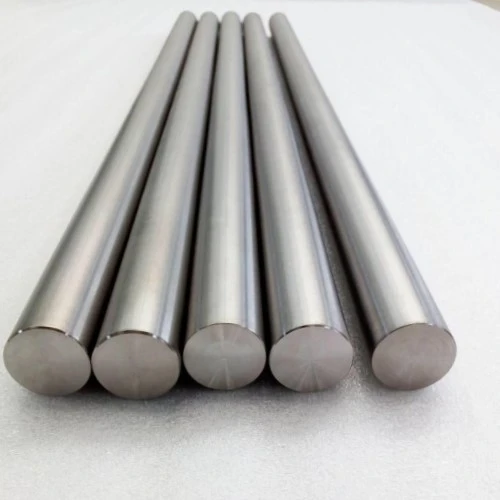
Hot Rolled vs. Forged vs. Cold Drawn Titanium Bar
These three products are manufactured through different processes and serve different procurement requirements.
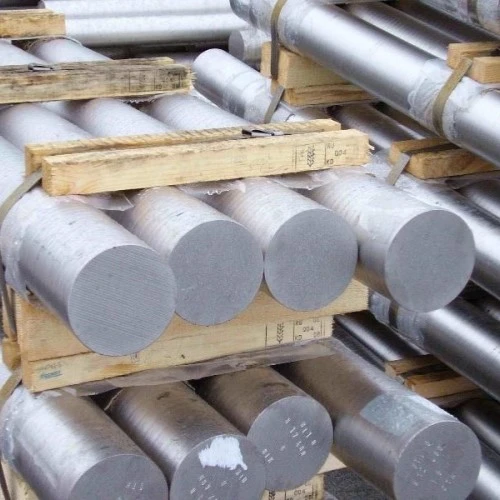
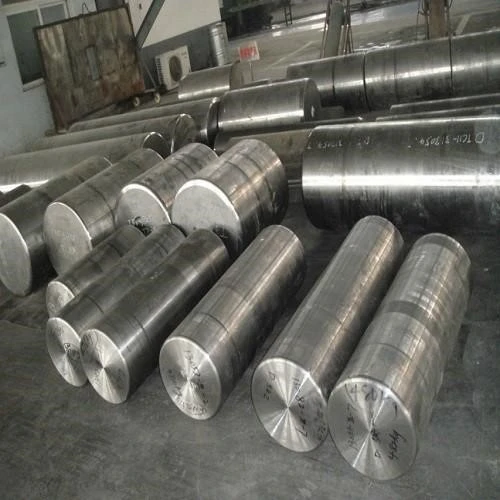
| Comparison | Hot Rolled Titanium Bar | Forged Titanium Bar | Cold Drawn Titanium Bar |
|---|---|---|---|
| Manufacturing Process | Hot rolling | Open-die or closed-die forging | Drawing through dies at room or controlled lower temperature |
| Typical Product Size | Medium and large bar sections | Medium to very large sections and special shapes | Generally smaller or precision-sized sections |
| Surface Condition | Hot-worked surface, often requiring descaling | As-forged or machined | Generally smoother |
| Dimensional Accuracy | Moderate; depends on rolling and finishing | Depends on forging and subsequent machining | Generally higher |
| Main Advantage | Efficient production of continuous bar stock | Suitable for large or specially shaped blanks | Better dimensional control and surface finish |
| Typical Use | General machining and industrial stock | Heavy-duty or large-section components | Precision-machined parts |
Choose hot rolled bars for general bar stock and machining blanks in regular round-bar dimensions.
Choose forged bars when the component requires a large cross-section, a special forged shape, or a forging-specific material route.
Choose cold drawn bars when closer dimensional tolerances and a smoother surface are more important than large-section availability.
Dimensions and Dimensional Tolerances
Dimensions are important when calculating machining allowances, material weight, cutting requirements, and production costs.
Common Diameter and Length Ranges
| Item | Procurement Reference |
|---|---|
| Round Bar Diameter | Ø10–200 mm |
| Common Small and Medium Diameters | Ø10–50 mm |
| Common Medium Diameters | Ø50–100 mm |
| Large Diameters | Ø100–200 mm |
| Standard Length Reference | 2,000–6,000 mm |
| Short Cut Lengths | 500–2,000 mm |
| Long Bar Lengths | 6,000 mm, subject to handling and production capability |
Diameter Tolerance and Machining Allowance
ASTM B348/B348M is a material specification, not a universal dimensional tolerance table for every hot rolled bar size. Diameter tolerance should therefore be stated separately in the purchase order.
| Nominal Bar Diameter | Suggested Diameter Allowance for Machining |
|---|---|
| Ø10–30 mm | 1–2 mm on diameter |
| Ø30–60 mm | 2–3 mm on diameter |
| Ø60–100 mm | 3–5 mm on diameter |
| Ø100–150 mm | 4–6 mm on diameter |
| Ø150–200 mm | 5–8 mm on diameter |
These are machining allowance suggestions, not hot rolled bar dimensional tolerances. Actual allowance must account for the bar's surface condition, scale, ovality, straightness, and final machining requirement.
For example, if the finished component requires a diameter of Ø50 mm, a Ø54 mm starting blank provides 2 mm of radial machining allowance. The actual blank should be selected after checking the bar's measured diameter and surface condition.
Length and Straightness Requirements
For procurement planning:
Standard commercial length: 2,000–6,000 mm.
Cut lengths: 500–2,000 mm can be specified for machining blanks.
Length tolerance: A starting purchase-order target of ±10 mm can be used for cut stock, subject to agreement.
Straightness: State the maximum permitted deviation over a defined measurement length, such as 1,000 mm or the full bar length.
Surface Conditions and Finishing Options
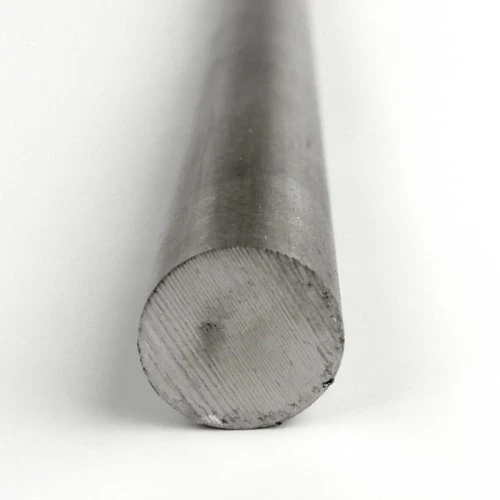
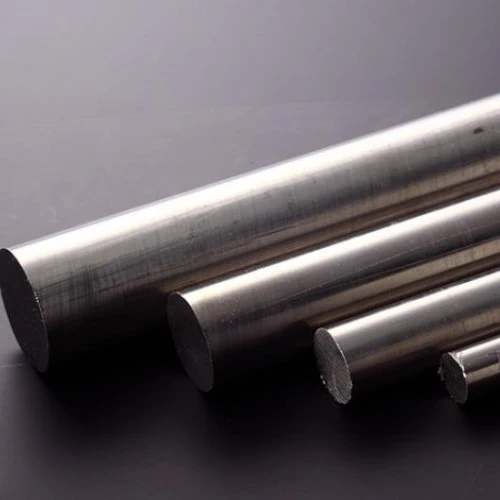
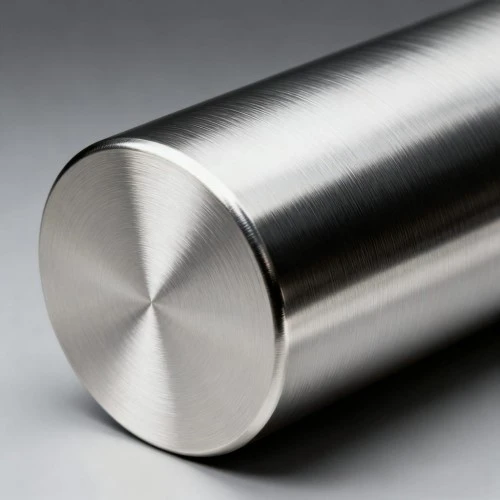
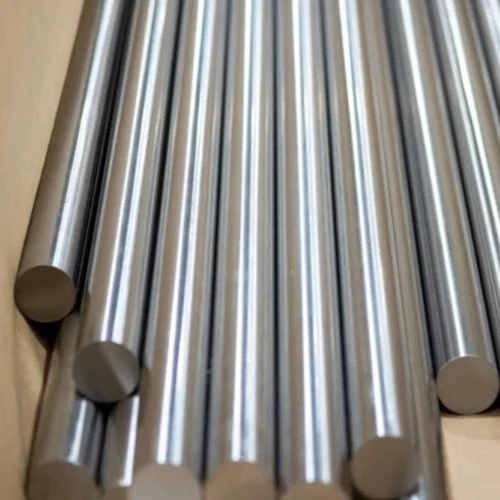
Hot rolled titanium bars may have different surface conditions depending on the production route and the customer's subsequent machining requirements.
| Surface Condition | Description | Suitable For |
|---|---|---|
| As-Rolled | Original hot-worked surface, generally with visible scale or surface discoloration | Applications where the full surface will be removed during machining |
| Descaled | Surface scale removed by an agreed mechanical or chemical process | General industrial machining |
| Pickled | Surface oxide and scale removed through chemical treatment | Applications requiring a cleaner metallic surface |
| Rough Turned | Surface machined to remove irregularities and provide a more uniform diameter | Machining blanks and intermediate processing |
| Ground | Surface processed by grinding for improved finish and dimensional control | Components requiring improved surface quality |
Which surface should you choose?
Choose as-rolled when the bar will undergo substantial machining and the original surface is acceptable.
Choose descaled or pickled when surface scale must be removed before further processing.
Choose rough turned when a more uniform starting diameter is needed for CNC machining.
Choose ground when surface finish and dimensional consistency are important.
Applications of Hot Rolled Titanium Bars
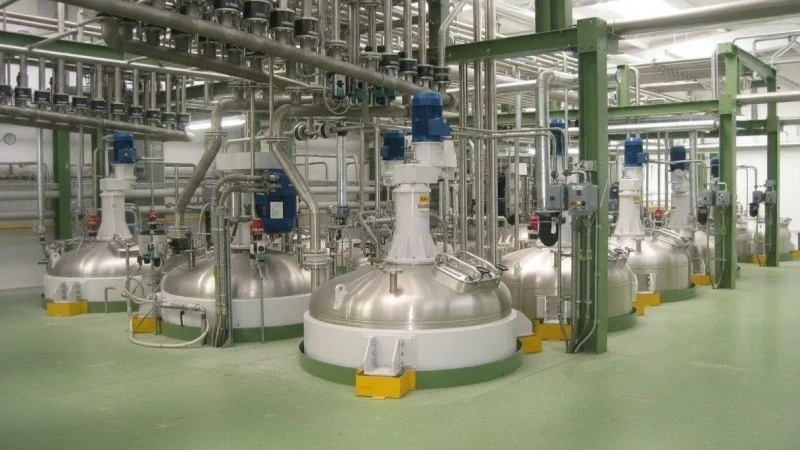
Chemical Processing Equipment
Grade 2, Grade 7, and Grade 12 bars are considered for machined components used in chemical processing equipment. Typical parts include valve components, pump shafts, fasteners, and equipment fittings.
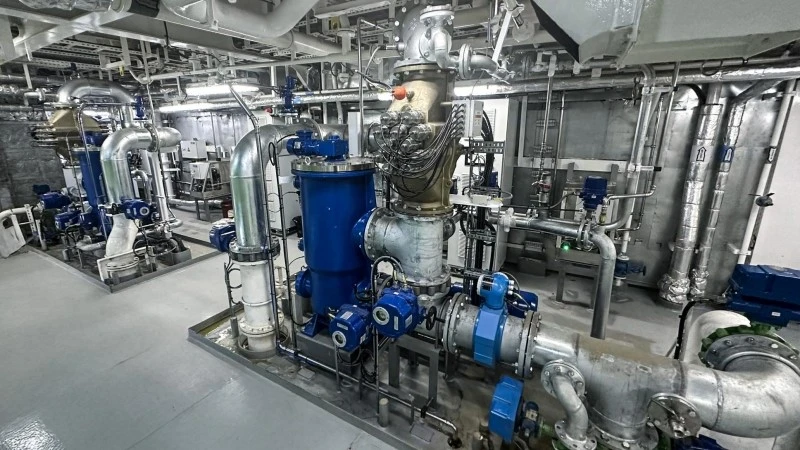
Marine Engineering
Titanium bars can be machined into marine equipment components exposed to seawater and other demanding environments.
Typical applications include pump components, shafts, fasteners, and selected marine equipment parts.
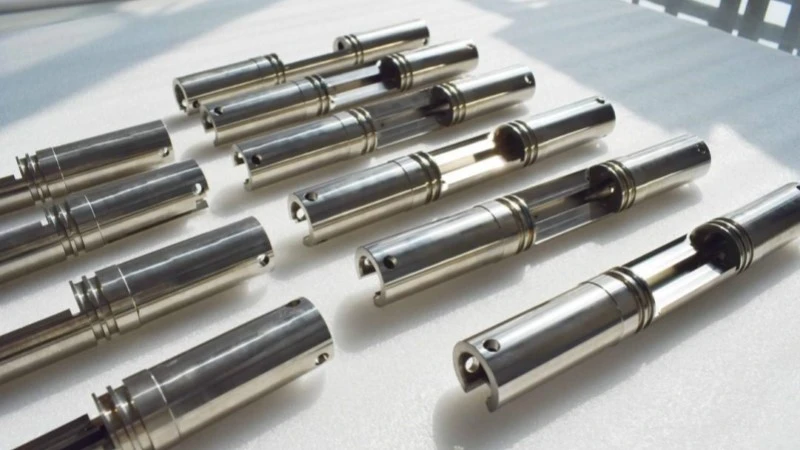
Oil and Gas Equipment
Titanium alloy bars may be used for selected components where weight reduction, corrosion resistance, and mechanical performance are important.
Potential applications include machined equipment parts, connectors, and specialty components.
Aerospace Components
Grade 5 and Grade 23 titanium alloy bars are used as machining stock for selected aerospace components.
Typical parts include structural fittings, brackets, and precision-machined components.
Quality Inspection and Testing

Chemical Composition Analysis

Dimensional Inspection

Dimensional Inspection

Tensile Test

Ultrasonic Testing
| Inspection Item | What Is Checked |
|---|---|
| Chemical Composition | Ti, alloying elements, and impurity limits |
| Tensile Test | Tensile strength, yield strength, elongation |
| Hardness Test | Material hardness |
| Dimensional Inspection | Diameter, length, ovality, straightness |
| Surface Inspection | Scale, cracks, laps, visible defects |
| Ultrasonic Testing | Internal discontinuities, when specified |
| Material Traceability | Heat number and product identification |
Delivery Conditions and Packaging
Estimated Delivery Time
The following are preliminary procurement planning estimates, not confirmed production commitments.
| Order Type | Estimated Lead Time |
|---|---|
| Standard Grade and Available Stock Sizes | 7–15 working days |
| Standard Grade, Made-to-Order Rolling | 30–45 calendar days |
| Special Grade or Non-Standard Diameter | 45–60 calendar days |
| Large Quantity or Multiple Production Lots | 45–75 calendar days |
| Additional UT or Special Inspection | Allow an additional 5–10 working days where required |
Lead time should be calculated from order confirmation, technical approval, and receipt of any required deposit or payment. It should include material preparation, rolling, finishing, inspection, and packing.
Actual shipment dates depend on raw material availability, production scheduling, inspection requirements, and order quantity. Confirm the delivery schedule in the quotation before placing the order.
Export Packaging
Titanium bars should be packed to prevent surface damage, contamination, and movement during transportation.

Protective Packaging for Titanium Bars

Titanium Bars with Wooden Crate Packaging

Titanium Bars Wrapped for Export

Titanium Bars Wrapped in Plastic Film

Titanium Round Bars in Wooden Export Crates
Typical export packing includes:
Bundling bars by grade and size.
Protective wrapping to reduce handling damage.
End protection where required.
Clear package labels showing grade, dimensions, quantity, and heat number.
Wooden crates or suitable export pallets for sea freight.
Packing lists and material documents accompanying the shipment.
Why Choose Our Titanium Bars
When purchasing titanium bars, buyers need more than a material grade and a quoted price. The dimensions, surface condition, inspection records, and delivery documents must also match the intended application.
We can coordinate the following requirements for your inquiry:
Grade Selection: Support selection among commercially pure titanium and titanium alloy grades.
Dimensional Coordination: Review diameter, length, cutting requirements, and machining allowance.
Surface Options: Coordinate hot-worked, descaled, pickled, and machined surface conditions.
Inspection Documentation: Arrange the agreed chemical, mechanical, dimensional, and additional inspection records.
Order Coordination: Review technical specifications and delivery requirements before quotation.
Export Packing: Prepare product identification and protective packaging for international shipment.
For special dimensions or application-specific requirements, provide the component drawing or technical specification so the material and processing route can be reviewed before quotation.
FAQ
Q: 1. What Is Hot Rolled Titanium Bar?
A: Hot rolled titanium bar is a solid titanium product manufactured by heating titanium billets and reducing their cross-section through rolling passes. It is commonly used as raw material for machining and industrial component manufacturing.
Q: 2. Which ASTM Standard Covers Titanium Bars?
A: ASTM B348/B348M is the main ASTM product specification for titanium and titanium alloy bars and billets. The applicable edition and required material condition should be stated in the purchase order.
Q: 3. What Is the Difference Between Hot Rolled and Forged Titanium Bar?
A: Hot rolled bars are produced through rolling passes, while forged bars are shaped through compressive deformation using forging equipment. Hot rolled bars are commonly selected for regular bar stock; forged bars are considered for large sections and components requiring a forging-specific manufacturing route.
Q: 4. What Is the Difference Between Grade 2 and Grade 5 Titanium Bar?
A: Grade 2 is commercially pure titanium with good corrosion resistance and formability. Grade 5 is Ti-6Al-4V, an alloy with substantially higher minimum tensile and yield strength. Choose Grade 2 for many corrosion-resistant industrial applications and Grade 5 when higher strength-to-weight performance is required.
Q: 5. Can Hot Rolled Titanium Bars Be Machined?
A: Yes. Hot rolled titanium bars are commonly used as machining blanks. Turning, milling, drilling, and cutting can be performed with suitable tooling and machining parameters. The required machining allowance should account for the actual bar diameter and surface condition.
Q: 6. Can You Supply Titanium Bars with Pickled or Machined Surfaces?
A: Surface options can be specified in the inquiry. State whether you require an as-rolled, descaled, pickled, rough-turned, or ground surface so the processing route and quotation can be evaluated.
Q: 7. Can You Provide an MTC?
A: The required material documentation should be agreed before order confirmation. For ASTM B348/B348M material, buyers commonly request a certificate showing the grade, heat number, chemical analysis, and mechanical test results.
Q: 8. What Information Is Needed for a Titanium Bar Quotation?
A: Please provide the following information:
Titanium grade
Diameter and length
Required quantity or total weight
Applicable standard and edition
Surface and delivery condition
Inspection requirements
Destination port or delivery address
Request a Quote for Hot Rolled Titanium Bars
Send us your titanium bar requirements for a technical and commercial review.
To help us quote accurately, include:
| Required Information | Example |
|---|---|
| Material Grade | Grade 2 / Grade 5 / Grade 9 |
| Standard | ASTM B348/B348M |
| Diameter | Ø50 mm |
| Length | 3,000 mm |
| Quantity | 500 kg |
| Surface | Descaled / Rough Turned |
| Inspection | MTC / UT, if required |
| Application | Chemical Equipment / Marine / Machining |
Have a drawing or technical specification? Send it with your inquiry so the dimensions, material condition, and machining allowance can be reviewed together.
Send Your Specifications for a Quotation
Hot Tags: hot rolled titanium bar, China hot rolled titanium bar manufacturers, suppliers, factory, titanium, bar of Gr2 titanium, Gr7 Titanium Bar, Ti Alloy Bar, Titanium Flat Bar, titanium rod for pump making, titanium rods manufacturers


