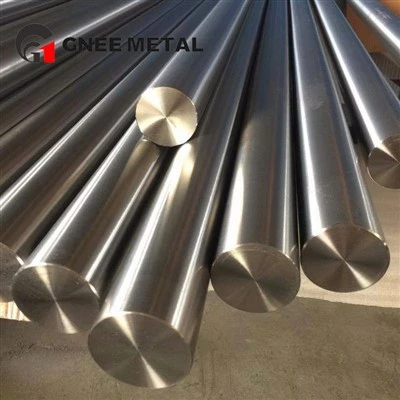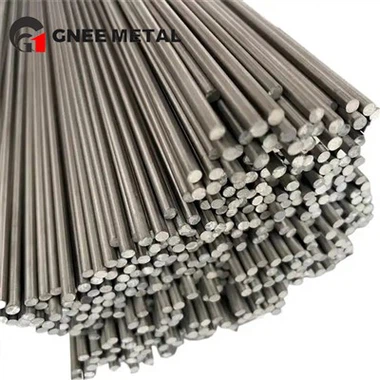

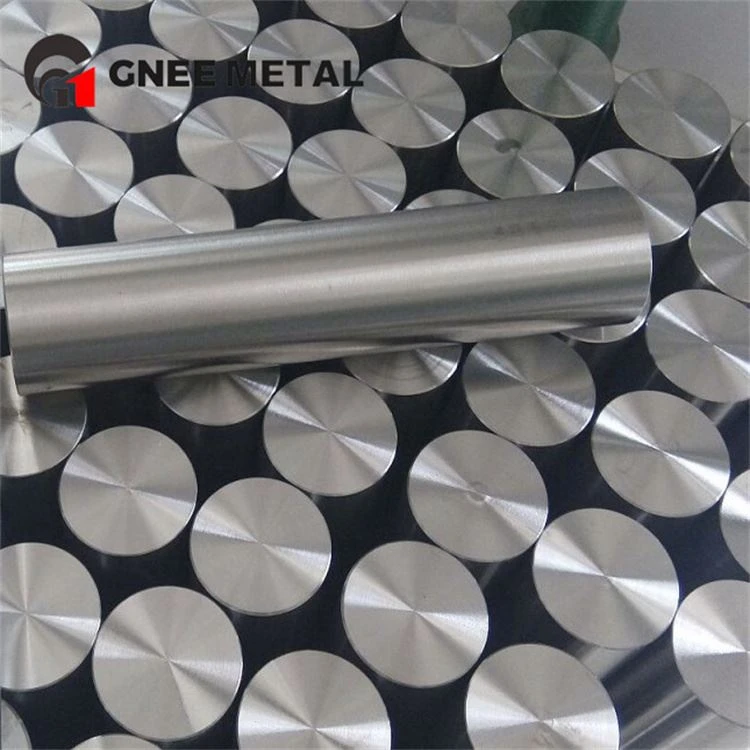
Titanium Forged Bar
Material Grades: Grade 2, Grade 5 (Ti-6Al-4V), Grade 7, Grade 12, Grade 23 (Ti-6Al-4V ELI).
Product Shapes: Round bars, square bars, rectangular bars, and forged billets.
Diameter: Ø50–500 mm for round forged bars.
Length: 1,000–3,000 mm.
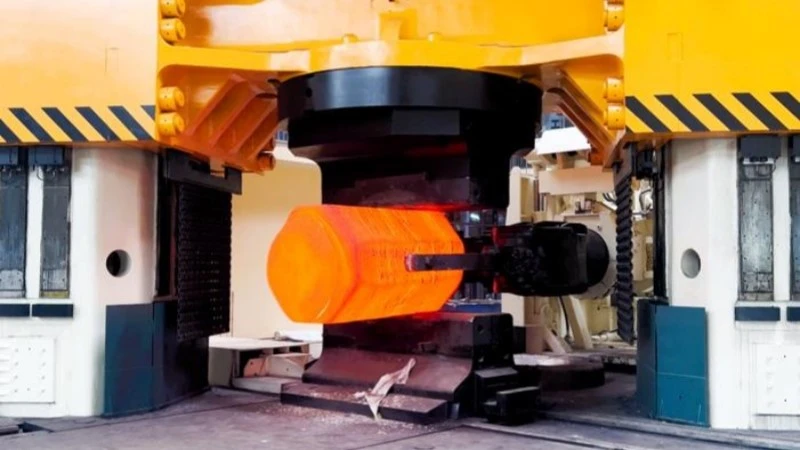
Manufacturing Process: Open-die forging and closed-die forging.
Applicable Standard: ASTM B381.
Heat Treatment: Annealed and stress-relieved conditions, as specified.
Surface Condition: As-forged, rough-machined, or machined.
Description
What is a titanium forged bar?
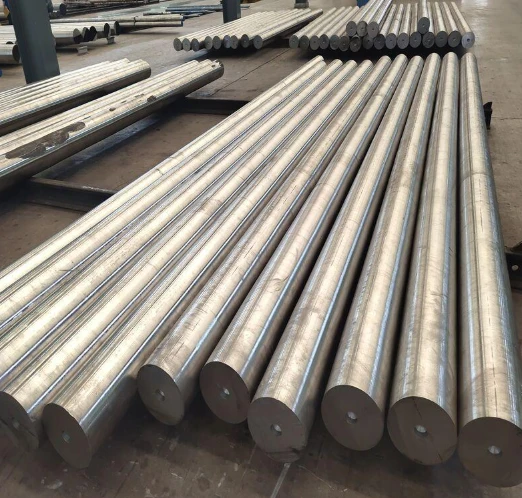
Titanium forged bars are produced by heating titanium billets or ingots and applying compressive force to form the required cross-section and dimensions. The forging process introduces controlled plastic deformation, helping refine the original cast structure and produce material suitable for demanding machining and industrial applications.
Compared with standard rolled titanium bars, forged titanium bars are particularly useful for large-section stock, heavy-duty components, and parts that require a specific forging route before machining.
Commercially pure titanium and titanium alloy forged bars
Round, square, and rectangular forged stock
As-forged, descaled, rough-machined, or machined surfaces
Annealed and other agreed heat-treated conditions
Ultrasonic testing and additional inspection upon request
Material test certificates and heat-number traceability
Titanium Forged Bar Specifications
The dimensions of titanium forged bars depend on the starting billet, forging equipment, material grade, deformation requirements, and final machining condition.
| Parameter | Specification / Reference |
|---|---|
| Product Name | Titanium Forged Bar |
| Material Types | Commercially Pure Titanium, Titanium Alloys |
| Common Grades | Grade 2, Grade 5, Grade 7, Grade 12, Grade 23 |
| Forging Standard | ASTM B381 |
| Related Bar Standard | ASTM B348 |
| Product Shape | Round, Square, Rectangular |
| Round Diameter | Ø50–500 mm |
| Length | 3,000 mm; confirm by order |
| Manufacturing Process | Open Die Forging / Closed Die Forging |
| Delivery Condition | As-Forged / Annealed / Other Agreed Heat-Treated Condition |
| Surface Condition | Black / Descaled / Rough Turned / Machined |
| Inspection | Chemical Analysis, Tensile Testing, Hardness Testing, UT, Dimensional Inspection |
| Certification | EN 10204 3.1 MTC, when specified and agreed |
Available Titanium Forged Bar Grades
Titanium forged bars can be produced from commercially pure titanium and different titanium alloys. The right grade depends on the required strength, corrosion resistance, operating temperature, and machining requirements.
| Material Grade | UNS | Chinese Grade Commonly Compared | Main Characteristics | Typical Applications |
|---|---|---|---|---|
| ASTM Grade 2 / Forging F-2 | R50400 | TA2 | Good corrosion resistance, ductility, and formability | Chemical equipment, marine components |
| ASTM Grade 5 / Forging F-5 | R56400 | TC4 | High strength-to-weight ratio and good mechanical performance | Aerospace and heavy-duty mechanical components |
| ASTM Grade 7 / Forging F-7 | R52400 | TA9 | Palladium-modified titanium with improved corrosion resistance in certain environments | Chemical processing equipment |
| ASTM Grade 12 / Forging F-12 | R53400 | TA10 | Molybdenum- and nickel-containing alloy with good corrosion resistance | Heat exchangers and chemical equipment |
| ASTM Grade 23 / Forging F-23 | R56407 | TC4 ELI is commonly compared, but not automatically equivalent | Extra-low-interstitial Ti-6Al-4V alloy | High-performance and fracture-sensitive components |
Grade 2 Titanium Forged Bar
Grade 2 is commercially pure titanium with good corrosion resistance and ductility.
It is commonly selected for chemical processing equipment, marine components, and industrial parts exposed to corrosive environments.
Choose Grade 2 when corrosion resistance and formability are more important than achieving the high strength of Ti-6Al-4V.
Grade 5 Titanium Forged Bar
Grade 5 is Ti-6Al-4V, containing approximately 6% aluminum and 4% vanadium.
It offers a substantially higher strength level than commercially pure titanium grades and is widely used for load-bearing components.
Choose Grade 5 when the component requires a high strength-to-weight ratio and reliable mechanical performance.
Grade 7 Titanium Forged Bar
Grade 7 is a palladium-modified commercially pure titanium grade. Its palladium addition improves corrosion resistance in certain reducing and acidic environments.
Choose Grade 7 when the service environment requires better corrosion resistance than standard commercially pure titanium can provide.
Grade 12 Titanium Forged Bar
Grade 12 is a titanium alloy containing molybdenum and nickel. It combines useful mechanical strength with corrosion resistance in selected chemical environments.
Choose Grade 12 when the application requires a balance of strength and corrosion resistance, particularly in chemical processing equipment.
Grade 23 Titanium Forged Bar
Grade 23 is Ti-6Al-4V ELI, with extra-low interstitial element limits compared with standard Grade 5.
It is selected for applications where fracture toughness and controlled interstitial content are important.
Choose Grade 23 when the drawing or application specifically requires the ELI material specification. Do not substitute ordinary Grade 5 solely because both alloys are Ti-6Al-4V.
Chemical Composition of Titanium Forged Bars
Chemical composition determines the titanium grade and influences corrosion resistance, strength, ductility, and heat-treatment response.
| Element | Grade 2 / F-2 | Grade 5 / F-5 | Grade 7 / F-7 | Grade 12 / F-12 | Grade 23 / F-23 |
|---|---|---|---|---|---|
| Aluminum (Al) | - | 5.50–6.75 | - | - | 5.50–6.50 |
| Vanadium (V) | - | 3.50–4.50 | - | - | 3.50–4.50 |
| Molybdenum (Mo) | - | - | - | 0.20–0.40 | - |
| Nickel (Ni) | - | - | - | 0.60–0.90 | - |
| Palladium (Pd) | - | - | 0.12–0.25 | - | - |
| Iron (Fe) | ≤0.30 | ≤0.40 | ≤0.30 | ≤0.30 | ≤0.25 |
| Oxygen (O) | ≤0.25 | ≤0.20 | ≤0.25 | ≤0.25 | ≤0.13 |
| Carbon (C) | ≤0.08 | ≤0.08 | ≤0.08 | ≤0.08 | ≤0.08 |
| Nitrogen (N) | ≤0.03 | ≤0.05 | ≤0.03 | ≤0.03 | ≤0.03 |
| Hydrogen (H) | ≤0.015 | ≤0.015 | ≤0.015 | ≤0.015 | ≤0.012 |
| Titanium (Ti) | Balance | Balance | Balance | Balance | Balance |
Composition notes:
Grade 2 is commercially pure titanium. Its corrosion resistance and mechanical behavior are strongly influenced by controlled interstitial elements, particularly oxygen and iron.
Grade 5 is Ti-6Al-4V. Aluminum and vanadium are its main alloying elements.
Grade 7 contains palladium, which improves corrosion resistance in certain chemical environments.
Grade 12 contains molybdenum and nickel, which contribute to its corrosion-resistant alloy characteristics.
Grade 23 is Ti-6Al-4V ELI, with tighter limits on interstitial elements such as oxygen and hydrogen.
Mechanical Properties of Titanium Forged Bars
| Forging Grade | Corresponding Material Grade | Tensile Strength (MPa) | Yield Strength (MPa) | Elongation (%) |
|---|---|---|---|---|
| F-2 | Grade 2 | ≥345 | ≥275 | ≥20 |
| F-5 | Grade 5 | ≥895 | ≥828 | ≥10 |
| F-7 | Grade 7 | ≥345 | ≥275 | ≥20 |
| F-12 | Grade 12 | ≥483 | ≥345 | ≥18 |
| F-23 | Grade 23 | ≥895 | ≥828 | ≥10 |
How Do These Properties Affect Material Selection?
Grade 2 / F-2: Its lower strength and good ductility make it suitable for corrosion-resistant industrial components that do not require the strength level of Grade 5.
Grade 5 / F-5: Its high tensile and yield strength make it suitable for load-bearing parts and components requiring a high strength-to-weight ratio.
Grade 7 / F-7: Its basic mechanical strength is similar to Grade 2, while palladium improves corrosion resistance in selected environments.
Grade 12 / F-12: Its moderate strength and alloy composition make it useful for chemical equipment where both mechanical performance and corrosion resistance matter.
Grade 23 / F-23: Its extra-low interstitial content makes it suitable for applications where fracture toughness and material consistency are important.
Titanium Forging Manufacturing Process
The forging process has a direct effect on the final material structure, mechanical properties, and internal quality of titanium forged bars.
Titanium requires controlled heating and deformation because its forging behavior changes significantly with temperature. The forging temperature range and deformation schedule must be selected according to the alloy grade and required material condition.

| Manufacturing Stage | Process Description | Quality Control Focus |
|---|---|---|
| 1. Billet Preparation | Select titanium ingots or billets with traceable material identification | Raw material grade and heat-number traceability |
| 2. Heating | Heat the billet according to the grade-specific forging procedure | Heating temperature and uniformity |
| 3. Initial Forging | Apply compressive force to reduce and reshape the billet | Deformation and material integrity |
| 4. Reheating | Reheat when required during multiple forging operations | Temperature control between forging stages |
| 5. Final Forging | Continue deformation to achieve the required section and forging dimensions | Final dimensions and deformation control |
| 6. Heat Treatment | Apply the specified annealing or other suitable heat treatment | Mechanical properties and microstructure |
| 7. Surface Processing | Remove oxide scale or machine the outer surface | Surface defects and machining allowance |
| 8. Cutting | Cut the forged material to the ordered length | Length and end-face quality |
| 9. Final Inspection | Perform the agreed chemical, mechanical, dimensional, and nondestructive tests | Compliance with purchase requirements |
Why Is Forging Deformation Important?
The original titanium ingot or billet has a cast structure. Forging applies plastic deformation to the material and can help break down and refine the original structure.
The degree of deformation matters because insufficient deformation may leave parts of the original cast structure insufficiently worked.
For this reason, buyers of critical titanium forgings should consider more than the final diameter. The starting billet, forging reduction, deformation sequence, heat treatment, and inspection requirements all contribute to the quality of the finished material.
Open Die Forging vs. Closed Die Forging
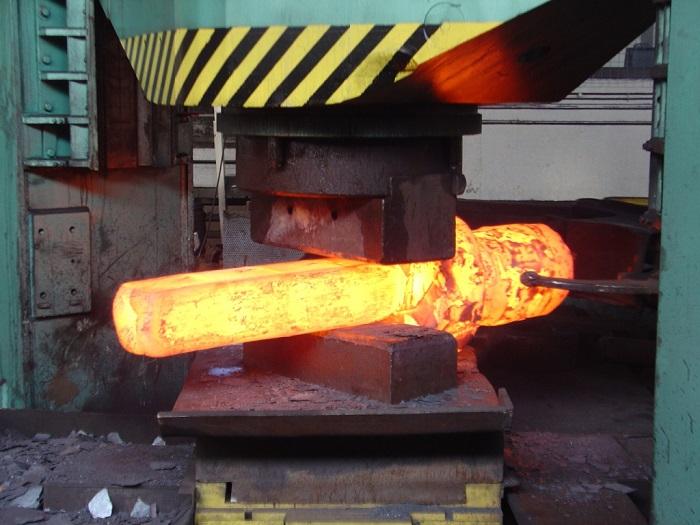
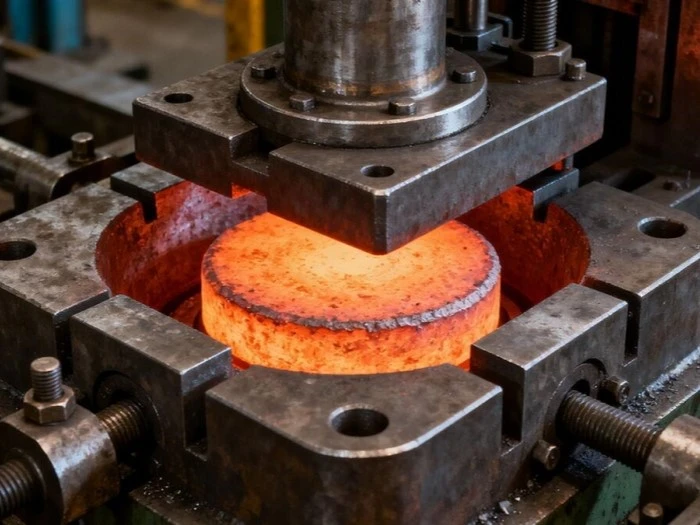
Open die forging and closed die forging are two different forging methods. The appropriate method depends on the required shape, size, production quantity, and tooling requirements.
| Comparison | Open Die Forging | Closed Die Forging |
|---|---|---|
| Die Structure | Uses relatively simple dies without a fully enclosed cavity | Uses shaped dies containing a defined cavity |
| Material Deformation | Material is compressed and reshaped between dies | Material flows within the die cavity |
| Shape Flexibility | Suitable for a wide range of large and simple shapes | Better suited to defined component geometries |
| Tooling Requirements | Generally lower tooling complexity | Requires dedicated die design and tooling |
| Typical Production | Large bars, billets, shafts, blocks | Near-net-shape components and repeat-production parts |
| Machining Allowance | Often requires more material removal | Can reduce machining allowance for suitable designs |
Which method should you choose?
Open Die Forging: A practical choice for large-diameter titanium bars, heavy sections, and machining blanks where the final component will be produced through subsequent machining.
Closed Die Forging: More suitable for components with a defined shape and repeat production requirements where dedicated tooling is economically justified.
Titanium Forged Bar vs. Rolled Bar vs. Cast Billet
| Comparison | Forged Bar | Rolled Bar | Cast Billet |
|---|---|---|---|
| Forming Method | Compressive deformation through forging | Plastic deformation through rolling | Solidification from molten titanium |
| Material Structure | Forging deformation can refine and break down the original cast structure | Rolling develops deformation along the rolling direction | Retains an as-cast structure unless subsequently worked |
| Shape and Size | Suitable for large sections and heavy blanks | Suitable for standard bar dimensions and long products | Commonly used as a starting material for further processing |
| Internal Quality | Depends on billet quality, forging reduction, process control, and inspection | Depends on starting material and rolling process | Depends on melting and casting quality |
| Typical Use | Heavy-duty components and large machining blanks | General industrial and machined components | Further forging, rolling, or other processing |
Forging is a suitable choice when the component requires a controlled forging process, particularly for large sections or demanding machining blanks. Rolled bars are often more economical for standard bar sizes. Cast billets are generally starting material for further processing rather than a direct substitute for finished forged bars.
Titanium Forged Bar Dimensions and Machining Allowance
Forged titanium bars are often purchased as machining blanks rather than finished precision bars. This makes the relationship between the forged dimensions and the final component dimensions particularly important.
Common Dimensions of Titanium Forged Bars
Titanium forged bars are commonly supplied in large cross-sections for heavy machining and industrial component manufacturing.
| Product Shape | Dimension Range | Common Length Range |
|---|---|---|
| Round Forged Bar | Ø50–500 mm | 1,000–3,000 mm |
| Square Forged Bar | 50 × 50–500 × 500 mm | 1,000–3,000 mm |
| Rectangular Forged Bar | 50–300 mm thick × 100–600 mm wide | 1,000–3,000 mm |
| Large Forged Billet | 100–600 mm across the main section | 1,000–2,000 mm |
Common Round Bar Diameter Groups
| Diameter Range | Typical Procurement Use |
|---|---|
| Ø50–100 mm | Medium-size shafts, mechanical parts, and CNC machining blanks |
| Ø100–200 mm | Pump components, valve parts, and industrial equipment |
| Ø200–300 mm | Large shafts, heavy-duty components, and machined equipment parts |
| Ø300–500 mm | Large-section forgings for heavy industrial and engineering applications |
Machining Allowance and Dimensional Tolerance
Forged bars are generally supplied with additional material for subsequent machining. The required allowance depends on the forging surface, blank dimensions, and final component tolerance.
| Item | Practical Procurement Reference |
|---|---|
| Radial Machining Allowance | 5–15 mm per side for preliminary planning |
| Length Allowance | 20–50 mm total for cutting and end machining |
| As-Forged Diameter Tolerance | Commonly planned around ±5–15 mm for large open-die forged sections |
| Rough-Turned Diameter Tolerance | Typically specified within ±1–3 mm, subject to diameter and machining route |
| Finished Machined Diameter | According to the component drawing; tighter tolerances require a separate machining specification |
| Straightness | Specify the maximum deviation over the full bar length in the purchase order |
Machining Allowance Example
Suppose a finished component requires a diameter of Ø100 mm.
| Item | Dimension |
|---|---|
| Finished Component Diameter | 100 mm |
| Selected Forged Blank Diameter | 120 mm |
| Total Diameter Allowance | 20 mm |
| Radial Allowance | 10 mm per side |
This provides 10 mm of material on each side for machining. The final blank size should also account for the actual forging surface and dimensional variation.
Titanium Forged Bar Surface Treatment
The surface condition affects the amount of material available for machining, the dimensional accuracy of the supplied blank, and the preparation required before further processing.
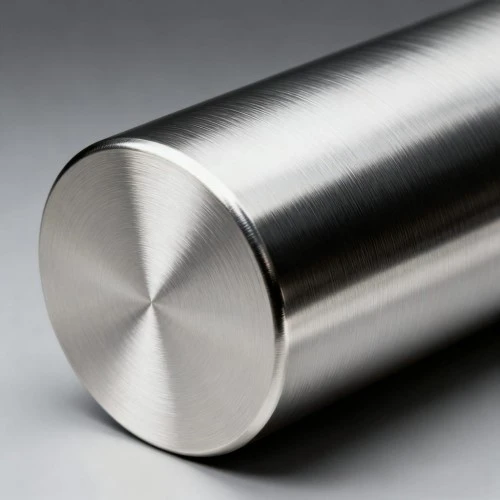
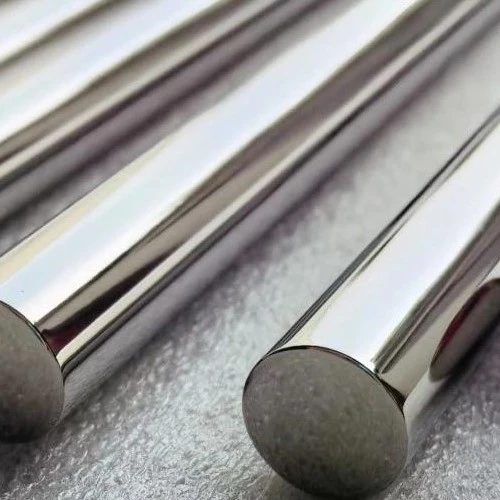
| Surface Condition | Processing Method | Surface Characteristics | Main Benefits | Typical Applications |
|---|---|---|---|---|
| As-Forged / Black | Supplied with forging scale | Dark, oxidized surface | Retains more of the forged section for subsequent machining | Heavy machining blanks |
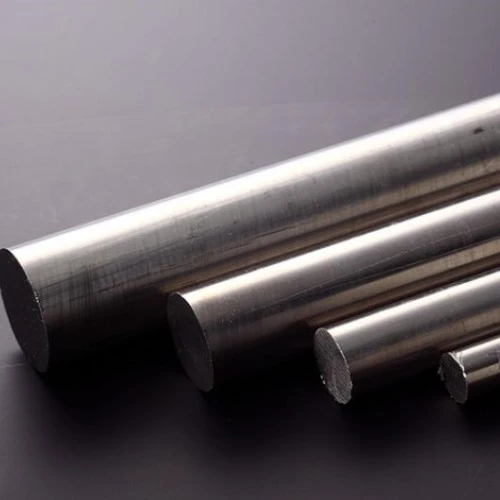
| Descaled | Mechanical removal of oxide scale | Matte metallic surface | Removes surface scale before further processing | General industrial use |
| Pickled | Chemical removal of oxide scale | Clean metallic surface | Removes oxide and surface contamination | Corrosion-resistant components |
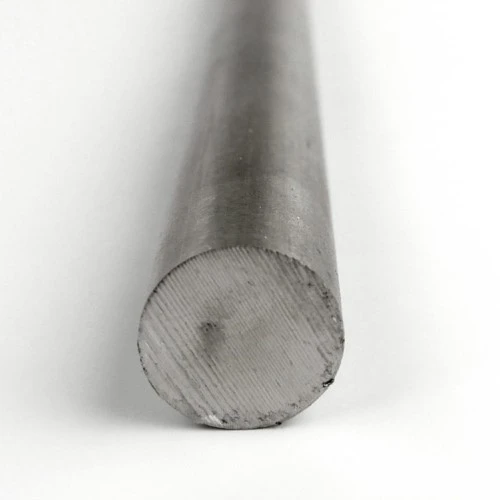
| Rough Turned | Outer surface removed by turning | Regular cylindrical surface with machining marks | Improves dimensional consistency and removes surface layers | CNC machining stock |
| Finish Machined | Precision turning or other machining | More uniform surface and controlled dimensions | Reduces subsequent machining work | Components requiring closer dimensional control |
How to Choose the Surface Condition?
As-Forged / Black: Suitable when the customer plans to remove the outer material during machining.
Descaled: Suitable when the oxide scale must be removed before further processing.
Pickled: Suitable when a clean metallic surface is required.
Rough Turned: Suitable when a more regular diameter and a defined machining blank are needed.
Finish Machined: Suitable when the buyer needs a more closely controlled supplied dimension.
Titanium Forged Bar Delivery Conditions
Delivery condition refers to the metallurgical and processing condition of the titanium forged bar when supplied. It affects mechanical properties, hardness, ductility, and subsequent machining performance.
| Delivery Condition | Processing Description | Material Characteristics |
|---|---|---|
| As-Forged | Supplied after the forging operation without final machining | Properties depend on grade, forging temperature, and subsequent processing |
| Annealed | Heated and cooled under a specified heat-treatment procedure | Provides a specified and controlled material condition |
| Solution Treated | Heated into a specified solution-treatment range and cooled according to the alloy procedure | Alters the alloy microstructure |
| Solution Treated and Aged | Solution treatment followed by controlled aging | Can increase strength in suitable alloys |
How to Select the Delivery Condition?
As-Forged: Suitable when the buyer requires a forging blank for further heat treatment or machining.
Annealed: Suitable when the order requires the mechanical properties and condition specified by the applicable forging standard.
Solution Treated: Suitable for specific alloy applications requiring a defined solution-treated condition.
Solution Treated and Aged: Suitable when the alloy and specification require an aged condition to achieve the required properties.
Quality Inspection and Testing

Chemical Composition Analysis

Dimensional Inspection

Dimensional Inspection

Tensile Test

Ultrasonic Testing
| Inspection Method | What It Checks |
|---|---|
| Chemical Composition Analysis | Titanium grade and alloying element content |
| Tensile Testing | Tensile strength, yield strength, and elongation |
| Hardness Testing | Material hardness |
| Ultrasonic Testing (UT) | Internal discontinuities |
| Metallographic Examination | Microstructure and grain condition |
| Dimensional Inspection | Diameter, length, straightness, and section dimensions |
| Surface Inspection | Cracks, laps, seams, and other visible defects |
Request UT and Inspection Details
Applications of Titanium Forged Bars
Titanium forged bars are used as starting material for components that require specific mechanical properties, corrosion resistance, or substantial machining.
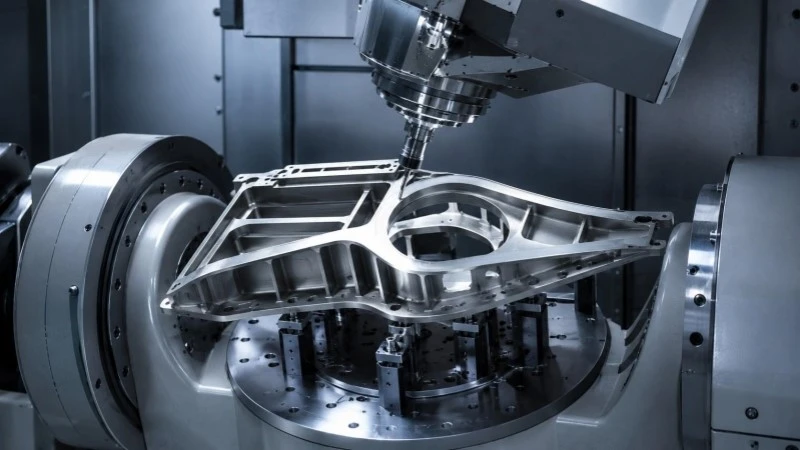
Aerospace Components
Grade 5 and Grade 23 titanium alloys are used in selected aerospace structural and mechanical components.
Typical applications include:
Structural machining blanks
Load-bearing components
High-strength mechanical parts
Components manufactured from large-section titanium stock
Chemical Processing Equipment
Commercially pure titanium, Grade 7, and Grade 12 are used in suitable chemical-processing environments.
Typical applications include:
Equipment shafts and structural parts
Corrosion-resistant components
Pump and valve components
Machined equipment blanks
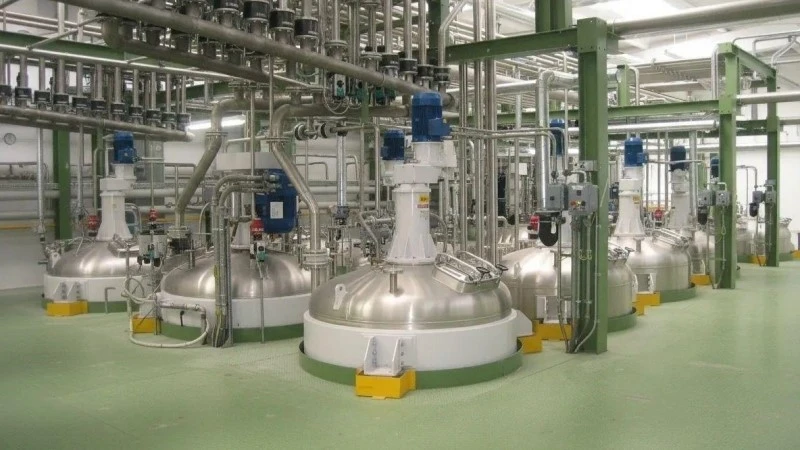
Marine Engineering
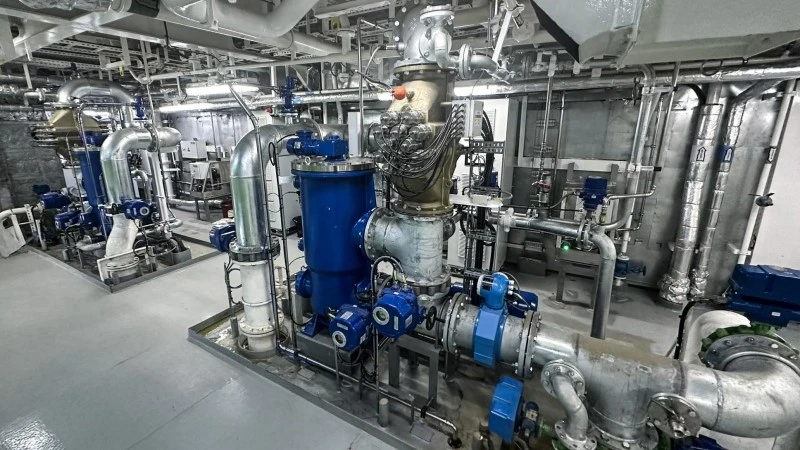
Titanium's corrosion resistance makes it useful in selected marine applications, especially where seawater exposure and low component weight are important.
Typical applications include:
Marine mechanical components
Corrosion-resistant shafts
Pump components
Special-purpose marine equipment parts
Heavy Industrial Machinery
Large-section titanium forged bars can be used as machining stock for components that require a substantial cross-section.
Typical applications include:
Heavy-duty shafts
Industrial equipment components
Large machined parts
Special mechanical components
Packing and Delivery

Protective Packaging for Titanium Bars

Titanium Bars with Wooden Crate Packaging

Titanium Bars Wrapped for Export

Titanium Bars Wrapped in Plastic Film

Titanium Round Bars in Wooden Export Crates
Titanium forged bars are packed according to their size, surface condition, weight, and transportation requirements.
| Item | Packing / Delivery Details |
|---|---|
| Surface Protection | Suitable protective wrapping or agreed surface protection |
| Bundling | Secure steel strapping or other suitable restraints |
| Individual Pieces | Separated or supported to reduce impact and surface damage |
| End Protection | Applied where required for machined or finished ends |
| Product Marking | Grade, dimensions, heat number, and batch identification |
| Packing Method | Wooden cases, crates, or other suitable export packing |
| Documents | MTC, inspection reports, packing list, and agreed shipping documents |
Delivery Time
|
Order Type |
Estimated Delivery Time |
|---|---|
|
Standard Grade 2 Forged Bars |
30–45 days |
|
Standard Grade 5 (Ti-6Al-4V) Forged Bars |
35–50 days |
|
Grade 7 / Grade 12 Forged Bars |
40–55 days |
|
Grade 23 (Ti-6Al-4V ELI) Forged Bars |
45–60 days |
|
Large-Diameter Forgings (Ø300–500 mm) |
50–70 days |
|
Forged Bars Requiring UT and Additional Inspection |
Add 5–10 days |
FAQ
Q: 1. What is the difference between titanium forged bar and titanium round bar?
A: Titanium forged bar refers to material produced through a forging process. Titanium round bar describes the product's shape. A forged bar can also be round, but not every round bar is forged. Buyers should confirm the manufacturing route and governing material specification.
Q: 2. What is the main standard for titanium forged bars?
A: ASTM B381 is the principal ASTM specification for titanium and titanium alloy forgings. ASTM B348 covers titanium and titanium alloy bars and billets. The applicable standard depends on the actual product form and purchase requirements.
Q: 3. What is the difference between ASTM Grade 5 and Forging Grade F-5?
A: Grade 5 is the familiar titanium alloy designation for Ti-6Al-4V. Under ASTM B381, the corresponding forging designation is F-5. The purchase order should identify the forging standard and grade rather than relying only on the general alloy name.
Q: 4. Can titanium forged bars be supplied in large diameters?
A: Yes, large-section titanium forged bars can be produced through appropriate forging routes. Published supplier examples include round forged bars around Ø50–500 mm. The actual available diameter depends on the grade, billet size, forging equipment, deformation requirements, and order quantity.
Q: 5. Is ultrasonic testing necessary for titanium forged bars?
A: Not every order requires UT. It is particularly worth considering for large-section material and critical components where internal discontinuities could affect service performance. The inspection class, coverage, and acceptance criteria should be specified in the purchase order.
Q: 6. What is the difference between as-forged and annealed titanium forged bars?
A: As-forged describes the material after the forging operation, before any additional agreed final processing. Annealed describes a heat-treated condition. An as-forged bar may subsequently be annealed, depending on the material grade and required mechanical properties.
Q: 7. How much machining allowance should be left on a titanium forged bar?
A: There is no universal machining allowance for all titanium forged bars. It depends on the blank diameter, forging surface condition, dimensional variation, material removal, and final component tolerance. Provide the finished drawing so that the required blank dimensions can be reviewed.
Q: 8. Can titanium forged bars be supplied with EN 10204 3.1 certificates?
A: A 3.1 material test certificate can be supplied when included in the agreed order documentation. The certificate should identify the material grade, heat number, chemical analysis, mechanical test results, and applicable specification.
Q: 9. Can titanium forged bars be supplied in custom shapes?
A: Round bars are common, but square, rectangular, and drawing-based forging blanks can also be reviewed. Feasibility depends on the required section, forging route, production quantity, and machining allowance.
Request a Quote for Titanium Forged Bars
If you are sourcing titanium forged bars for machining, industrial equipment, or special engineering projects, send us your material and dimensional requirements for technical review.
To help us prepare an accurate quotation, please provide:
| RFQ Information | Details to Provide |
|---|---|
| Material Grade | Grade 2, Grade 5, Grade 7, Grade 12, Grade 23, or other specified grade |
| Standard | ASTM B381 or other required specification and revision |
| Product Shape | Round, square, rectangular, or drawing-based blank |
| Dimensions | Diameter or section dimensions and length |
| Quantity | Pieces or total weight |
| Delivery Condition | As-Forged, Annealed, or other agreed condition |
| Surface Condition | Black, Descaled, Rough Turned, or Machined |
| Inspection | UT, tensile testing, hardness, dimensional inspection, etc. |
| Documentation | MTC, inspection reports, and other required certificates |
Have a component drawing? Send the drawing with the finished dimensions and machining requirements. We can review the proposed forging blank and discuss the appropriate material and production route.
Upload Your Titanium Forging Drawing
Hot Tags: titanium forged bar, China titanium forged bar manufacturers, suppliers, factory, titanium, Titanium Alloy Rod, Titanium Rectangle Gr7 Bar, titanium rod for elbow making, titanium rod for flange making, titanium rod for tee making, Titanium Square Bar