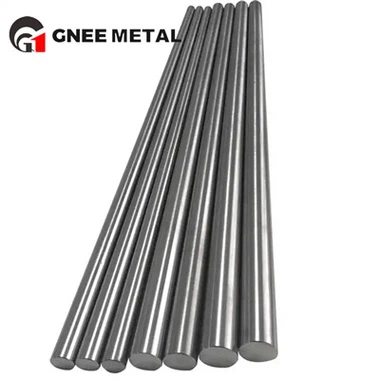

GR1 Titanium Pipe Data Sheet
May 14, 2026
What Is Titanium Gr 1 Pipe
GR1 titanium pipe is one of the most widely used commercially pure titanium grades, favored for forming and corrosion-resistant applications. GR1 is the softest and most ductile CP grade; the commonly quoted workhorse descriptions in the industry apply to the CP family as a whole, with Grade 2 being the most widely used CP grade overall. GR1 is selected where maximum formability is required.
Annealing and Temperature Capability
The annealing temperature of GR1 titanium pipe/tube is 700-785 deg C. ASTM B338 grade 1 pipe has excellent tensile properties at ambient temperature and beneficial creep resistance for service up to 300 deg C (570 deg F).
Key Properties
Grade 1 titanium has high specific strength, low weight, excellent corrosion resistance, and biocompatibility. Resistance to fatigue and crack propagation is excellent. GR1 tube is heat treatable and has good strength and ductility along with good weldability and fabricability.
Applications
Paper and pulp companies, high-pressure applications, oil and gas industry, chemical refineries, pipelines, high-temperature applications, water pipelines, nuclear power plants, food processing and dairy industries, boilers and heat exchangers. GR1 titanium heat exchanger tubes are a common application; GR1 titanium for chemical processing includes refinery piping and reactor components.
Specifications
Standard: ASTM B338, ASTM B861, ASME SB861. Wall thickness: 1-100 mm. Diameter: customized per requirement. Production: hot-rolled, cold-rolled, seamless, or welded. Werkstoff Nr.: 3.7025. UNS: R50250.
Chemical Composition (Max, Percent)
| Element | C | N | O | H | Fe | Ti |
|---|---|---|---|---|---|---|
| GR1 | 0.08 | 0.03 | 0.18 | 0.015 | 0.20 | Balance |
Mechanical Properties
Tensile strength 240 MPa min; yield strength 170 MPa min (some specifications show 138 MPa; confirm the value against the specific standard and revision); elongation 24 percent min.
Frequently Asked Questions
What is the annealing temperature range? 700-785 deg C, which relieves residual stresses from cold working and restores ductility.
What is the Werkstoff number equivalent? 3.7025; the UNS number is R50250.
What is the maximum oxygen content? 0.18 percent, which gives GR1 its high ductility and formability.
Can GR1 be used above 300 deg C? It has beneficial creep resistance up to 300 deg C; above this temperature it may experience gradual oxidation and strength reduction.
Is GR1 biocompatible? Yes, medical grade 1 titanium conforming to ASTM F67 is used for surgical implants and devices.
Q: What is the density of GR1 titanium pipe?
About 4.51 g/cm3, roughly 56 percent of the density of carbon steel, which is why titanium piping offers significant weight savings in offshore, marine, and high-rise process systems.
Q: What standards and equivalents cover GR1 titanium pipe?
ASTM B861 for seamless pipe, ASTM B338 for heat exchanger tube, and ASME SB861; the UNS number is R50250 and the Werkstoff number is 3.7025. For medical use ASTM F67 grade 1 and ISO 5832-2 apply, and the Chinese designation is TA1.
Q: How is GR1 titanium pipe welded?
Gas tungsten arc welding (TIG) with high-purity argon shielding on both the face and the root is standard; surfaces must be clean and dry, matching filler such as ERTi-1 is used, and thin-wall pipe needs no preheat.
Q: What surface conditions are available for GR1 pipe?
Annealed and pickled, bright annealed, or as-rolled surfaces; ground and polished finishes can be supplied on request, and pipe is normally delivered with plastic end caps and protective packaging to prevent scratches in transit.
Q: What is the modulus of elasticity of GR1 titanium?
About 103 GPa at room temperature, roughly half that of carbon steel, which must be considered in piping stiffness, vibration, and thermal expansion design.