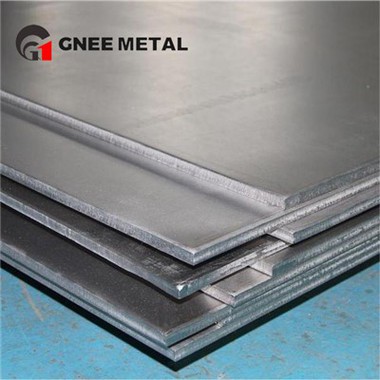
Grade 1 Titanium
May 14, 2026
What Is Titanium GR1 Pipe?
Titanium GR1 pipe is a commercially pure titanium alloy renowned for its exceptional corrosion resistance, high flexibility, and soft strength. GR1 titanium pipe offers superior formability and outstanding performance in extreme environments, making it a preferred choice for many applications.
GR1 titanium tube is composed of 99.5% pure titanium. This high purity gives titanium CP1 its characteristic softness and ductility. ASTM B338 grade 1 pipe balances strength with flexibility, making it suitable for a wide range of industrial uses.

GR1 Titanium Pipe Key Features
Superior Corrosion Resistance – Ideal for harsh environments, titanium grade 1 offers unmatched protection against corrosion
High Ductility – GR1 titanium tube is easily formed and shaped, perfect for applications requiring intricate designs
Soft Strength – Balances strength with flexibility
Excellent Formability – Allows for diverse applications
GR1 Titanium Pipe Specifications
| Property | Value |
|---|---|
| Material Composition | 99.5% GR1 titanium |
| Titanium grade 1 density | 4.51 g/cm³ |
| Tensile Strength | 240 MPa |
| GR1 titanium yield strength | 170 MPa |
| Elongation | 24% |
| Grade 1 titanium hardness | 70 HRB (Rockwell B) |
| Melting Point | 1660°C |
| Maximum Operating Temp | 300°C |
| Thermal Conductivity | 22 W/m-K |
| Standard (Pipe/Tube) | ASTM B338 / B861 / B862 |
| UNS | R50250 |
| Werkstoff NR. | 3.7025 |
GR1 Titanium Tube Applications
GR1 titanium tube is used in the following industries:
| Industry | Typical Use for GR1 Titanium Pipe |
|---|---|
| Chemical Processing | GR1 titanium for chemical processing – reactors, heat exchangers, piping |
| Aerospace | Airframe components where formability is critical |
| Medical | Medical grade 1 titanium – ASTM F67 grade 1 surgical instruments |
| Marine | Seawater cooling lines, GR1 titanium heat exchanger tubes |
| Automotive | Lightweight exhaust and structural components |
| Architecture | Cladding and structural elements |
GR1 titanium for deep drawing is a common specification for formed components in these industries.
GR1 Titanium Pipe Equivalent Standards
| STANDARD | DESIGNATION |
|---|---|
| ASTM B338 grade 1 | Titanium Pipe |
| ASTM B861 grade 1 | Titanium Seamless Tube |
| ASTM B862 GR1 | Titanium Welded Tube |
| UNS | R50250 |
| Werkstoff NR. | 3.7025 |
FAQ
Q1: What is the material composition of ASTM B338 grade 1 titanium pipe?
A: ASTM B338 grade 1 titanium pipe is composed of 99.5% pure titanium. This high purity gives GR1 titanium its superior corrosion resistance and high ductility. The remaining 0.5% consists of iron, oxygen, carbon, nitrogen, and hydrogen within specified maximum limits.
Q2: Can GR1 titanium tube be customized for specific industrial applications?
A: Yes, GR1 titanium tube can be tailored to meet specific requirements including dimensions (OD and wall thickness), lengths, and surface finishes. Customized GR1 titanium tube is available from GR1 titanium tube manufacturers to suit various industrial applications such as chemical heat exchangers or marine piping systems.
Q3: What industries use GR1 titanium pipe most commonly?
A: GR1 titanium pipe is widely used in aerospace, medical, chemical processing, marine, automotive, and architectural industries. GR1 titanium for chemical processing includes reactor and heat exchanger tubing. Medical grade 1 titanium (ASTM F67 grade 1) is used for surgical implants and instruments.
Q4: Can grade 1 titanium be coated for enhanced surface properties?
A: Yes, grade 1 titanium can be coated with various materials to enhance surface properties such as wear resistance or further improved corrosion resistance. GR1 titanium MMO anode applications use a mixed metal oxide coating on grade 1 titanium anode/cathode substrates.
Q5: What is the density of titanium grade 1 pipe in g/cm³?
A: Titanium grade 1 density is 4.51 g/cm³. This low density makes GR1 titanium pipe approximately 44% lighter than stainless steel pipe of the same dimensions. GR1 titanium tube offers a high strength-to-weight ratio for aerospace and marine applications.
Q6: What is the maximum operating temperature for GR1 titanium tube?
A: The maximum operating temperature for GR1 titanium tube is 300°C. Above this temperature, GR1 titanium may experience gradual oxidation and strength reduction. For sustained high temperature service above 300°C, buyers should compare GR1 vs GR5 titanium properties.
Q7: What is the yield strength of ASTM B861 grade 1 titanium tube?
A: The minimum GR1 titanium yield strength for ASTM B861 grade 1 titanium tube is 170 MPa (shown in specifications above). Some standards specify 138 MPa minimum. Buyers should confirm the required GR1 titanium yield strength with their GR1 titanium tube suppliers based on the specific standard revision.
Q8: Is GR1 titanium pipe suitable for marine environments?
A: Yes, GR1 titanium pipe offers superior corrosion resistance in marine environments. GR1 titanium tube is highly resistant to seawater corrosion, chloride attack, and biofouling. Many GR1 titanium heat exchanger tubes are installed in offshore platforms and shipboard cooling systems.
Q9: What is the melting point of ASTM B862 GR1 titanium welded tube?
A: The melting point of ASTM B862 GR1 titanium welded tube is 1660°C (slightly lower than the 1670°C shown in other sources). GR1 titanium maintains its structure up to this temperature, though practical operating limits are much lower at 300°C maximum.
Q10: How does the price of GR1 titanium pipe compare to other grades?
A: GR1 titanium price per kg is typically moderate compared to other titanium grades. Titanium grade 1 cost is higher than GR2 due to stricter oxygen control (0.18% vs 0.25% max), but lower than GR5 (Ti-6Al-4V) which requires alloying elements. For current GR1 titanium price and wholesale grade 1 titanium discounts, contact GR1 titanium tube suppliers.
Q11: Is GR1 titanium pipe heat treatable?
A: GR1 titanium pipe is typically used in annealed condition. While GR1 titanium can be stress relieved at 500-650°C, it does not respond to heat treatment for strengthening like GR5 titanium. GR1 titanium achieves its properties through purity and cold work, not through precipitation hardening.
Q12: What is the hardness of GR1 titanium tube on the Rockwell B scale?
A: Grade 1 titanium hardness is 70 HRB on the Rockwell B scale. This relatively low hardness contributes to the excellent machinability and formability of GR1 titanium tube. For comparison, GR2 titanium has higher hardness around 80 HRB due to higher oxygen content.
Q13: Can GR1 titanium be welded to stainless steel?
A: Direct welding of GR1 titanium to stainless steel is not recommended due to formation of brittle intermetallic compounds. How to weld GR1 titanium to dissimilar metals typically requires an intermediate transition material or mechanical joining methods. For most applications, GR1 titanium tube is welded to titanium components only.
Q14: What is the difference between GR1 and GR2 titanium tube?
A: The difference between pure titanium GR1 and GR2 is primarily oxygen content. GR1 titanium tube has 0.18% oxygen maximum, while GR2 has 0.25% oxygen maximum. This makes titanium grade 1 vs grade 2 comparison show GR1 has higher ductility (24% vs 20% elongation) and lower strength (170 MPa vs 275 MPa yield strength).
Q15: What is the thermal conductivity of GR1 titanium pipe?
A: The thermal conductivity of GR1 titanium pipe is 22 W/m-K at room temperature. This is lower than copper alloys but comparable to some stainless steels. GR1 titanium heat exchanger tubes are still effective due to their thin wall thickness and excellent corrosion resistance.
Q16: Is GR1 titanium tube available for fast delivery from stock?
A: Yes, fast delivery GR1 titanium is available from GR1 titanium tube suppliers with stock in major warehouses. GR1 titanium tube in stock includes standard sizes of seamless and welded tube. GR1 titanium ready to ship items can be dispatched within 3-5 days. GR1 titanium tube for sale listings typically show available inventory.
Q17: What is the elongation percentage of ASTM B338 grade 1 titanium pipe?
A: The minimum elongation of ASTM B338 grade 1 titanium pipe is 24%. This high ductility makes GR1 titanium for deep drawing an excellent choice for complex formed parts. GR1 titanium forming/bending operations take advantage of this 24% elongation to achieve tight radii without cracking.
Inspection
| Inspection Method | Purpose |
|---|---|
| Chemical analysis (Spectro) | Verify 99.5% purity and GR1 titanium chemical composition limits |
| Tensile testing | Confirm GR1 titanium yield strength, tensile strength, and 24% elongation |
| Hardness testing | Verify grade 1 titanium hardness at 70 HRB |
| Hydrostatic testing | For ASTM B338 grade 1 pipe – pressure test without leakage |
| Ultrasonic testing (UT) | Detect internal flaws in GR1 titanium tube |
| Eddy current testing (ET) | Surface defect detection on GR1 titanium pipe |
| Visual and dimensional inspection | Check OD, wall thickness, length, surface finish |
| PMI (Positive Material Identification) | Verify GR1 titanium grade on each pipe length |
| Flattening test | For welded ASTM B862 GR1 tube – assess ductility of weld |

Packaging
| Package Type | Description |
|---|---|
| Plastic end caps | Applied to both ends of each GR1 titanium tube |
| Shrink-wrapped bundles | Individual bundles of GR1 titanium pipe sealed for moisture protection |
| Wooden pallets | Standard export pallets with steel banding |
| Wooden crates | For large diameter GR1 titanium pipe and high value orders |
| Carton boxes | For small diameter GR1 titanium tube and sample orders |
| Labeling | Grade (GR1), standard (ASTM B338/B861/B862), heat number, size, quantity |

Factory Equipment
| Equipment | Function |
|---|---|
| Vacuum Arc Remelting (VAR) furnace | Produces high purity 99.5% GR1 titanium ingot |
| Extrusion press (1500-3000 ton) | Forms GR1 titanium pipe hollows from billet |
| Cold pilger mill (multi-stand) | Reduces diameter and wall thickness of GR1 titanium tube with high precision |
| Cold drawing bench | Produces customized GR1 titanium tube with tight dimensional tolerances |
| Tube straightener (6-roll or 10-roll) | Corrects bending after pilgering or drawing |
| Annealing furnace (vacuum or argon) | Stress relief of GR1 titanium pipe at 650-750°C |
| Pickling line | Removes oxide scale from GR1 titanium surface after heat treatment |
| Ultrasonic tester (rotary head) | Non-destructive inspection of GR1 titanium tube |
| Eddy current tester | Surface flaw detection on GR1 titanium pipe |
| Hydrostatic tester | Pressure testing of each pipe length |
| CNC tube cutting machine | Precision length cutting (+/- 1mm tolerance) |
| End facing and chamfering machine | Prepares GR1 titanium pipe ends for welding |
| Optical Emission Spectrometer (OES) | In-house chemical analysis for GR1 titanium chemical composition verification |
| Universal tensile testing machine | Mechanical property verification including GR1 titanium yield strength |
| Hardness tester (Rockwell) | Grade 1 titanium hardness verification at 70 HRB |

Get Dedicated Engineer Support