


GR1 Titanium Plate
May 15, 2026
The GR1 Titanium Plate, also known as Grade 1 Titanium Plate, stands at the forefront of premium titanium products, renowned for its remarkable combination of low density, excellent corrosion resistance, and good formability. As the purest commercially available grade of titanium, GR1 offers a unique blend of properties that make it an ideal choice for a wide range of applications across multiple industries.
GR1 Titanium Plate Key Properties
Corrosion Resistance: GR1 Titanium Plate exhibits outstanding resistance to corrosion, even in harsh environments. It forms a thin, adherent oxide film on its surface, which acts as a protective barrier against various corrosive media, including seawater, chlorides, and many acids. This makes it a top pick for marine, chemical processing, and desalination applications.
Low Density: With a density significantly lower than traditional metals like steel, GR1 titanium plate allows for the creation of lightweight components without sacrificing strength. This characteristic is highly valued in the aerospace and automotive industries, where reducing weight can enhance fuel efficiency and performance.
Good Formability: The material can be easily cold-worked, hot-worked, and formed into various shapes and sizes, providing flexibility in manufacturing processes. It can be rolled, stamped, and welded, enabling the production of complex parts with precision.
Biocompatibility: GR1 titanium is biocompatible, meaning it can safely interact with the human body without causing adverse reactions. This property makes it suitable for medical implants, such as dental fixtures and orthopedic plates.
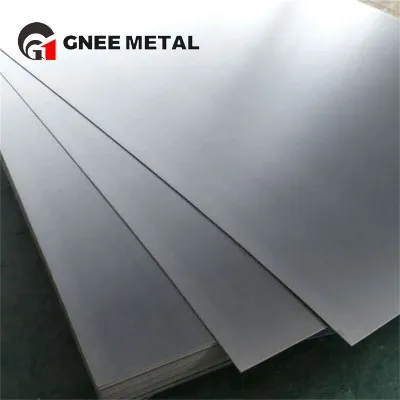


GR1 Titanium Plate Chemical Composition
|
Element |
Content (%) |
|
Titanium (Ti) |
Balance |
|
Iron (Fe) |
≤0.20 |
|
Oxygen (O) |
≤0.18 |
|
Nitrogen (N) |
≤0.03 |
|
Hydrogen (H) |
≤0.015 |
|
Other elements |
Trace amounts |
GR1 Titanium Plate Mechanical Properties
Tensile Strength: 240 - 345 MPa
Yield Strength: 170 - 275 MPa
Elongation: ≥24%
Hardness (Rockwell B): 55 - 70
GR1 Titanium Plate Dimensions and Tolerances
Thickness: Available from 0.5mm to 100mm, with tight thickness tolerances to ensure consistent quality.
Width: Standard widths range from 500mm to 3000mm, but custom widths can be provided upon request.
Length: Custom lengths are available to meet your specific project requirements, ensuring minimal material waste.
GR1 Titanium Plate Surface Finish
Our GR1 Titanium Plates are available with a variety of surface finishes:
Mill Finish: The standard finish obtained directly from the rolling process, providing a smooth, matte surface.
Bright Annealed Finish: A highly polished surface finish that offers enhanced aesthetics and improved corrosion resistance.
Pickled Finish: Removes the oxide layer formed during heat treatment, resulting in a clean, bright surface.
GR1 Titanium Plate Applications
Aerospace: Used in aircraft structures, engine components, and interior parts, where its lightweight and high-strength properties contribute to improved fuel efficiency and performance.
Medical: Ideal for medical implants, surgical instruments, and prosthetics, thanks to its biocompatibility and corrosion resistance.
Marine: Suitable for shipbuilding, offshore platforms, and marine equipment, as it can withstand the corrosive effects of seawater.
Chemical Processing: Used in chemical reactors, heat exchangers, and pipelines, due to its excellent resistance to chemical corrosion.
Automotive: Applied in automotive components, such as exhaust systems and suspension parts, to reduce weight and improve fuel economy.
GR1 Titanium Plate Customization Options
We understand that every project is unique, which is why we offer a wide range of customization options for our GR1 Titanium Plates. Whether you need a specific size, shape, surface finish, or mechanical property, our team of experts is ready to work with you to develop a solution that meets your exact requirements.
FAQ
Q1: What is GR1 titanium plate?
A: GR1 titanium plate, also known as Grade 1 Titanium Plate, is the purest commercially available grade of titanium. It offers a unique combination of low density, excellent corrosion resistance, and good formability. GR1 titanium meets ASTM B265, ASME SB-265, and ISO 5832-2 standards.
Q2: What is the UNS number for GR1 titanium plate?
A: The UNS number for GR1 titanium plate is R50250. GR1 titanium is also known as Grade 1 Titanium or CP1 (Commercially Pure Grade 1).
Q3: What is the density of titanium grade 1 plate?
A: Titanium grade 1 density is 4.51 g/cm³. This is significantly lower than traditional metals like steel (7.85 g/cm³), allowing GR1 titanium plate to create lightweight components without sacrificing strength.
Q4: What is the chemical composition of GR1 titanium plate?
A: GR1 titanium chemical composition includes: Ti (balance), Fe ≤0.20%, O ≤0.18%, N ≤0.03%, H ≤0.015%. The low oxygen content (0.18% max) gives GR1 titanium its high ductility.
Q5: What are the mechanical properties of GR1 titanium plate?
A: GR1 titanium plate has tensile strength of 240-345 MPa, GR1 titanium yield strength of 170-275 MPa, elongation ≥24%, and grade 1 titanium hardness of 55-70 HRB. This combination offers excellent formability with adequate strength.
Q6: What thicknesses are available for GR1 titanium plate?
A: GR1 titanium plate is available in thicknesses from 0.5mm to 100mm with tight tolerances. Width ranges from 500mm to 3000mm. Custom lengths are available. GR1 titanium plate in stock includes standard sizes.
Q7: What surface finishes are available for GR1 titanium plate?
A: GR1 titanium plate is available with mill finish (smooth matte from rolling), bright annealed finish (highly polished for enhanced aesthetics and corrosion resistance), and pickled finish (clean, bright surface after oxide removal).
Q8: Is GR1 titanium plate suitable for medical applications?
A: Yes, GR1 titanium plate is biocompatible and suitable for medical implants such as dental fixtures and orthopedic plates. Medical grade 1 titanium conforming to ASTM F67 grade 1 is used for surgical implants and instruments.
Q9: Is GR1 titanium plate corrosion resistant to seawater?
A: Yes, GR1 titanium plate exhibits outstanding corrosion resistance in seawater. It forms a thin, adherent oxide film that acts as a protective barrier. GR1 titanium is a top pick for marine, chemical processing, and desalination applications.
Q10: Can GR1 titanium plate be welded?
A: Yes, how to weld GR1 titanium uses GTAW (TIG) with ERTi-1 filler metal. Proper argon shielding on both sides is required. GR1 titanium has good weldability and can be rolled, stamped, and welded into complex parts.
Q11: What industries use GR1 titanium plate?
A: GR1 titanium plate is used in aerospace (aircraft structures, engine components), medical (implants, surgical instruments), marine (shipbuilding, offshore platforms), chemical processing (reactors, GR1 titanium heat exchanger), and automotive (exhaust systems, suspension parts).
Q12: What is the difference between GR1 and GR2 titanium plate?
A: The difference between pure titanium GR1 and GR2 is primarily oxygen content. GR1 titanium plate has 0.18% oxygen max, while GR2 has 0.25% oxygen max. Titanium grade 1 vs grade 2 comparison shows GR1 has higher ductility and lower strength, making GR1 titanium for deep drawing the preferred choice.


