


Grade2 Vs. Grade 5 Titanium
Dec 10, 2025
Titanium Grade 2
Industries & Applications
Titanium Grade 2, with its reduced density, is an excellent choice for applications in which weight must be minimized. Titanium alloys are particularly important in the medical and aerospace sectors. The exceptional strength and corrosion resistance of titanium Grade 2 make it a good choice for many industrial uses, including chemical processing, marine, and desalination. Temperatures in continuous service may reach up to 800 degrees Fahrenheit, with infrequent and intermittent service temperatures reaching 1000 degrees Fahrenheit.
Resistance to Corrosion
Titanium's C.P. grades' resistance to corrosion originates from a firmly adhesive, persistent, protective oxide film that develops in oxygen. The metal is protected from further oxidation thanks to this layer of protection. Because of this film, the economically pure grades of titanium are resistant to most oxidizing conditions, neutral and inhibited reducing environments, and moderately reducing environments. Grade 2 provides a great resistance level to the corrosion caused by salt water and the marine atmosphere. Although the four classes of C.P. have comparable corrosion resistance, the mechanical qualities of each grade are distinct due to differences in oxygen and iron concentration.
The process of fabrication followed by heat treatment
Titanium Grade 2 has excellent flexibility, making it possible to cold shape the metal. The minimum bend radius for the material thickness of fewer than 0.070 inches should be 2T. In contrast, the minimum bend radius for more than 0.070 inches of material thickness should be 2.5T. The material is very simple to process, and may be hot worked and welded without difficulty. Heating to a temperature between 900 and 1100 degrees Fahrenheit, followed by either forced air or gentle cooling, is recommended for de-stressing after heating. The annealing process is performed at temperatures ranging from 1200 to 1400 degrees Fahrenheit for six minutes to two hours, followed by air cooling.
MIG and TIG are only two of the many welding processes used when working with Grade 2 titanium. The use of inert gas shielding is necessary to stop oxygen collection and the weakening of the weld region. Generally speaking, a combination of argon and helium is preferable. However, this mixture has to be evaluated before being accepted as a welding method.



Titanium Grade 5
The titanium of grades 5, 6-4 has been the most popular topic of debate about titanium's usage in manufacturing for many years. This is mostly attributable to the effective use of this workhorse alloy in many militaries and sophisticated aerospace applications. Documentation on grade 5 titanium is abundant, and since it has historically been the most commercially accessible kind of titanium alloy, it has a greater degree of name recognition. This information is not well recognized. Although both of these alloys are quite good, Grade 5 Titanium isn't always the greatest option for cost-effective and precise manufacturing applications in sectors such as aerospace, automotive, medical, oil and gas, and power generation.
Increased Expenses Associated with Titanium 6Al-4V Grade 5
There are considerable hurdles to overcome before Grade 5 Titanium may be used in industrial applications where dealing with precision rolled coil is ideal, despite its somewhat improved material attributes like as shear and tensile strength.
Titanium grade 5 (Ti-6Al-4V) is a popular material option for use in demanding applications such as biomedical implants, which need a material that can simulate bone, and high-temperature structural applications in the aerospace sector. Both of these are examples of demanding applications.
Titanium Grade 5 benefit greatly from the addition of vanadium as an alloying element. When titanium is alloyed with Ti, the resultant titanium alloy is much stronger than titanium that is commercially pure while maintaining similar rigidity and thermal properties. As was previously indicated, the fact that Grade 5 titanium CNC machining possesses qualities comparable to those of human bones makes it the material of choice for orthopedic medical equipment. Other more popular uses include tension set rings, components for bicycles, and nuts and bolts that are used in hostile environments.
The features of material
Plates and sheets, not coils, are the most frequent forms in which the titanium alloy may be purchased. Applications that need machining often demand Titanium Grade 5, which is also referred to as "6-4" on production floors. Titanium Grade 5 is unable to be cold-formed. Because there are superior possibilities available in formable titanium alloys, it is most often employed in situations where there is no requirement for forming. Several concerns and equipment requirements cannot be met in batch production for Grade 5 hot forming from a coil due to the material's ability to be hot formed with contact heating.
The titanium of grade 5 is an excellent material that is very sought for use in applications with very stringent requirements. As a consequence of increased manufacturing costs brought on by vacuum melting and process costs and an increase in value, that brings an increase in warehousing risk and storage charges for manufacturers. It is necessary to carefully cut or grind down Grade 5 to attain the correct thickness, and the use of this material in applications requiring a narrow gauge is severely restricted. The waste Grade 5 titanium material that has been combined with the grinding medium cannot be re-melted due to the cutting and grinding operations that were performed, which increases the loss of yield.
why choose us

We provide a comprehensive range of titanium materials and fabricated parts, including:
Titanium Tubes & Pipe: Seamless and welded tubing in commercial and aerospace grades (Gr1, Gr2, Gr5, Gr7, Gr9, Gr12), suitable for heat exchangers, condenser tubes, and piping systems.
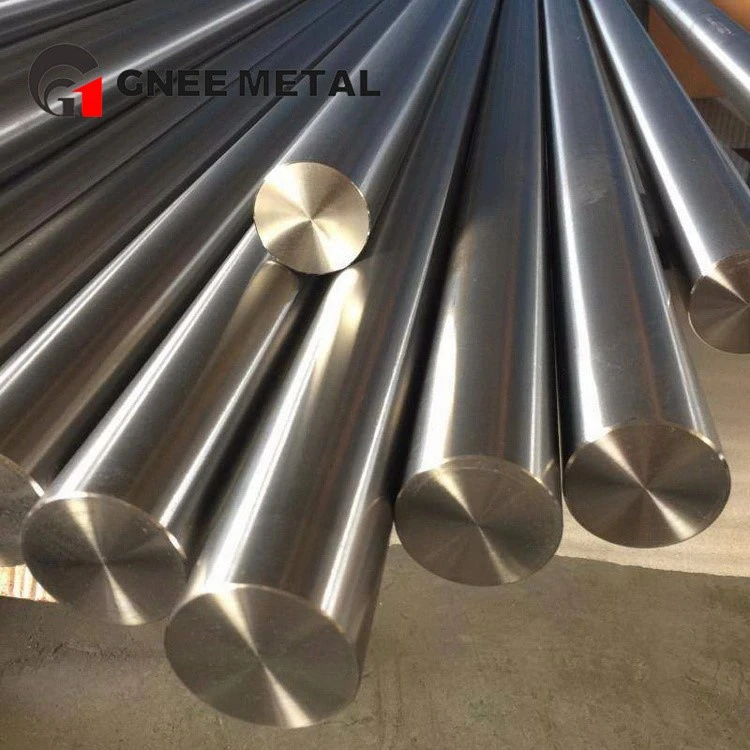
Titanium Bars & Rods: Round bars, hex bars, and square bars in hot-rolled, forged, and cold-drawn conditions, available in various diameters and lengths.
Titanium Plate & Sheet: Plates, sheets, and strips in standard and custom dimensions, ideal for pressure vessels, chemical processing, and marine applications.
Titanium Wire & Foil: Fine wire for welding, fasteners, and medical applications, alongside ultra-thin foil for specialized industrial uses.
Precision Titanium CNC Machining Parts: Custom-engineered components, fittings, flanges, fasteners, and intricate parts machined from titanium billets, bars, or plates with tight tolerances.
For quotes, technical specifications, or to discuss your project requirements for titanium tubes, bars, plates, sheets, wire, foil, or custom CNC machined components, please contact our team.
Email us at: info@gneemetal.com


