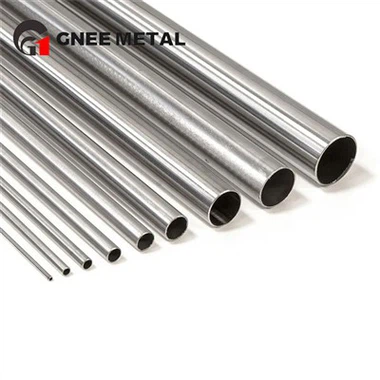

ASTM B338 GR1 Titanium Pipe
May 14, 2026
What Is GR1 Titanium Pipe?
GR1 titanium pipe is commercially pure titanium, usually containing more than 99.5% purity. GR1 titanium tube is widely used in many fields, including aerospace, medical devices, chemical industry, and marine engineering.
GR1 titanium pipe offers high purity, light weight, and superior corrosion resistance. ASTM B338 grade 1 pipe complies with rigorous production standards and provides certified quality with test data.

What Are the Key Properties of GR1 Titanium Tube?
GR1 titanium tube has the following key properties:
| Property | Description |
|---|---|
| Corrosion resistance | Forms a protective oxide layer (TiO2) on the surface when exposed to oxygen or moisture |
| Passive oxide layer | Thin, adherent, and self-healing – if scratched, the oxide layer quickly reforms |
| Pitting resistance | Resists pitting corrosion in chloride environments, including saltwater |
| High strength-to-weight ratio | Titanium grade 1 density is 4.51 g/cm³ – light but strong |
| High temperature stability | Maintains properties at elevated temperatures |
| Formability and ductility | GR1 titanium forming/bending and GR1 titanium for deep drawing are excellent |
What Is the Chemical Composition of GR1 Titanium Pipe?
GR1 titanium chemical composition limits:
| Grade | Fe max | C max | N max | H max | O max | Residual Element (Each) | Residual Element (Total) |
|---|---|---|---|---|---|---|---|
| GR1 | 0.2 | 0.08 | 0.03 | 0.015 | 0.20 | 0.1 | 0.4 |
What Are the Specifications of GR1 Titanium Tube?
| Parameter | Range |
|---|---|
| Length | 100mm to 6000mm (customizable) |
| Width / Diameter (OD) | 100mm to 300mm (customizable for GR1 titanium pipe) |
| Wall Thickness | 0.3mm to 50mm |
| Standards | ASTM B338, ASTM B861, ASME SB861, AMS 4902, DIN 17860 |
| Grades available | GR1, GR2, GR3, GR4, GR5, GR7, GR9, GR12, GR23 |
What Are the Surface Finishes Available for GR1 Titanium Pipe?
GR1 titanium tube can be supplied with various surface finishes:
Titanium sheet metal finish (as-rolled)
Polished finish
Anodized titanium sheet finish (for GR1 titanium)
GR1 titanium tube in stock typically includes multiple finish options. GR1 titanium ready to ship items are available for standard finishes.
What Are the Applications of GR1 Titanium Tube?
| Industry | Application |
|---|---|
| Aerospace | Aircraft frames, wings, structural elements – lightweight and excellent strength-to-weight ratio |
| Medical | Medical grade 1 titanium – orthopedic implants, dental implants, surgical instruments (ASTM F67 grade 1) |
| Chemical Processing | GR1 titanium for chemical processing – corrosion-resistant piping, GR1 titanium reactor components |
| Marine Engineering | Ship components, offshore structures, marine equipment – seawater corrosion resistance |
| Industrial | GR1 titanium heat exchanger tubes, condenser tubing |
How to Weld GR1 Titanium Pipe?
| Parameter | Recommendation |
|---|---|
| How to weld GR1 titanium | GTAW (TIG) with ERTi-1 filler metal |
| Argon shielding | Required on both sides (root and cover) |
| Preheat | Not required |
| Post-weld heat treatment | Not required for most applications |
| Key precaution | Prevent contamination – titanium reacts with oxygen, nitrogen, hydrogen at high temperatures |
FAQ
Q1: What is the purity of GR1 titanium pipe?
A: GR1 titanium pipe is commercially pure titanium containing more than 99.5% purity. This high purity gives GR1 titanium its excellent corrosion resistance, formability, and biocompatibility. The remaining 0.5% consists of iron, oxygen, carbon, nitrogen, and hydrogen within specified limits.
Q2: What is the UNS number for ASTM B861 grade 1 titanium tube?
A: The UNS number for ASTM B861 grade 1 titanium tube is R50250. ASTM B338 grade 1 titanium pipe also uses UNS R50250. Medical grade 1 titanium (ASTM F67 grade 1) uses the same UNS number with additional biocompatibility requirements.
Q3: What is the density of titanium grade 1 pipe?
A: Titanium grade 1 density is 4.51 g/cm³. This low density gives GR1 titanium pipe a high strength-to-weight ratio. Compared to stainless steel (8.0 g/cm³), GR1 titanium tube is approximately 44% lighter, making it ideal for aerospace and marine applications.
Q4: Is GR1 titanium pipe corrosion resistant to seawater?
A: Yes, GR1 titanium pipe is highly corrosion resistant to seawater. GR1 titanium forms a protective oxide layer (TiO2) on its surface. This oxide layer is stable and self-healing – if scratched, it quickly reforms in the presence of oxygen. GR1 titanium tube resists pitting corrosion in chloride environments.
Q5: What is the maximum operating temperature for GR1 titanium heat exchanger tubes?
A: GR1 titanium heat exchanger tubes have good high-temperature stability. GR1 titanium maintains its properties at elevated temperatures. For specific temperature limits, consult GR1 titanium tube suppliers based on your application requirements.
Q6: Can GR1 titanium tube be used for medical applications?
A: Yes, medical grade 1 titanium conforming to ASTM F67 grade 1 is used for orthopedic implants, dental implants, and surgical instruments. GR1 titanium is biocompatible, non-toxic, and non-reactive, making it safe for medical devices where corrosion resistance and biocompatibility are critical.
Q7: What wall thicknesses are available for GR1 titanium pipe?
A: GR1 titanium pipe is available in wall thicknesses from 0.3mm to 50mm. Lengths range from 100mm to 6000mm. Customized GR1 titanium tube with non-standard wall thicknesses and lengths is available from GR1 titanium tube manufacturers.
Q8: What standards apply to GR1 titanium tube?
A: GR1 titanium tube is available under ASTM B861 (seamless tube) and ASTM B862 (welded tube). GR1 titanium pipe is available under ASTM B338. Other applicable standards include ASME SB861, AMS 4902, and DIN 17860. All comply with rigorous production standards.
Q9: Is GR1 titanium pipe suitable for chemical processing?
A: Yes, GR1 titanium for chemical processing is a common application. GR1 titanium pipe is resistant to corrosion in acids (sulfuric acid, hydrochloric acid), alkalis, and chemical solutions. GR1 titanium reactor components and GR1 titanium heat exchanger tubes are widely used in the chemical industry.
Q10: What is the difference between GR1 and GR2 titanium tube?
A: The difference between pure titanium GR1 and GR2 is primarily oxygen content. GR1 titanium tube has 0.20% oxygen maximum, while GR2 has 0.25% oxygen maximum. Titanium grade 1 vs grade 2 comparison shows GR1 has higher ductility and lower strength, making it more formable for GR1 titanium for deep drawing applications.
Q11: What is the elongation percentage of GR1 titanium pipe?
A: GR1 titanium pipe has minimum elongation of 24%. This high ductility makes GR1 titanium excellent for forming operations. GR1 titanium forming/bending can achieve tight radii without cracking. GR1 titanium for deep drawing is preferred for complex shapes.
Q12: What is the melting point of GR1 titanium tube?
A: The melting point of GR1 titanium tube is approximately 1660-1670°C. However, the maximum recommended operating temperature for continuous service is lower due to oxidation concerns. For high-temperature applications, consult GR1 titanium tube suppliers for specific guidance.
Inspection
| Test | Purpose |
|---|---|
| Chemical analysis | Verify GR1 titanium chemical composition (Fe, C, N, H, O, residuals) |
| Tensile testing | Confirm GR1 titanium yield strength, tensile strength, elongation (24% min) |
| Hardness testing | Verify grade 1 titanium hardness |
| Corrosion resistance testing | Assess resistance in various environments (seawater, acids, alkalis) |
| Dimensional inspection | Check length, OD/width, wall thickness |
| Surface inspection | Examine for defects, imperfections, or irregularities |
| Weight verification | Confirm weight per piece or per bundle |
| Adherence to standards | Verify compliance with ASTM B338, ASTM B861, ASME SB861, AMS 4902, DIN 17860 |
| Hydrostatic test | Pressure integrity of GR1 titanium pipe |
| Ultrasonic testing | Detect internal flaws in GR1 titanium tube |

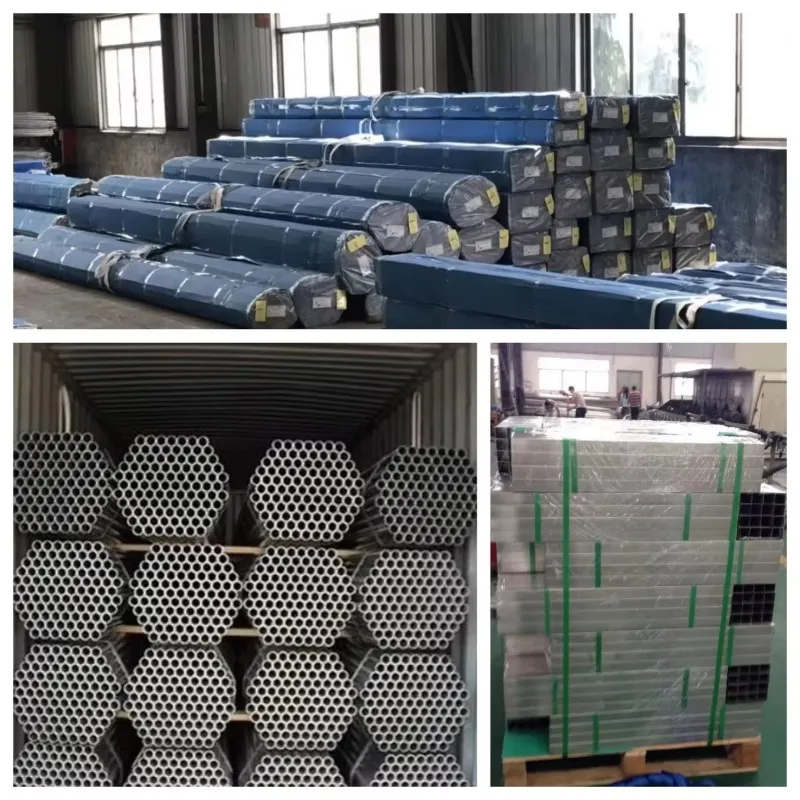
Packaging
| Packaging Step | Description |
|---|---|
| 1. End protection | Plastic end caps on both ends of each GR1 titanium tube to prevent thread damage and moisture ingress |
| 2. Inner wrapping | VCI (Vapor Corrosion Inhibitor) paper wrapped around GR1 titanium pipe to prevent surface oxidation |
| 3. Plastic shrink wrap | Additional layer of plastic shrink wrap over VCI paper for moisture protection |
| 4. Bundling | GR1 titanium tube bundled with steel straps (3-4 straps per bundle) |
| 5. Edge protection | Cardboard or steel corners under each strap to prevent strap cutting into pipe surface |
| 6. Wooden crate or pallet | Fumigated plywood crates or heavy-duty wooden pallets for sea freight |
| 7. Steel banding on crate | 4-6 steel straps on each crate (vertical and horizontal) for structural integrity |
| 8. Labeling | Grade (GR1), standard (ASTM B338/B861), dimensions, heat number, quantity, destination |
| 9. Documentation pouch | Waterproof pouch attached to crate exterior containing packing list, mill test certificate, origin certificate |
Factory Equipment
| Equipment | Function |
|---|---|
| VAR furnace | Vacuum Arc Remelting for high-purity titanium ingot (>99.5% purity) |
| Extrusion press | Forms GR1 titanium pipe hollows from billet |
| Cold pilger mill | Reduces diameter and wall thickness of GR1 titanium tube with high precision |
| Cold drawing bench | Produces customized GR1 titanium tube with tight dimensional tolerances |
| Annealing furnace | Stress relief and recrystallization of GR1 titanium |
| Pickling line | Removes oxide scale from GR1 titanium surface after heat treatment |
| Straightening machine | Corrects bending of GR1 titanium pipe |
| Cutting machine (CNC) | Precision length cutting |
| End finishing machine | Prepares pipe ends for welding |
| Polishing equipment | Provides various surface finishes (polished, anodized) |
| Ultrasonic tester | Non-destructive inspection of GR1 titanium tube |
| Eddy current tester | Surface defect detection on GR1 titanium pipe |
| Hydrostatic tester | Pressure testing of each pipe length |
| Optical Emission Spectrometer (OES) | In-house chemical analysis for GR1 titanium chemical composition verification |
| Universal tensile testing machine | Mechanical property verification including GR1 titanium yield strength |
| Hardness tester | Grade 1 titanium hardness verification |