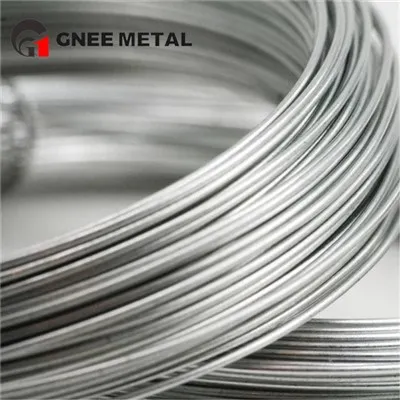

GR1 Pure Titanium vs GR5 Titanium Alloy
May 20, 2026
GR1 is pure titanium. Soft, formable, corrosion resistant.
GR5 is Ti-6Al-4V alloy. Strong, hard, aerospace grade.
They are completely different materials. Picking the wrong one costs you money. GR1 will fail if you need high strength. GR5 will crack if you try to deep draw it.
This guide helps you choose the right one for your application.
What is the difference between GR1 and GR5?
GR1 is commercially pure titanium. GR5 is a titanium alloy with aluminum and vanadium.
| Property | GR1 | GR5 (Ti-6Al-4V) |
|---|---|---|
| Composition | 99.5% Ti min | 90% Ti, 6% Al, 4% V |
| Tensile strength | 240 MPa min | 895 MPa min |
| Yield strength | 170-310 MPa | 828 MPa min |
| Elongation | 24% min | 10% min |
| Hardness | 120-200 HV | 310-400 HV |
| Density | 4.51 g/cm³ | 4.43 g/cm³ |
| Modulus of elasticity | 105 GPa | 114 GPa |
GR5 is about 3 to 4 times stronger than GR1.
GR1 is about 2 to 3 times more ductile than GR5.

Which one is stronger?
GR5 is much stronger.
GR5 tensile strength is 895 MPa minimum. GR1 is 240 MPa minimum. That is nearly four times stronger.
When to choose GR5 for strength:
Aerospace structural components
High pressure vessels
Fasteners and bolts
Medical implants (GR5 is common for hip stems and bone screws)
Racing and performance parts
When GR1 strength is enough:
Heat exchanger tubes
Chemical reactor liners
Marine piping
Anode substrates
Deep drawn parts
Which one is easier to form?
GR1 is much easier to form.
GR1 elongation is 24 percent minimum. GR5 elongation is 10 percent minimum. GR1 stretches more than twice as far before cracking.
What GR1 can do that GR5 cannot:
Deep drawing into cups and housings
Tight radius bends
U-bend heat exchanger tubes
Complex formed shapes
Thin wall tubing
What GR5 can do (with difficulty):
Simple bends with large radius
Hot forming (GR5 is easier to form at elevated temperature)
Machined parts (no forming required)
Which one is more corrosion resistant?
GR1 has better corrosion resistance in most environments.
GR1 is better for:
Seawater and brine
Chlorides
Reducing acids
High temperature corrosion
GR5 is acceptable for:
Aerospace applications (corrosion is usually not the primary concern)
Many chemical environments (but GR1 is still better)
Medical implants (GR5 is commonly used despite lower corrosion resistance)
Which one is more expensive?
GR5 costs significantly more than GR1.
| Factor | GR1 | GR5 |
|---|---|---|
| Raw material cost | Lower | Higher (aluminum and vanadium alloying) |
| Melting complexity | Simpler | More complex |
| Machining cost | Moderate (gummy) | High (hard and abrasive) |
| Forming cost | Low | High (difficult to form) |
Expect to pay 2 to 3 times more for GR5 compared to GR1. For the same tube size and quantity, GR5 can be significantly more expensive.
Do not buy GR5 if GR1 works for your application. You are paying for strength you do not need.
Which one is easier to machine?
Neither is easy. But GR5 is harder on tools.
| Machining factor | GR1 | GR5 |
|---|---|---|
| Material behavior | Gummy, work-hardens | Hard, abrasive |
| Tool wear | Moderate | High |
| Surface speed | 30-60 m/min | 20-40 m/min |
| Feed rate | 0.05-0.15 mm/rev | 0.05-0.10 mm/rev |
| Coolant required | Yes | Yes |
| Best tool material | Carbide | Carbide or CBN |
GR1 is gummy. It smears if your tool is not sharp. Use sharp carbide, high coolant flow, and avoid letting the tool rub.
GR5 is hard and abrasive. It wears tools out faster. Use rigid setups, carbide tools, and lower speeds than GR1.
Which one is easier to weld?
GR1 is easier to weld. GR5 requires post-weld heat treatment.
| Welding factor | GR1 | GR5 |
|---|---|---|
| Shielding requirement | Argon | Argon (same) |
| Post-weld heat treatment | Not required | Required |
| Filler metal | ERTi-1 or ERTi-2 | ERTi-5 (Ti-6Al-4V) |
| Weld ductility | Good | Low (without heat treatment) |
| Common applications | Field welding | Shop welding only |
GR1 welds are ductile as-welded. No heat treatment needed.
GR5 welds are brittle as-welded. The weld zone contains alpha prime martensite. You must post-weld heat treat to restore ductility. This means GR5 welding is shop-only. No field welding.
What are the typical applications for each grade?
GR1 is used for:
Gr1 titanium heat exchanger tubes
Gr1 titanium reactor liners
Grade 1 titanium anode/cathode substrates
Gr1 titanium MMO anodes
Medical grade 1 titanium (ASTM F67) for certain implants
Gr1 titanium for deep drawing
Chemical processing equipment
Marine piping and components
GR5 is used for:
Aerospace structural parts (airframes, engine components)
High performance fasteners
Medical implants (hip stems, bone screws, dental implants)
Racing bicycle frames
Golf club heads
High pressure hydraulic tubing
Springs and pressure vessels
Can I substitute GR1 for GR5?
Only if your strength requirements are very low.
GR1 has one quarter the strength of GR5. If your part was designed for GR5, GR1 will likely fail under load.
Do not substitute GR1 for GR5 in:
Aerospace components
High pressure vessels
Load bearing structural parts
Fasteners or bolts
You can substitute GR1 for GR5 in:
Non-structural parts
Corrosion resistant components where GR5 was over-specified
Prototypes where strength is not critical
Can I substitute GR5 for GR1?
Do not substitute GR5 for GR1 in:
Heat exchanger U-bend tubes (will crack)
Deep drawn cups or housings (will crack)
Any part that needs forming (GR5 is too hard)
You can substitute GR5 for GR1 in:
Straight pipe with no forming
Machined parts (no bending or drawing)
Applications where the higher strength is beneficial
FAQ
1. Which grade has better corrosion resistance: GR1 or GR5?
GR1 has better corrosion resistance. GR1 is commercially pure titanium with 99.5 percent titanium minimum. GR5 contains aluminum and vanadium, which can affect corrosion performance in some environments. For seawater, chlorides, and most chemical processing applications, GR1 is the better choice.
2. Is GR5 stronger than GR1?
Yes, GR5 is much stronger. GR5 tensile strength is 895 MPa minimum. GR1 tensile strength is 240 MPa minimum. GR5 is nearly four times stronger than GR1. If your application needs high strength, choose GR5. If not, GR1 is sufficient and costs less.
3. Can I use GR5 for deep drawing parts?
No, GR5 cannot be used for deep drawing. GR5 elongation is only 10 percent minimum. Deep drawing requires at least 20 percent elongation. GR1 has 24 percent minimum elongation and is the standard choice for deep drawn parts. GR5 will crack if you try to deep draw it.
4. Is GR5 more expensive than GR1?
Yes, GR5 costs significantly more than GR1. Expect to pay 2 to 3 times more for GR5 compared to GR1. The higher cost comes from alloying elements (aluminum and vanadium) and more complex processing. Do not buy GR5 if GR1 works for your application.
5. Which grade is easier to weld: GR1 or GR5?
GR1 is easier to weld. GR1 welds are ductile as-welded and do not require post-weld heat treatment. GR5 welds are brittle as-welded and must be heat treated after welding to restore ductility. GR1 can be welded in the field. GR5 welding is limited to shop applications with heat treatment capability.
6. Can I weld GR1 to GR5?
Yes, you can weld GR1 to GR5. Use ERTi-5 filler metal (Ti-6Al-4V). The weld zone will have properties between GR1 and GR5. Post-weld heat treatment is required because the GR5 side will be brittle without it. Use pure argon shielding on both sides.
7. What is the yield strength difference between GR1 and GR5?
GR1 yield strength is 170 to 310 MPa, depending on temper and processing. GR5 yield strength is 828 MPa minimum. GR5 is roughly 3 to 5 times stronger in yield strength. If your design requires more than 310 MPa, GR1 will not work and you need GR5.
8. Can I use GR1 for medical implants?
Yes for non-load-bearing implants. ASTM F67 covers medical grade GR1 for surgical implants that do not bear heavy loads. For load-bearing implants like hip stems and bone screws, GR5 (ASTM F136) is used because it is much stronger. Both are used in medical applications for different purposes.
9. Which grade machines easier: GR1 or GR5?
GR1 is less abrasive but both are difficult. GR1 is gummy and work-hardens quickly. Use sharp carbide tools and high coolant flow. GR5 is hard and abrasive, causing more tool wear. Expect shorter tool life with GR5. Both require rigid setups and slow to moderate speeds.
10. What is the density of GR1 compared to GR5?
GR1 density is 4.51 grams per cubic centimeter. GR5 density is 4.43 grams per cubic centimeter. GR5 is about 2 percent lighter than GR1. The difference is very small and rarely matters for most applications.
11. Can I substitute GR1 for GR5 in my design?
Only if your strength requirements are very low. GR1 has one quarter the strength of GR5. If your part was designed for GR5, GR1 will likely fail under load. Do not substitute GR1 for GR5 in aerospace components, high pressure vessels, load bearing parts, or fasteners.
12. Can I substitute GR5 for GR1 in my design?
Only if your part has no forming requirements. GR5 cannot be deep drawn or bent to tight radii. Do not substitute GR5 for GR1 in heat exchanger U-bend tubes, deep drawn cups, or any part that needs forming. GR5 costs more, so you will pay extra for no benefit.
13. What is the hardness of GR1 vs GR5?
GR1 hardness is 120 to 200 HV (Vickers). GR5 hardness is 310 to 400 HV. GR5 is about twice as hard as GR1. The higher hardness makes GR5 more wear resistant but also more difficult to machine and form.
14. Which grade is better for heat exchanger tubes: GR1 or GR5?
GR1 is better for heat exchanger tubes. Heat exchanger tubes are often bent into U-shapes. GR1 has 24 percent elongation and bends easily. GR5 has only 10 percent elongation and will crack on the bend. For the shell side (straight pipe), GR2 is common. GR5 is never needed for heat exchangers.
15. How do I choose between GR1 and GR5 for my project?
Ask yourself three questions. First, does your part need high strength over 300 MPa? If yes, consider GR5. Second, does your part need deep drawing or tight radius bending? If yes, use GR1. Third, does your budget allow GR5 pricing which is 2 to 3 times higher? If no, use GR1. Most industrial applications do not need GR5.