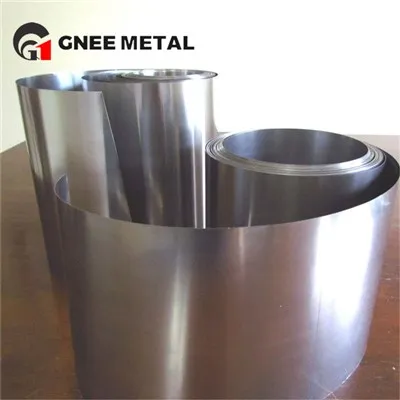
GR1 Titanium Pipe – Aerospace Grade Data Sheet
May 18, 2026
GR1 titanium pipe is commercially pure (CP) Grade 1 titanium. Titanium is 30% stronger than steel but nearly 50% lighter. Although aluminum is lighter, GR1 titanium is stronger and has excellent strength retention. Due to titanium's weight, strength, and high corrosion resistance, it is very popular in aerospace, medical, shipping, and military industries.
Chemical Composition
| Element | Weight % |
|---|---|
| Ti | Balance |
| C | 0.08 max |
| Fe | 0.02 max |
| N | 0.03 max |
| O | 0.15 max |
| H | 0.015 max |
Key differences from commercial standards:
Oxygen: 0.15% max (typical commercial GR1 is 0.18% max) – this lower oxygen gives even higher ductility
Iron: 0.02% max (typical commercial GR1 is 0.20% max) – much tighter control for aerospace applications
GR1 titanium chemical composition for aerospace grade has tighter controls than commercial ASTM B861 grade 1.

Mechanical Properties
| Property | Value (ksi) | Value (MPa) |
|---|---|---|
| Tensile strength (min) | 35 ksi | 241 MPa |
| GR1 titanium yield strength | 25-45 ksi | 172-310 MPa |
| Elongation | 24% | 24% |
Titanium grade 1 density is 4.51 g/cm³. Grade 1 titanium hardness is approximately 70 HRB.
Specifications and Standards
| Standard | Product Form |
|---|---|
| ASTM B338 | GR1 titanium heat exchanger tube |
| ASTM B337 | GR1 pipe (withdrawn – use B338 or B861) |
| ASTM B265 | Sheet, plate |
| ASTM B348 | Bar |
| ASTM B367 | Castings |
| ASTM B381 | Forgings |
| ASTM F67 | Medical grade 1 titanium – surgical implant |
| ASTM F467 | Nuts |
| ASTM F468 | Bolts |
| AMS 4940 | Sheet, strip, plate |
| AMS-T-9046 CP4 | Sheet, strip, plate |
| MIL-T-9046J CP4 | Sheet, strip, plate |
Equivalent Grade Designations
| Standard | Designation |
|---|---|
| UNS | R50250 |
| Werkstoff (aerospace) | WS3.7024 |
| Werkstoff (commercial) | 3.7025 |
| DTD | 5013 |
| AIR | 9182 T35 |
| LN | 9297 |
| IMI | 115 |
| AICMA | Ti-P01 |
| DIN 17850 | Chemistry |
| DIN 17860 | Sheet, plate |
| DIN 17862 | Bar |
| DIN 17863 | Wire |
| DIN 17864 | Forgings |
ASTM B861 grade 1 titanium tube (commercial seamless) and ASTM B862 GR1 (welded) are common commercial equivalents. For aerospace applications, AMS specifications apply.
Available Forms
GR1 titanium is available in:
| Form | Availability |
|---|---|
| GR1 titanium pipe / tube | Yes – ASTM B338 (heat exchanger tube) |
| Bar | Yes |
| Billet | Yes |
| Extrusion | Yes |
| Plate | Yes |
| Sheet | Yes |
| Strip | Yes |
| Wire | Yes |
| Rings | Yes |
| Forgings | Yes |
Applications
Due to its weight, strength, and high corrosion resistance, GR1 titanium pipe is very popular in:
| Industry | Application |
|---|---|
| Aerospace | Aircraft structures, fluid handling systems |
| Medical | ASTM F67 grade 1 surgical implants |
| Shipping / Marine | Corrosion-resistant piping |
| Military | Various applications |
| Heat exchangers | GR1 titanium heat exchanger tubes per ASTM B338 |
GR1 titanium for chemical processing also benefits from the material's excellent corrosion resistance.
Key Advantages of Titanium Over Other Metals
| Comparison | Advantage |
|---|---|
| Titanium vs Steel | 30% stronger than steel but nearly 50% lighter |
| Titanium vs Aluminum | Aluminum is lighter, but GR1 titanium is stronger with excellent strength retention |
How to Weld GR1 Titanium Pipe
| Parameter | Recommendation |
|---|---|
| How to weld GR1 titanium | GTAW (TIG) with ERTi-1 filler metal |
| Argon shielding | Required on both sides |
| Preheat | Not required |
| Post-weld heat treatment | Not required for most applications |
GR1 titanium machinability – the lower iron content (0.02% max) may affect machining characteristics. Use sharp carbide tools and abundant coolant.
GR1 titanium forming/bending is excellent due to low oxygen content (0.15% max). GR1 titanium for deep drawing is ideal.
FAQ
Q1: What is the difference between aerospace grade GR1 and commercial GR1 titanium pipe?
A: Aerospace grade GR1 titanium pipe has tighter chemical controls. Oxygen is 0.15% max (commercial: 0.18% max). Iron is 0.02% max (commercial: 0.20% max). This gives aerospace grade even higher ductility and purity. Aerospace grade also complies with AMS and MIL specifications in addition to ASTM.
Q2: What is the UNS number for ASTM B861 grade 1 titanium tube?
A: The UNS number for ASTM B861 grade 1 titanium tube is R50250. Aerospace equivalents include Werkstoff WS3.7024 (aerospace) and WS3.7025 (commercial), DTD 5013, AIR 9182 T35, LN 9297, IMI 115, and AICMA Ti-P01.
Q3: What is the oxygen content of aerospace grade GR1 titanium tube?
A: The oxygen content for aerospace grade GR1 titanium tube is 0.15% maximum. This is lower than commercial GR1 (0.18% max), resulting in even higher ductility for GR1 titanium for deep drawing and GR1 titanium forming/bending operations.
Q4: What ASTM standard covers GR1 titanium heat exchanger tubes?
A: ASTM B338 covers GR1 titanium heat exchanger tubes. ASTM B337 (pipe) has been withdrawn – for pipe applications, use ASTM B338 or ASTM B861.
Q5: Is GR1 titanium pipe suitable for surgical implants?
A: Yes, medical grade 1 titanium conforms to ASTM F67 grade 1 for surgical implants. The same UNS R50250 designation applies. GR1 titanium offers excellent biocompatibility and corrosion resistance.
Q6: How strong is GR1 titanium pipe compared to steel?
A: GR1 titanium is 30% stronger than steel but nearly 50% lighter. Titanium grade 1 density is 4.51 g/cm³ vs steel at 7.85 g/cm³. Although aluminum is lighter, GR1 titanium is stronger and has excellent strength retention at elevated temperatures.
Q7: What are the mechanical properties of GR1 titanium pipe?
A: Minimum tensile strength is 241 MPa (35 ksi). GR1 titanium yield strength ranges from 172-310 MPa (25-45 ksi). Elongation is 24% minimum. These properties are specified per MIL-T-9046J, AMS-T-9046, and AMS 4940.
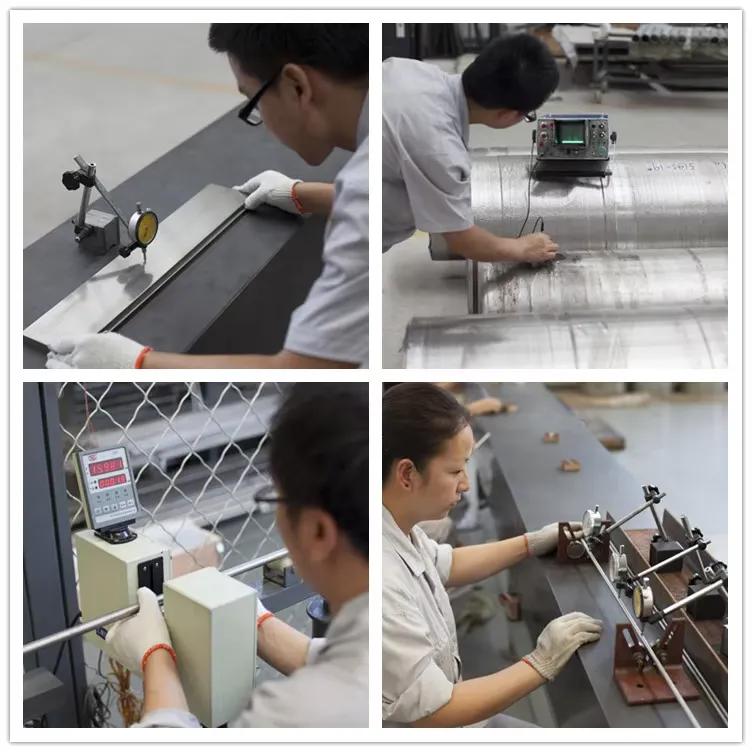
Inspection
| Test | Purpose | Specification Reference |
|---|---|---|
| Chemical analysis | Verify composition (C 0.08, Fe 0.02, N 0.03, O 0.15, H 0.015) | ASTM, AMS, MIL |
| Tensile testing | Confirm tensile strength (≥241 MPa), GR1 titanium yield strength (172-310 MPa), elongation (≥24%) | MIL-T-9046J |
| Hardness testing | Verify grade 1 titanium hardness | Per customer requirements |
| Dimensional inspection | Check OD, wall thickness, length | ASTM B338 |
| Ultrasonic testing | Detect internal flaws in GR1 titanium pipe | ASTM E213 |
| Eddy current testing | Surface defect detection on GR1 titanium tube | ASTM E571 |
| Hydrostatic testing | Pressure integrity | ASTM B338 |
Packaging
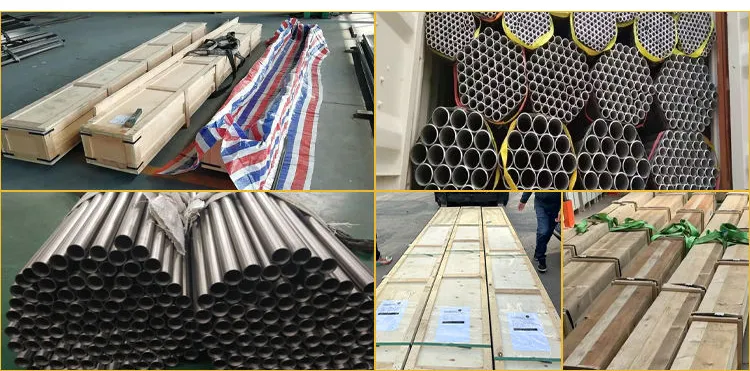
| Packaging Step | Description |
|---|---|
| 1. End protection | Plastic end caps on both ends of each GR1 titanium tube |
| 2. Inner wrapping | VCI paper / plastic wrap around GR1 titanium pipe |
| 3. Bundling | Steel straps securing bundles |
| 4. Wooden case | Suitable for long-distance air or sea shipping |
| 5. Labeling | Grade (GR1), specification (ASTM B338 / AMS / MIL), dimensions, heat number |
| 6. Documentation pouch | Waterproof pouch with packing list, mill test certificate, and any required aerospace certifications |
Factory Equipment
| Equipment | Function | Notes |
|---|---|---|
| VAR furnace | Vacuum Arc Remelting for high-purity ingot | Essential for 0.15% O, 0.02% Fe control |
| Extrusion press | Forms GR1 titanium pipe hollows from billet | For seamless tube production |
| Cold pilger mill | Reduces diameter and wall thickness | Precision for tube dimensions |
| Annealing furnace | Stress relief – with protective atmosphere | For annealed condition per AMS/MIL |
| Pickling line | Removes oxide scale | Surface preparation |
| Straightening machine | Corrects bending of GR1 titanium pipe | For straightness tolerances |
| Cutting machine | Precision length cutting | CNC controlled |
| Welding equipment | For welded GR1 titanium tube (ASTM B862) | For larger diameters |
| Ultrasonic tester | Non-destructive inspection | For internal flaw detection |
| Eddy current tester | Surface defect detection | For tube surface quality |
| Hydrostatic tester | Pressure testing | Per ASTM B338 |
| Tensile testing machine | Mechanical property verification | For yield and tensile strength |
| Spectrometer | Chemical analysis | For O, Fe, C, N, H verification |
| Ring rolling mill | For forging production | OD ≤1300mm capability |
| Disc forging press | For forging production | OD ≤1100mm capability |