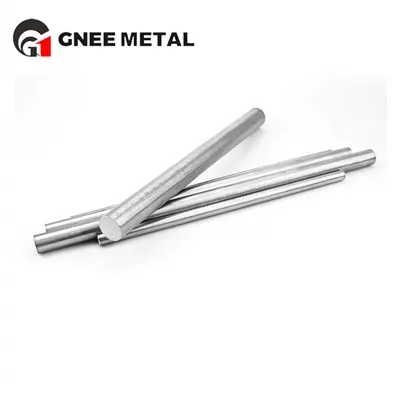
What Is The Purpose Of Titanium Wire And What Industry Is It Used In?
Jan 11, 2024
What is the purpose of titanium wire and what industry is it used in?
Titanium wire is mainly made of nano zinc titanium film as the main raw material, which is made of polymer polymerization material, military DP anti-corrosion, DM anti-acid technology.
Titanium wire is used in chemical industry, petroleum, pharmaceuticals, paper making, artificial leather, food processing, agriculture and fisheries, etc. It is acid-resistant, abrasion-resistant and corrosion-resistant.
Titanium wire use: military, medical, sporting goods, eyeglasses, earrings, hair accessories, electroplating hangers, welding wire and other industries.
Titanium wire density, high strength, corrosion resistance
Titanium is a very reactive metal with a low equilibrium potential and a high tendency to corrode thermodynamically in media. However, titanium is actually very stable in many media. For example, titanium is corrosion resistant in oxidizing, neutral, and weakly reducing media. This is due to the fact that titanium has a great affinity for oxygen. In air or oxygen-containing media, a dense, strong, inert oxide film forms on the surface of titanium, which protects the titanium substrate from corrosion. Even due to mechanical abrasion, it heals or regenerates quickly. This indicates that titanium is a metal with a strong passivation tendency. The oxide film of titanium always maintains this property at temperatures below 315°C.
In order to improve the corrosion resistance of titanium, surface treatment techniques such as oxidation, electroplating, plasma spraying, ion nitriding, ion implantation, laser processing, etc., have been investigated, and titanium oxide films have been utilized to enhance the protection and obtain the desired corrosion resistance. Impact. For the needs of metal materials in the production of sulfuric acid, hydrochloric acid, methylamine solution, high temperature wet chlorine, a series of corrosion-resistant titanium alloys such as titanium molybdenum, titanium palladium, titanium molybdenum nickel and other corrosion-resistant titanium alloys gases and high-temperature chlorides have been developed. Titanium castings are made of titanium-32-molybdenum alloy. Titanium-0.2-palladium alloy is used locally for titanium equipment in titanium-0.3 molybdenum-0.8 nickel alloys or in environments where crevice corrosion or pitting corrosion often occurs. Impact.
Titanium wire has good heat resistance, and new titanium alloys can be used for long periods of time at temperatures over 600°C. Low-temperature titanium alloys such as titanium alloy TA7 (Ti-5Al-2.5Sn), TC4 (Ti-6Al-4V) and Ti-2.5Zr-1.5Mo, etc., its strength increases with the decrease in temperature, but plasticity is not great. It maintains good plasticity and toughness at -196-253℃ to avoid cold embrittlement. It is the ideal material for low-temperature containers and storage tanks.


Strong anti-damping properties
Titanium metal is subjected to mechanical and electrical vibration, its own vibration decay time is the longest compared with steel and copper metal. Utilizing this property of titanium, it can be used as tuning fork, vibration element of medical ultrasonic vibrator, and vibration membrane of high-grade audio speakers. Non-magnetic, non-toxic Titanium is a non-magnetic metal, in the large magnetic field will not be magnetized, non-toxic and good compatibility with human tissue and blood, so by the medical profession.
The tensile strength is close to its yield strength. This property of titanium indicates a high yield ratio (tensile strength/yield strength), suggesting that titanium metal materials are less capable of plastic deformation during molding. Since the ratio of yield limit to modulus of elasticity of titanium is large, titanium has a high springback force when molded.
Good heat transfer performance
The thermal conductivity of titanium metal is lower than that of carbon steel and copper, but due to titanium's excellent corrosion resistance, the wall thickness can be greatly reduced, the surface and the steam heat transfer method of droplet condensation, but also reduces the heat group and the surface. No scaling can also reduce the thermal resistance, so that titanium heat transfer performance is significantly improved. Low modulus of elasticity The modulus of elasticity of titanium at room temperature is 106.4GMPa, 57% of steel. Absorption properties Titanium is a very chemically active metal that reacts with many elements and compounds at high temperatures. Titanium's inhalation mainly refers to the reaction with carbon, hydrogen, nitrogen and oxygen at high temperatures.