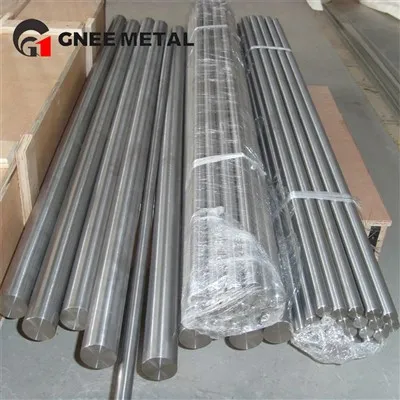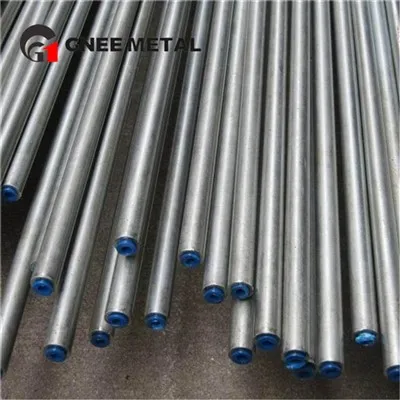

Seamless Vs. Welded ASTM B338 GR2 Titanium Tube
Jun 30, 2026
What is ASTM B338 GR2?
ASTM B338 covers both seamless and welded titanium tubes primarily used for surface condensers, heat exchangers, and evaporators.
Grade 2 (GR2): Commercially pure titanium with moderate strength (Yield ≥ 275 MPa) and exceptional corrosion resistance, especially against chlorides, seawater, and oxidizing acids.
Why GR2? It offers the best balance of formability, weldability, and cost-stronger than GR1, far more affordable than GR7 or GR12.
Seamless vs. Welded

| Aspect | Seamless Tube | Welded Tube |
|---|---|---|
| Raw Material | Solid round billet | Titanium strip / coil |
| Primary Process | Rotary piercing + pilger rolling / extrusion | Roll forming + autogenous TIG welding |
| Wall Thickness Range | Typically heavier (min. 1.5mm depending on O.D.) | Can be very thin (0.5mm and above) |
| Dimensional Tolerance | Moderate; inherent ovality and eccentricity | Excellent; precise O.D., I.D., and roundness |
| Surface Quality | Internal surface may have slight spiral marks | Smooth, uniform surface both inside and out |
| Lead Time | Longer (6–8 weeks typical) | Shorter (3–4 weeks typical) |
Discuss Your Project Requirements
Corrosion Resistance
| Environment | Seamless | Welded (with proper annealing) | Verdict |
|---|---|---|---|
| Seawater / Brine (ambient) | Excellent | Excellent | Tie |
| High-temperature chlorides (> 200°C) | Excellent | Good (needs stress relief) | Seamless preferred |
| Reducing acids (e.g., HCl, H₂SO₄) | Good | Good (weld zone slightly weaker) | Seamless preferred |
| Crevice corrosion under deposits | Equal | Equal | Tie |
A welded tube that has been fully annealed after welding restores the weld zone's corrosion resistance to near-parent-metal levels. Never accept as-welded (un-annealed) tubes for corrosive services.
Mechanical Strength
| Parameter | Seamless | Welded |
|---|---|---|
| Joint Efficiency Factor | 1.00 (ASME Section VIII) | 0.85 (if no full radiography) |
| Burst Strength | Higher (uniform grain structure) | Slightly lower; adequate for most GR2 applications |
| Fatigue / Vibration Resistance | Superior | Weaker at weld toe; avoid high-cyclic loading |
| Suitable Max. Pressure | > 10 MPa | Typically ≤ 6 MPa (can be higher with thicker wall) |
Fabrication & Installation
| Application | Seamless | Welded |
|---|---|---|
| Roller Expansion to Tubesheet | Difficult due to ovality; risk of loose joints | Ideal; precise roundness ensures leak-tight expansion |
| U-Bending (tight radius) | Good | Risk of weld wrinkling; require careful die design |
| Welding to Tubesheet | Standard | Standard (avoid placing seam directly at weld joint) |
Seamless vs. Welded ASTM B338 GR2 Titanium Tube
| Service Condition | Recommended Type | Rationale |
|---|---|---|
| High pressure (> 8 MPa) & high temp (> 300°C) | Seamless | No weld seam vulnerability under thermal-mechanical stress |
| Severe vibration or cyclic loading | Seamless | Superior fatigue endurance |
| Aggressive acids (HF, wet chlorine) | Seamless | Eliminates preferential weld attack risk |
| Shell-and-tube heat exchangers / condensers | Welded | Best for roller expansion; cost-effective |
| Large O.D. (> 100mm) or thin-wall applications | Welded | Seamless unavailable or excessively expensive in large sizes |
| Budget-conscious projects with urgent delivery | Welded | Shorter lead time and lower base price |
Factory

| Item | What to Check |
|---|---|
| Billet / Coil Source | Traceable to certified titanium sponge mills (VSMPO, ATI, or equivalent) |
| Cold Pilger / Drawing Capacity | Maximum length, O.D. range, and wall thickness accuracy |
| Welding Line (for welded tubes) | Autogenous TIG with inert gas shielding on both I.D. and O.D. |
| Annealing Furnace | Vacuum or inert atmosphere annealing to prevent surface oxidation |
| Quality System | ISO 9001, ASME U-stamp (if applicable), and PED 2014/68/EU |
Inspection & Testing


| Test / Inspection | Purpose | Applicable To |
|---|---|---|
| Chemical Analysis | Verify Ti ≥ 98.9%, O₂, Fe, C, N, H within GR2 limits | Both |
| Tensile Test | Confirm YS ≥ 275 MPa, UTS ≥ 345 MPa, Elongation ≥ 20% | Both |
| Flattening Test | Check ductility and soundness | Both |
| Flange / Reverse Flange Test | Detect seam defects (critical for welded tubes) | Welded only |
| Hydrostatic Test | Leak-proof integrity at 1.5× design pressure | Both |
| Eddy Current (ET) Test | Detect pinholes, cracks, and inclusions along full length | Both |
| Ultrasonic Test (UT) | Optional; for high-critical applications | Both |
| PMI (Positive Material Identification) | Confirm grade on every bundle | Both |
All test reports are compiled into a comprehensive Mill Test Report (MTR) , traceable by heat number. We retain retained samples for 5 years for full traceability.
Packaging

| Packaging Step | Specification |
|---|---|
| Interior Protection | Each tube end is capped with plastic plugs to prevent ingress of moisture and debris |
| Bundle Strapping | Tubes are bundled on steel pallets with rust-proof banding; wooden battens between layers prevent friction damage |
| Waterproof Wrapping | Entire bundle wrapped in heavy-duty VCI (Vapor Corrosion Inhibitor) paper + multiple layers of PVC stretch film |
| Outer Protection | Seaworthy wooden crates or steel-framed boxes for container shipping |
| Marking | Clear stenciling: Grade (GR2), Spec (ASTM B338), Heat No., Size (O.D. × Wall), and Bundle Number |
| Documentation Pouch | Waterproof pouch attached to each crate containing the MTR, packing list, and inspection certificates |
Get Fast Quote & Logistics Plan
FAQ
Q1: Can welded tubes be used in seawater cooling systems?
A: Absolutely. In fact, welded GR2 tubes are the industry standard for seawater-cooled condensers. With proper annealing and ET testing, they perform identically to seamless in this service.
Q2: Is a welded tube weaker than a seamless tube?
A: The parent metal has the same strength. The weld joint efficiency is typically 0.85 vs. 1.0 for seamless. This means a welded tube requires a slightly thicker wall to achieve the same burst pressure. For most low-to-medium pressure heat exchanger duties, this is negligible.
Q3: How can I visually distinguish seamless from welded tube?
A: Look at the I.D. surface. Seamless tubes often show a slight spiral pattern from the piercing mill. Welded tubes have a perfectly straight, smooth I.D. On the O.D., the weld seam may be faintly visible after finishing.
Q4: What is the maximum length available for ASTM B338 GR2 tubes?
A: For seamless, typical lengths are up to 15 meters (depending on O.D.). For welded, we can supply up to 25 meters straight length, or coils for smaller diameters. Custom cut lengths are available upon request.
Q5: Do you provide third-party inspection?
A: Yes. We work with SGS, BV, or TÜV for on-site witness testing if required. Additional charges apply, but we fully coordinate the logistics.
Q6: What is the difference between ASTM B338 and ASME SB338?
A: Chemically and dimensionally, they are identical. ASME SB338 is the Boiler & Pressure Vessel Code version for code-stamped vessels. We supply both with the appropriate certification.