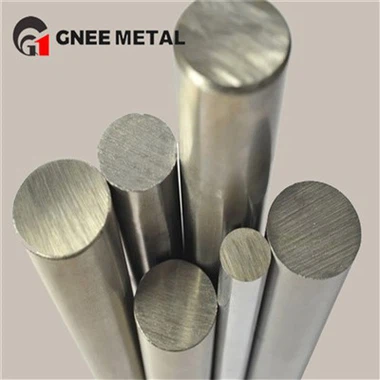
Advantages of Gr2 Titanium Alloy
Apr 07, 2024
The density of Gr2 titanium alloy is generally around 4.5g/cm3, which is only 60% of steel. The strength of pure titanium is close to that of ordinary steel. The strength of some high-strength titanium alloys exceeds that of many alloyed structural steels. Therefore, the specific strength (strength/density) of titanium alloys is much greater than that of other metal structural materials, which allows the production of parts with high unit strength, good rigidity and light weight. Currently, titanium fasteners and landing gears are used for aircraft engine components, skeletons and skins.
Titanium alloy shows excellent corrosion resistance in harsh environments, which is the main reason it is used in the manufacture of chemical equipment. It has good high and low temperature characteristics, is non-magnetic, and has a low heat transfer coefficient and thermal expansion coefficient. On the flip side, titanium fasteners are very difficult to machine. In addition, when threaded fasteners are installed and locked, the threads can be easily scratched or seized. Here are some examples of titanium alloys that are sensitive to stress corrosion at appropriately high temperatures. However, this can be mitigated with some special procedures.


|
CHEMICAL, PHYSICAL AND |
|||||||
|
CHEMICAL COMPOSITION |
ASTM Grade |
||||||
|
(Max. Values) |
1 |
2 |
5 |
7 |
9 |
12 |
23 |
|
N, Nitrogen |
0,03 |
0,03 |
0,05 |
0,03 |
0,02 |
0,03 |
0,03 |
|
C, Carbon |
0,1 |
0,1 |
0,1 |
0,1 |
0,05 |
0,08 |
0,08 |
|
H, Hydrogen |
0,015 |
0,015 |
0,0125 |
0,015 |
0,013 |
0,015 |
0,0125 |
|
Fe, Iron |
0,2 |
0,3 |
0,4 |
0,3 |
0,25 |
0,3 |
0,25 |
|
O, Oxygen |
0,18 |
0,25 |
0,20 |
0,25 |
0,12 |
0,25 |
0.13 |
|
Pd, Palladium |
0,12-0,25 |
||||||
|
Al, Aluminum |
5,5-6,75 |
2,5-3,5 |
5,5-6.5 |
||||
|
Mo, Molybdenum |
0,2-0,4 |
||||||
|
V, Vanadium |
3,5-4,5 |
2,0-3,0 |
3,5-4,5 |
||||
|
Ni, Nickel |
0,6-0,9 |
||||||
|
Ti, Titanium |
Bal. |
Bal. |
Bal. |
Bal. |
Bal. |
Bal. |
Bal. |