
Introduction Of Industrial Pure Titanium
Mar 19, 2024
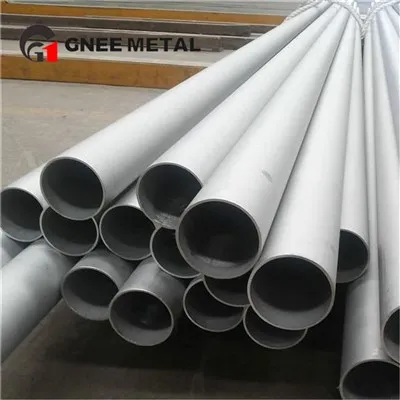
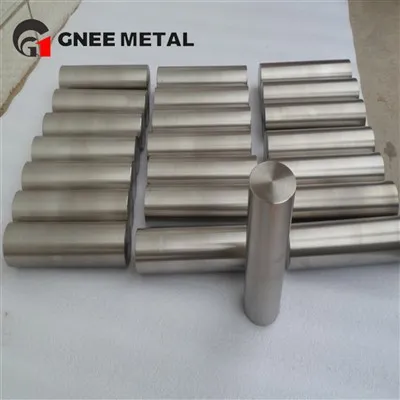
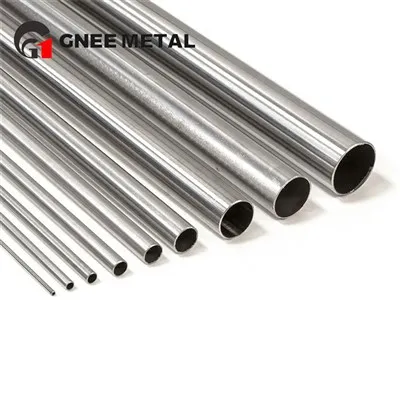
Industrially pure titanium is graded according to the content of impurity elements. It has excellent stamping process properties and welding properties, is insensitive to heat treatment and organization type, and has a certain strength under satisfactory plasticity conditions. Its strength depends mainly on the content of the interstitial elements oxygen and nitrogen. It has high corrosion resistance in seawater, but is poor in inorganic acids. Generally used in the manufacture of a variety of plate parts or forgings that work at temperatures of -253 to 350 ℃ and are not subjected to much force, and can also be used in the manufacture of rivets wire and tubes.
Alpha-phase titanium containing a certain amount of oxygen, nitrogen, carbon, silicon, iron and other elemental impurities. Dense metallic titanium with a titanium content of not less than 98%, containing a small amount of oxygen, nitrogen, hydrogen, carbon, silicon and iron and other impurities. Oxygen, nitrogen, carbon, hydrogen and silicon belong to the interstitial impurity elements, and iron belongs to the alternative β-stabilizing elements. Oxygen, nitrogen and carbon can increase the room temperature tensile strength of titanium, but also reduce the plasticity of titanium, so the content of oxygen, nitrogen and carbon in titanium have relatively strict limits, especially the oxygen content. The solubility of hydrogen in titanium is very small, and the reaction between hydrogen and titanium is reversible. The main effect of hydrogen on titanium performance is manifested as "hydrogen embrittlement", when the hydrogen content of titanium reaches a certain amount, will greatly increase the titanium sensitivity to the notch, which sharply reduces the notched specimen impact toughness and other properties. Usually stipulates that the hydrogen content of titanium shall not exceed 0.015%. Titanium is a modern cosmic aviation science, marine science and nuclear power generation and other cutting-edge science and industry indispensable materials. Titanium is 48% lighter than the general metal, and toughness, acid and alkali resistance, corrosion resistance, high stability, high strength, good elasticity and other advantages, in line with the Department of ergonomics, titanium is non-toxic to the human body, without any radiation.
Typical grades of industrially pure titanium are: Gr-1, Gr-2, Gr-3, Gr-4 of ASTM of the United States; classl, 2, 3 of JIS of Japan; 115, 125, 130, 155, 160 of IMI of the United Kingdom; 3.7025, 3.7035, 3.7055, 3.7065 of DIN of Germany; China's industrially pure titanium material grades are deformed Industrial pure titanium TA1, TA2, TA3; cast industrial pure titanium ZTAl, ZTA2, ZTA3.


Industrial pure titanium should generally undergo two vacuum (at least one of which is in a vacuum white depletion electrode arc furnace) melting, and its castings are usually produced in a vacuum shell furnace. Industrial pure titanium can withstand both hot and cold working. Since titanium easily absorbs oxygen, hydrogen and nitrogen when heated, which reduces plasticity and deteriorates properties, care must be taken to keep the furnace atmosphere neutral or slightly oxidizing when heated, and try to avoid the use of reducing atmosphere, not to mention the use of hydrogen heating. Can be forged, extruded, rolled and stretched in the usual equipment for processing, its thermal processing temperature range of 800 ~ 900 ℃. When cold working is carried out, intermediate annealing should be carried out when the cold working rate reaches a certain value (e.g. 30% to 60%).
Industrial pure titanium cutting similar to austenitic stainless steel, but due to the high chemical activity of titanium, poor thermal conductivity, the tool surface has a high tendency to bond, so the specific cutting process and steel should be different. The use of sharp work gorlg tools, large feed, lower cutting speeds and soluble oil coolant, as well as rigid work fixtures, can be smooth cutting process. Industrial pure titanium is suitable for all kinds of welding, with excellent fluidity in the weld zone. There are many welding methods, the most widely used in industry is argon gas shielded arc welding.
Due to the industrial pure titanium has a good comprehensive performance and excellent corrosion resistance, so it has become an indispensable structural material for many industrial parts. And as a biological implant material, it has been widely used in clinical practice since the 1960s. Among all commonly used implantable metal materials, titanium has good biocompatibility, and because its density and elasticity are close to that of human bone, and it is non-magnetic, thus among the three major metal implant materials, namely stainless steel, cobalt-chromium-molybdenum alloy, and titanium, titanium is one of the most promising bioengineering materials. The application of titanium has solved many major engineering and technical problems, promoted scientific and technological progress, and brought obvious economic benefits, while the excellent performance and great potential of titanium, and demonstrated its application of a broader prospect.