Progress in The Development Of Titanium Alloys
Mar 14, 2024
The excellent properties of titanium, titanium alloys and titanium compounds have led to an urgent need for them. However, the high cost of production has limited their application.
Despite their superior properties, titanium alloy parts are still a long way from the universal application of titanium and its alloys, due to problems such as high prices, poor formability and poor weldability. Whether it is the initial smelting of the metal or subsequent processing, the price of titanium alloy is much higher than other metals.
With the development of titanium alloy near-net forming technology and electron beam welding, plasma arc welding, laser welding and other modern welding technology in recent years, titanium alloy forming and welding problems is no longer a key factor restricting the application of titanium alloys, in recent years, countries are developing low-cost and high-performance new types of titanium alloys, and strive to make titanium alloys into the field of civil industry with huge market potential. The new progress of research on titanium alloy materials at home and abroad is mainly reflected in the following aspects.
High temperature titanium alloy
In recent years, foreign countries to use fast solidification / powder metallurgy technology, fiber or particle reinforced composite materials to develop titanium alloys as a high-temperature titanium alloy development direction, so that the use of titanium alloys can be increased to more than 650 ℃ temperature. The U.S. McDonnell Douglas Company has successfully developed a high-purity, high density titanium alloy using fast solidification/powder metallurgy technology, and its strength at 760℃ is equivalent to the strength of the current titanium alloy used at room temperature.
Titanium-aluminum compound based titanium alloy
Compared with general titanium alloys, titanium and aluminum compounds based on sodium Ti3Al (α2) and TiAl (γ) intermetallic compounds, the big advantage of high temperature performance is good (high temperature of 816 and 982 ℃, respectively), oxidation resistance, creep resistance and light weight (density of nickel-based high-temperature alloys only 1/2), these advantages make it become the future of aero-engine and aircraft structural components with a competitive material. Material.


High strength and high toughness β-type titanium alloy
β-type titanium alloy early is the mid-1950s by the United States Crucible company developed B120VCA alloy (Ti-13v-11Cr-3Al). β-type titanium alloys have good hot and cold machining properties, easy to forge, can be rolled, welded, can be solid solution - aging treatment to obtain high mechanical properties, good environmental resistance and strength and fracture toughness of a good match. New high-strength and high-toughness β-type titanium alloys Representative of the following types:
Ti1023 (Ti-10v-2Fe-#al), the alloy and aircraft structural components commonly used in the 30CrMnSiA high-strength structural steel performance is comparable to excellent forging performance;
Ti153 (Ti-15V-3Cr-3Al-3Sn), the alloy's cold working performance is better than industrial pure titanium, and the room temperature tensile strength after aging can reach more than 1000MPa;
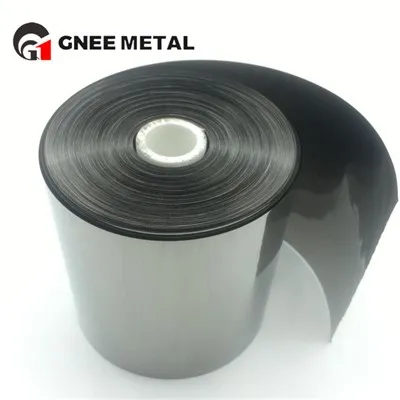
β21S (Ti-15Mo-3Al-2.7Nb-0.2Si), the alloy is a new type of oxidation-resistant, strong titanium alloy developed by the Timet Division of the U.S. Titanium Metals Company, with good oxidation resistance, excellent hot and cold working properties, can be made into foils with a thickness of 0.064mm;
Flame retardant titanium alloy
Conventional titanium alloys have a tendency to burn under certain conditions, which largely limits their application. In view of this situation, all countries have launched the research on flame retardant titanium alloys and made some breakthroughs. The United States developed Alloy c, is a continuous combustion insensitive flame retardant titanium alloy, has been used in the F119 engine. BTT-1 and BTT-3 for the Russian development of flame retardant titanium alloys, are Ti-Cu-Al alloys, has a fairly good thermal deformation process performance, can be used to make complex parts.
Medical Titanium Alloy
Titanium is non-toxic, lightweight, high strength and has excellent biocompatibility, is a very ideal medical metal materials, can be used as implants implanted in the human body. At present, widely used in the medical field is still Ti-6Al-4v ELI alloy. However, the latter will precipitate a very small amount of vanadium and aluminum ions, reducing its cellular adaptability and may cause harm to the human body, this problem has long caused widespread concern in the medical community. The United States as early as the mid-1980s began to develop aluminum-free, vanadium-free, biocompatible titanium alloys for orthopedic surgery. Japan, the United Kingdom and other countries have also done a lot of research work in this area and made some new progress. It is estimated that in the near future, with high strength, low modulus of elasticity, as well as excellent molding and corrosion resistance properties of the LU titanium alloy is likely to replace the Ti-6Al-4V ELI alloy, which is widely used in the medical field.