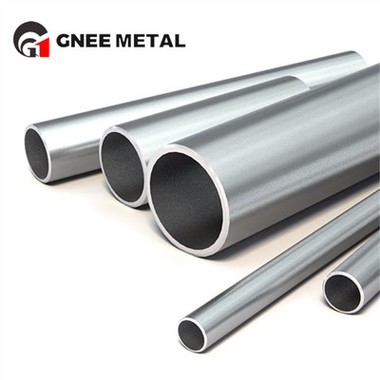
Things To Note When Processing Titanium Tubes
Nov 08, 2023
1. When installing titanium and titanium alloy pipes, care should be taken not to contact or collide with iron materials when transporting and storing titanium and titanium alloy pipes.
2. Titanium and titanium alloy pipes should be cut by mechanical methods, and the cutting speed should be low. When cutting or grinding titanium pipes with grinding wheels, special grinding wheels should be used; flame cutting is not allowed. The groove should be processed mechanically.
3. Titanium and titanium alloy pipes should be welded using inert gas shielded welding or vacuum welding. Oxygen-acetylene welding or carbon dioxide gas shielded welding cannot be used, nor can ordinary manual arc welding be used.
4. When installing titanium and titanium alloy pipes, do not use iron tools and materials to knock or squeeze them; rubber plates or soft plastic plates should be inserted between carbon steel supports and hangers and titanium and titanium alloy pipes to make them Not in direct contact with titanium and titanium alloy pipes; when titanium and titanium alloy pipes pass through walls or floors, casings should be installed. The gaps should not be less than 10mm and should be filled with insulation. The insulation should not contain iron impurities.
5. Titanium and titanium alloy pipes should not be directly welded to other metal pipes. When connections are required, loop flange connections can be used. The non-metallic gasket used is generally a rubber gasket or a plastic gasket, and the chloride ion content should be controlled not to exceed 25ppm.