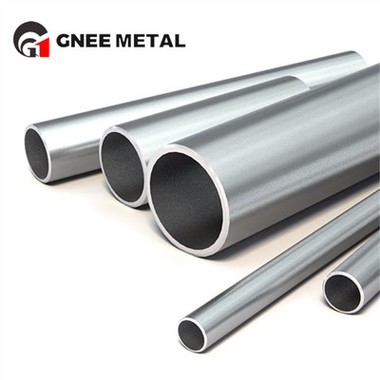
Zr702/Zr705 Zirconium Metal And Its Alloy Applications
Mar 11, 2024
Zirconium and its alloys have outstanding nuclear properties and excellent corrosion resistance and mechanical properties, at present almost all used in the atomic energy industry, as the structure of nuclear reactors, cladding and control rods materials.
1. Application in reactors
Zirconium metal is suitable for water-cooled reactors, and its uses are as follows:
(1) Making permanent core structures and fixing fuel elements. To make pressure tubes and to make other accessories.
(2) As cladding material for fuel elements. Fuel element cladding material requires a small thermal neutron absorption cross-section, good corrosion resistance and mechanical properties, in which zirconium alloys are the most satisfactory. In addition, the thermal conductivity and compatibility with fuel are also good.
(3) Zirconium is a good additive for uranium alloys. The hydride of zirconium can be used as a decelerator in reactors.
Bell is an ideal control material for water-cooled reactors. Because of its good corrosion resistance, bell can be used in the bare state without cladding. The noodles are highly resistant to irradiation and have a long service life. At present, almost all water-cooled reactors for ships use bell to make control rods.
2. Application in chemical industry
Because zirconium has excellent resistance to corrosion by acids, alkalis and other media, it has been increasingly widely used in chemical equipment. Such as zirconium can be used to manufacture corrosion-resistant reaction towers, pumps, heat exchangers, valves, stirrers, nozzles, thermocouple casing, conduit and container lining and so on.


3. Other applications
Zirconium, noodles powder in the electronic tube industry can be used as a good degassing agent, Zr-16A1 alloy powder and pressure knot is an excellent non-dissipative degassing agent. Zirconium wires and sheets can be used as gate holders, cathode holders and gate materials. The use of bell's high melting point and high emissivity, available bell (W-Hf alloy) to make incandescent filament, the cathode of the X-ray tube, the electrode of the high-voltage gas discharge tube and rectifier components.
In the pyrotechnic industry, zirconium and lead powder are used to make detonators and primers. Zirconium powder and zirconium nitrate can be used to make photographic flash powder.
Zirconium metal as an alloying element has many valuable uses in the smelting industry.
In the steelmaking process, zirconium is a powerful deoxidizing and denitrifying element. Zirconium refines the austenite grains in steel, and sulfur can be synthesized into zirconium sulfide, thus preventing the thermal embrittlement of steel. Zirconium also reduces the effects of strain aging and improves the low temperature toughness of steel. For magnesium alloys, aluminum alloys, zirconium is extremely effective grain refiner.
The addition of a small amount of lead improves the resistance of nickel-mining alloys (containing about 80% Ni and 20% Cr). In addition, when reducing tungsten oxides, adding 0.1~3% of lead can control the rate of grain growth.
Zirconium oxides are raw materials for acid-resistant enamel and refractory materials. Some compounds of zirconium are used as dyes and as catalysts for organic reactions. In the glass industry, zirconium chromium is used as an additive for special glasses.
Carbide of noodles (HfC) melting point of 3890C, and tantalum carbide (TaC) 1:4 composition after (HfC-4TaC), the melting point of 3940C, is the highest melting point of ceramic materials. Carbide noodles are very hard and can be used as sharpening and abrasive materials.