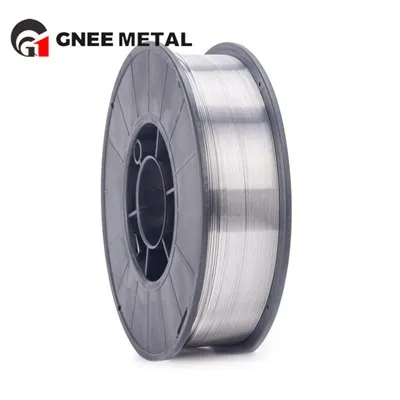
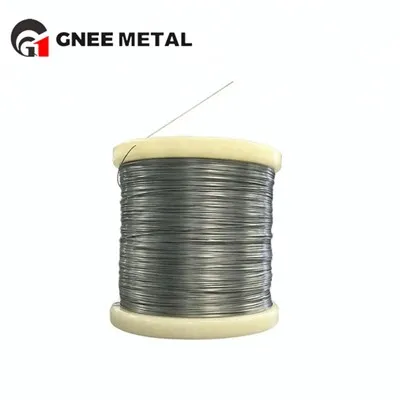
Alpha Titanium Alloys
Titanium alloys are alloys that contain a mixture of titanium and other chemical elements. Such alloys have very high tensile strength and toughness (even at extreme temperatures). They are light in weight, have extraordinary corrosion resistance and the ability to withstand extreme temperatures. However, the high cost of both raw materials and processing limit their use to military applications, aircraft, spacecraft, bicycles, medical devices, jewelry, highly stressed components such as connecting rods on expensive sports cars and some premium sports equipment and consumer electronics.
Description
The α alloys contain predominantly α phase at temperatures well above 540°C (1000°F). A major class of α alloy is the unalloyed CP titanium family of alloys that differ by the amount of oxygen and iron in each alloy. Alloys with higher interstitial content are higher in strength, hardness, and transformation temperature compared to high-purity alloys. Other α alloys contain additions such as aluminum and tin (e.g., Ti–5Al–2.5Sn and Ti–6Al–2Sn–4Zr–2Mo (in wt%)). Generally, α rich alloys are more resistant to high-temperature creep than α/β or β alloys, and α alloys exhibit little strengthening from heat treatment. These alloys are usually annealed or recrystallized to remove stresses imparted from cold working. They have good weldability and generally inferior forgeability in comparison to α/β or β alloys.
Products Description
First-class titanium production technology

| Composition (wt%) | Grade 7 | Grade 11 | Grade 17 |
|---|---|---|---|
| Pd | 0.12–0.25 | 0.12–0.25 | 0.04–0.08 |
| O | ≤0.25 | ≤0.18 | ≤0.18 |
| Fe | ≤0.30 | ≤0.20 | ≤0.20 |
| H | ≤0.015 | ≤0.015 | ≤0.015 |
| N | ≤0.03 | ≤0.03 | ≤0.03 |
| C | ≤0.1 | ≤0.1 | ≤0.1 |
| Ti | Balance | Balance | Balance |
Titanium alloys are generally classified into four main categories:
Alpha alloys which contain neutral alloying elements (such as tin) and/ or alpha stabilisers (such as aluminium or oxygen) only. These are not heat treatable. Examples include:Ti-5Al-2Sn-ELI, Ti-8Al-1Mo-1V.
Near-alpha alloys contain small amount of ductile beta-phase. Besides alpha-phase stabilisers, near-alpha alloys are alloyed with 1–2% of beta phase stabilizers such as molybdenum, silicon or vanadium. Examples include:Ti-6Al-2Sn-4Zr-2Mo, Ti-5Al-5Sn-2Zr-2Mo, IMI 685, Ti 1100.
Alpha and beta alloys, which are metastable and generally include some combination of both alpha and beta stabilisers, and which can be heat treated. Examples include:Ti-6Al-4V, Ti-6Al-4V-ELI, Ti-6Al-6V-2Sn, Ti-6Al-7Nb, and Ti62A
Beta and near beta alloys, which are metastable and which contain sufficient beta stabilisers (such as molybdenum, silicon and vanadium) to allow them to maintain the beta phase when quenched, and which can also be solution treated and aged to improve strength. Examples include:Ti-10V-2Fe-3Al, Ti–29Nb–13Ta–4.6Zr, Ti-13V-11Cr-3Al, Ti-8Mo-8V-2Fe-3Al, Beta C, Ti-15-3.
Product packaging

Package Terms:
Moisture-proof cloth, foam cotton inside, wooden case outside.
Express,Air,Shipping or as your choice.
All the detail terms we will discuss in the contract.
about us
Established in 2008, the company has grown over the years to become a leading manufacturer and supplier of metal products serving a wide range of industries. The company continuously invests in research and development to improve the quality and durability of its products. The company places great emphasis on customer satisfaction and is known for providing high quality products and excellent customer service. Today, the company has a global presence and serves customers in countries all over the world.
Highly reliable team

Customer visits

GNEE Participation in Exhibitions

Hot Tags: alpha titanium alloys, China alpha titanium alloys manufacturers, suppliers, factory, titanium, Pure Titanium Gr2 Wire, Round Titanium Wire, Gr9 thin titanium wire, straight titanium Gr1 wire, thin Gr7 titanium wire, straight Gr1 titanium wire