Straightening Method Of Titanium Tube
Nov 03, 2023
Tension straightening, sinusoidal straightening, pressure straightening and other methods are used to straighten titanium tubes.
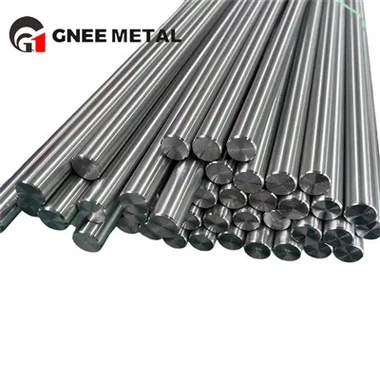
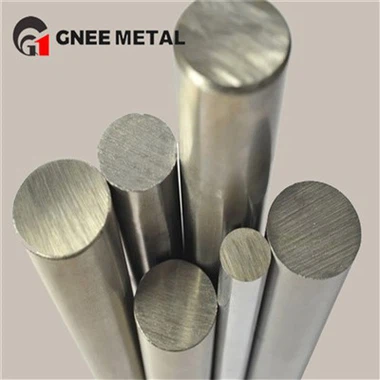
Tension straightening is a processing method that applies vertical tension that exceeds the yield limit of the material to the workpiece to plastically extend it and correct shape defects. It is also called tensile straightening. During straightening, tensile stress exceeding the yield limit of the material is applied to titanium rods, titanium wires and titanium tubes with corrugated defects on the tension straightening machine.
The accumulation of tensile stress and the original residual stress of the titanium rod. At the larger extension, part of the tensile stress is offset, thereby reducing the actual deformation stress, and the plastic extension is smaller during straightening; at the original smaller place, due to the increase in tensile stress Accumulated, the deformation stress actually expands and plastically widens during straightening. Therefore, after the tension is applied, all parts of the straightened workpiece extend evenly, thus eliminating the waveform defect.
In production, the sinusoidal straightening method is widely used for bars and pipes with simple cross-sections. Titanium tubes and titanium rods are processed on an inclined roller straightening machine. The number of rollers of the straightening machine is greater than 4 (usually 5 to 29 rollers), and its working principle is to gradually reduce the variation range of the residual curvature of the workpiece by continuously bending three points of the workpiece through each roller.
Sinusoidal straightening is often used together with pressure straightening. First, the workpiece with large curvature is straightened by a pressure straightening machine, and then the inclined roller is straightened. The straightening effect mainly depends on the pressure of the straightening machine and the roller inclination angle. The stress depends on the yield strength and degree of bending of the alloy material. If it is a high-strength titanium alloy, when the curvature is larger, the straightening pressure should be larger, and vice versa. The size of the roller inclination angle depends on the diameter of the workpiece, and the large diameter workpiece should be larger than the small straightening inclination angle. After straightening, unqualified workpieces should also be returned for re-straightening. Titanium pipes that cannot be straightened should be sent to a tension straightening machine for straightening.
The basic principle of titanium tube roller straightening is:
(1) The smaller the roller diameter, the greater the number of rollers, and the higher the straightening accuracy; the small roller distance value is conducive to the bite of the workpiece and the establishment of the straightening process.
(2) The main function of the first few rollers in titanium tube roller straightening is to reduce the residual curvature difference along the length direction of the workpiece, and the main function of the subsequent rollers is to reduce the residual curvature to make it uniform.
(3) The advantage and disadvantage of straightening quality lies in the reasonable determination of the reverse bending rate of the workpiece under each roller. The first few rollers (the second and third rollers) adopt larger reverse bending rates, and the reverse bending rates on subsequent rollers are determined based on the residual curvature of the previous adjacent rollers.
(4) The larger the hardening coefficient, the more difficult it is to straighten the material. In this case, a larger reverse bending rate, a larger number of straightening rollers, and a smaller roller diameter should be used.