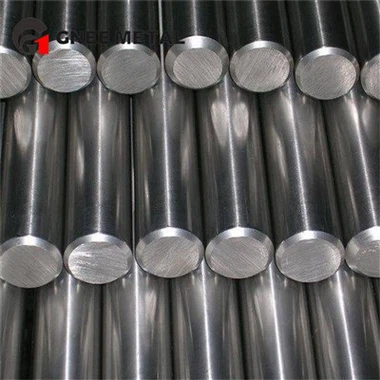

TA10 Titanium Rod Properties And Applications
Apr 02, 2024
I. Overview of TA10 titanium bar Pure titanium bar and titanium alloy bar is a new type of structural material, because titanium has a high melting point, small specific gravity, high specific strength, good toughness, fatigue resistance, acid and alkali corrosion resistance, low thermal conductivity, high and low temperatures, good resistance, in the rapid cold and heat conditions of the stress is small and other characteristics. It is used in aviation, aerospace and other high-tech fields, and is constantly promoted to the chemical industry, petroleum, electric power, seawater desalination, construction, daily necessities and other industries.


II. Titanium rods commonly used grades
National standard grade: TA1, TA2, TA3, TA7, TA9, TA10, TA15, TA18, TC4, TC4ELI, TC6, TC9, TC10, TC11
American Standard: GR1, GR2, GR3, GR5, GR7, GR12.
III. Titanium bar making process:
Hot forging - hot rolling - annealing straightening - turning (grinding) - polishing - flat head - inspection - packaging
IV. Titanium rod implementation of common standards:
National standard: GB/2965-2007, GB/T13810
American Standard: ASTM B348, ASTM F136, ASTM F67, AMS4928
V. Titanium bar specifications: (diameter * length / mm): 6mm-250mm * L
VI. Titanium bar supply state: hot working state, annealed state
VII. Citation standards
1,GB 228 metal tensile test methods
2, GB / T 3620.1 titanium and titanium alloy number and chemical composition
3, GB / T 3620.2 titanium and titanium alloy processing products, chemical composition and composition of the permissible deviations
4, GB 4698 titanium sponge, titanium and titanium alloy chemical analysis methods
VIII. Technical requirements for titanium rods
1, the chemical composition of titanium and titanium alloy rods should be consistent with the provisions of GB / T 3620.1, the need for repeated testing, the permissible deviation of the chemical composition should be consistent with the provisions of GB / T 3620.2. TA10 (Ti-0.3Mo-0.8Ni)
2, the diameter or length of hot-worked bar and its allowable deviation should be consistent with the corresponding provisions.
3, hot machined by turning (grinding) bar and cold rolled, cold drawn bar diameter allowable deviation shall comply with the industry regulations.
4, hot machined by turning (grinding) light bar should not be more than half of the size tolerance of the out-of-roundness.
IX. Uses:
Aerospace, aviation, navigation, ships, desalination, petroleum, chemical industry, machinery and equipment, nuclear power equipment, power equipment, automobile and motorcycle parts, sports and leisure, medical parts, steel and metallurgy, high-tech fields.