


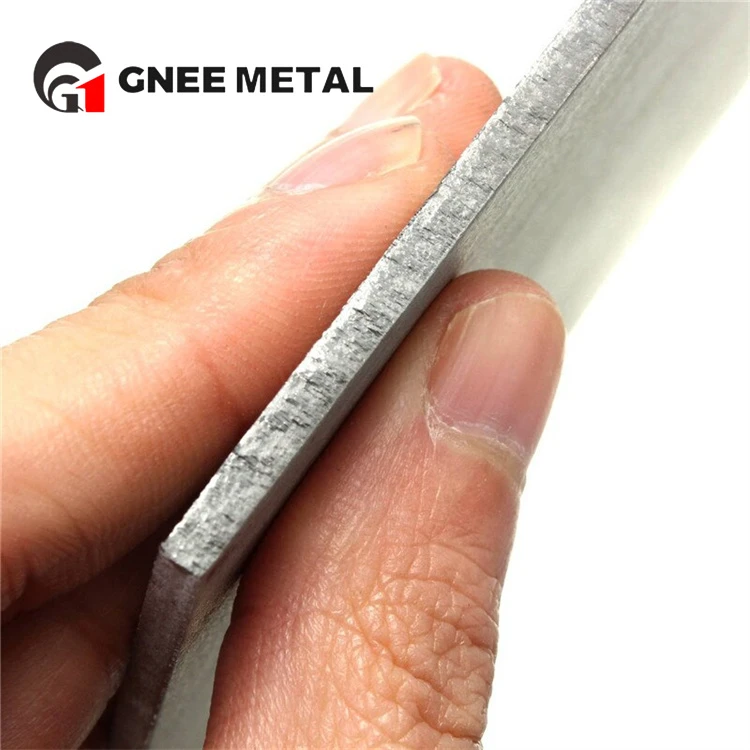
Grade 12 Titanium Plate
Material: Grade 12 Titanium (Ti-0.3Mo-0.8Ni)
UNS: R53400
Standard: ASTM B265
Product forms: Titanium plate, sheet, and strip
Typical condition: Annealed
Key features: Improved crevice corrosion resistance, higher strength than Grade 2, good weldability, and corrosion resistance in chloride-containing environments
Description
What is a Grade 12 titanium plate?
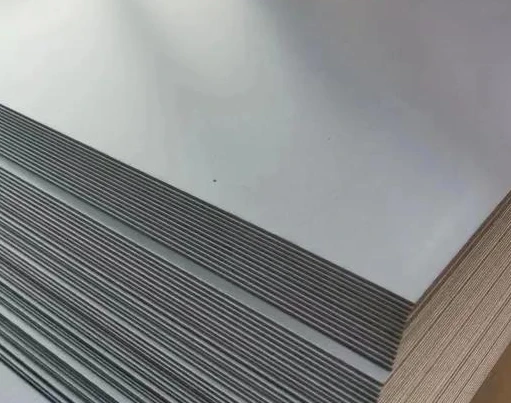
Grade 12 Titanium Plate is a corrosion-resistant titanium alloy containing small additions of molybdenum and nickel. Its nominal composition is Ti-0.3Mo-0.8Ni, and it is identified by UNS R53400.
Compared with commercially pure Grade 2 titanium, Grade 12 offers higher mechanical strength and improved resistance to crevice corrosion, particularly in certain hot chloride and brine environments. It also provides good weldability and performs well in many oxidizing and mildly reducing chemical environments.
Grade 12 titanium plate is commonly selected for industrial equipment exposed to corrosive liquids, elevated temperatures, and conditions where Grade 2 may not provide sufficient corrosion resistance or mechanical strength.

Grade 12 Titanium Plate Specifications
We supply Grade 12 titanium plate and sheet for industrial fabrication, chemical processing equipment, heat exchangers, and other corrosion-resistant applications.
| Parameter | Typical Commercial Specification |
|---|---|
| Product Name | Grade 12 Titanium Plate |
| Material Grade | Grade 12 |
| Alloy Composition | Ti-0.3Mo-0.8Ni |
| UNS Number | R53400 |
| Standard | ASTM B265 |
| Product Form | Plate, Sheet, Strip |
| Thickness | 0.5–100 mm |
| Width | 1,000–2,500 mm |
| Length | 2,000–6,000 mm |
| Delivery Condition | Annealed |
| Manufacturing Process | Hot Rolled, Cold Rolled |
| Surface Finish | Pickled, Bright, Machined |
| Inspection | Chemical Analysis, Tensile Test, Dimensional Inspection, Surface Inspection |
| Certification | Mill Test Certificate (MTC) |
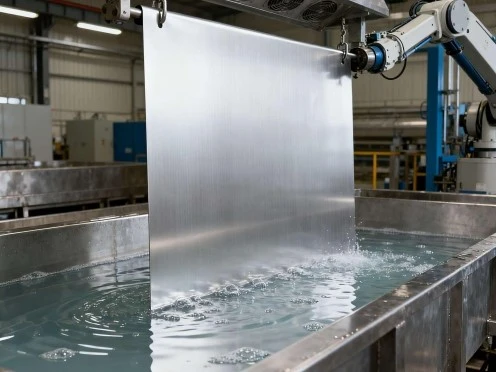
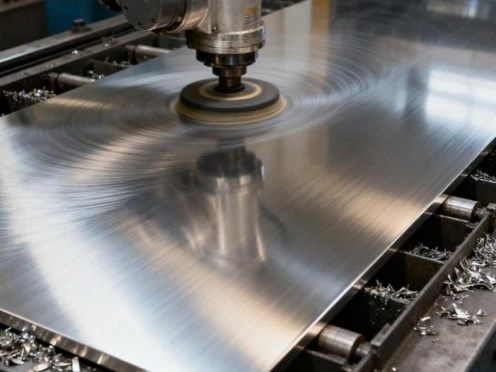
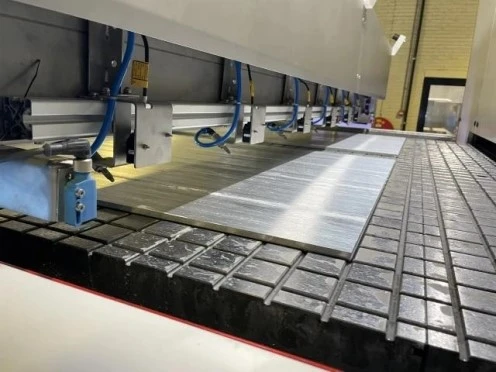
Available surface finishes:
Pickled Surface: Removes oxide scale formed during hot processing.
Bright Surface: Provides a smoother metallic appearance.
Machined Surface: Offers a more controlled surface condition for subsequent fabrication.
Chemical Composition of Gr12 Titanium
Grade 12 titanium is a lightly alloyed titanium material. Its main alloying elements are molybdenum (Mo) and nickel (Ni), which improve its corrosion resistance and mechanical properties compared with commercially pure titanium grades.
Chemical Composition Requirements
| Element | Composition (wt.%) |
|---|---|
| Titanium (Ti) | Balance |
| Molybdenum (Mo) | 0.20–0.40 |
| Nickel (Ni) | 0.60–0.90 |
| Iron (Fe) | 0.30 max. |
| Oxygen (O) | 0.25 max. |
| Carbon (C) | 0.08 max. |
| Nitrogen (N) | 0.03 max. |
| Hydrogen (H) | 0.015 max. |
Why Are Molybdenum and Nickel Added?
Molybdenum (Mo) improves the alloy's resistance to localized corrosion in certain reducing and chloride-containing environments. It is particularly relevant to Grade 12's improved resistance to crevice corrosion.
Nickel (Ni) contributes to the alloy's corrosion performance in reducing environments and works together with molybdenum to provide a better balance of corrosion resistance and strength.
The combination of these elements makes Grade 12 suitable for applications where commercially pure titanium may be less resistant to localized corrosion.
Mechanical Properties of Ti-0.3Mo-0.8Ni Plate
Grade 12 titanium offers higher strength than commercially pure Grade 2 titanium while maintaining useful ductility and weldability. These properties make it suitable for equipment components exposed to both mechanical loads and corrosive service conditions.
| Property | Minimum Requirement / Typical Reference |
|---|---|
| Tensile Strength | 483 MPa min. |
| Yield Strength (0.2% Offset) | 345 MPa min. |
| Elongation | 18% min. |
| Reduction of Area | 25% min. |
| Elastic Modulus | Approx. 103 GPa |
| Hardness | Approx. 170–240 HV, typical reference |
Physical Properties of UNS R53400 Titanium
Grade 12 retains the relatively low density and high strength-to-weight characteristics associated with titanium materials. Its physical properties are important when calculating component weight, thermal performance, and structural behavior.
| Physical Property | Typical Value |
|---|---|
| Density | 4.51 g/cm³ |
| Elastic Modulus | Approx. 103 GPa |
| Poisson's Ratio | Approx. 0.34 |
| Thermal Conductivity | Approx. 16 W/(m·K) |
| Melting Range | Approx. 1,660–1,680°C |
Physical property values are typical references and may vary slightly with material condition, temperature, and data source. They should not replace design values specified by the applicable engineering code.
Density: At approximately 4.51 g/cm³, Grade 12 titanium is significantly lighter than many common engineering metals, including stainless steel.
Thermal Conductivity: Titanium has relatively low thermal conductivity compared with copper and aluminum. Heat exchanger design should account for this property when calculating heat transfer performance.
Elastic Modulus: Its elastic modulus is lower than that of steel, which should be considered when evaluating component stiffness and deformation.
Corrosion Resistance of Grade 12 Titanium
Corrosion resistance is one of the main reasons Grade 12 titanium plate is selected for chemical processing, heat exchangers, and industrial equipment.
The alloy combines titanium's protective passive film with small additions of molybdenum and nickel. These alloying elements improve its performance in selected environments compared with commercially pure titanium.
Corrosion Resistance in Different Environments
| Environment | Grade 12 Performance | Application Considerations |
|---|---|---|
| Chloride-Containing Environments | Good resistance in many chloride services | Evaluate temperature, concentration, flow, and deposits |
| Seawater and Brackish Water | Suitable for many applications | Check crevice geometry, temperature, and service conditions |
| Hot Brines | Improved crevice corrosion resistance compared with CP titanium | Particularly relevant where deposits or tight joints occur |
| Mildly Reducing Acidic Environments | Good resistance in selected chemical conditions | Acid type and concentration are critical |
| Chemical Processing Environments | Suitable for many oxidizing to mildly reducing services | Confirm compatibility with the complete process chemistry |
Why Does Grade 12 Resist Crevice Corrosion Better?
Crevice corrosion can occur in narrow gaps where the local chemical environment becomes different from the surrounding bulk liquid.
Typical locations include:
Gasket contact areas
Bolted joints
Overlapping plates
Deposits and sediment-covered surfaces
Narrow gaps in heat exchanger assemblies
In hot chloride solutions, these locations can become more aggressive than the surrounding environment.
Grade 12's molybdenum and nickel additions improve its resistance to crevice corrosion in certain conditions. This makes it a useful option for equipment where hot brines or chloride-containing liquids are present.
Grade 12 Material Selection: What Should Buyers Check?
Before selecting Grade 12 titanium plate for a corrosion-resistant project, buyers and engineers should evaluate:
Chemical composition of the medium: Identify all major chemicals, impurities, and contaminants.
Concentration: The same chemical can produce different corrosion behavior at different concentrations.
Operating temperature: Higher temperatures can significantly change corrosion performance.
Flow conditions: Flow velocity, stagnation, and deposits may affect local corrosion.
Crevice geometry: Gaskets, joints, and deposits can create localized corrosion conditions.
Mechanical requirements: Pressure, loading, plate thickness, and design code requirements must also be considered.
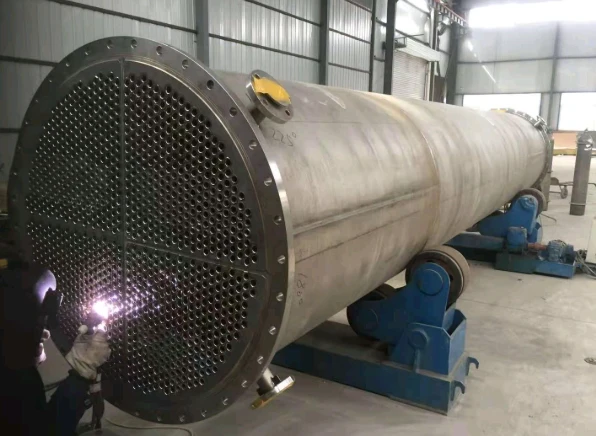
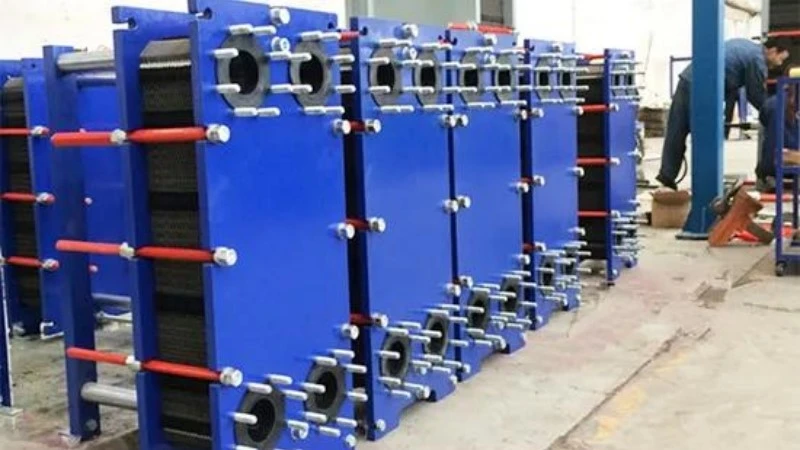
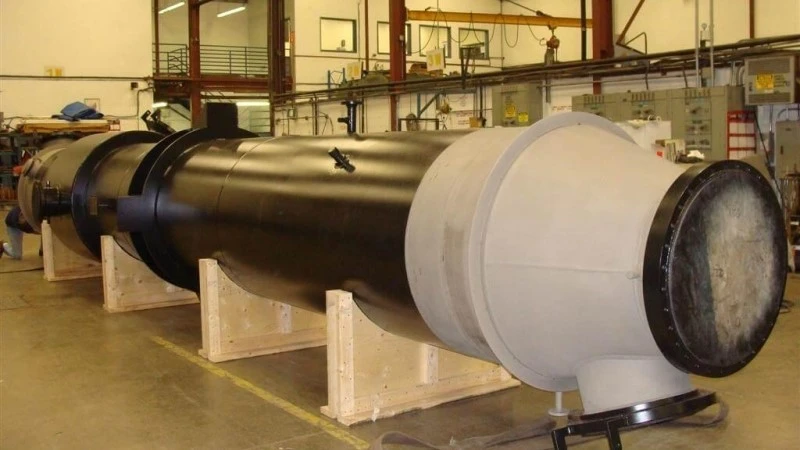
Titanium Heat Exchanger in a Corrosive Chemical Environment
Grade 12 vs Grade 2 vs Grade 7 Titanium Plate
Grade 12, Grade 2, and Grade 7 are all used in corrosion-resistant industrial equipment, but their alloy compositions and corrosion performance differ.
The right choice depends on the chemical environment, temperature, mechanical requirements, and design specifications.
Grade 12 vs Grade 2 vs Grade 7: Comparison Table
| Comparison | Grade 2 | Grade 12 | Grade 7 |
|---|---|---|---|
| UNS Number | R50400 | R53400 | R52400 |
| Alloy Type | Commercially Pure Titanium | Ti-0.3Mo-0.8Ni | Titanium with Palladium |
| Main Alloying Elements | No intentional major alloy additions | 0.20–0.40% Mo, 0.60–0.90% Ni | 0.12–0.25% Pd |
| Tensile Strength | 345 MPa min. | 483 MPa min. | 345 MPa min. |
| Yield Strength | 275 MPa min. | 345 MPa min. | 275 MPa min. |
| Elongation | 20% min. | 18% min. | 20% min. |
| Crevice Corrosion Resistance | Limited in some hot chloride conditions | Improved in certain hot brines and chloride environments | Excellent in many reducing and acidic environments |
| Weldability | Good | Good | Good |
| Typical Applications | General chemical equipment, heat exchangers, seawater equipment | Chemical processing equipment, hot brine service, heat exchangers | Chemical processing equipment, acidic reducing environments |
Grade 12 vs Grade 2: Which Should You Choose?
Grade 2 is a widely used commercially pure titanium grade with good corrosion resistance, ductility, and weldability. It is suitable for many seawater and chemical processing applications.
Grade 12 contains molybdenum and nickel, providing higher mechanical strength and improved resistance to crevice corrosion in certain environments.
Choose Grade 2 when:
The operating environment is suitable for commercially pure titanium.
Standard mechanical strength is sufficient.
The application does not require the additional crevice corrosion resistance of Grade 12.
Choose Grade 12 when:
The equipment operates in certain hot chloride or brine environments.
Crevice corrosion is a significant material selection concern.
Higher mechanical strength is required.
Grade 12 vs Grade 7: Which Is More Suitable?
Grade 7 is commercially pure titanium alloyed with palladium. Palladium improves corrosion resistance in many reducing acid environments.
Grade 12 uses molybdenum and nickel rather than palladium. It is particularly known for improved crevice corrosion resistance in selected hot chloride environments and offers higher minimum strength requirements than standard Grade 7 plate.
Choose Grade 7 when:
The process involves reducing acidic environments where palladium-bearing titanium is advantageous.
The chemical service has established Grade 7 material requirements.
Choose Grade 12 when:
Hot brine or chloride-related crevice corrosion is a key concern.
Higher mechanical strength is an important design consideration.
The chemical environment is compatible with Grade 12.
Applications of Ti-0.3Mo-0.8Ni Plate
Grade 12 titanium plate is used in industrial equipment where corrosion resistance, mechanical strength, and fabrication performance are important.
Its alloying additions make it especially relevant to selected chemical processing and hot chloride applications.
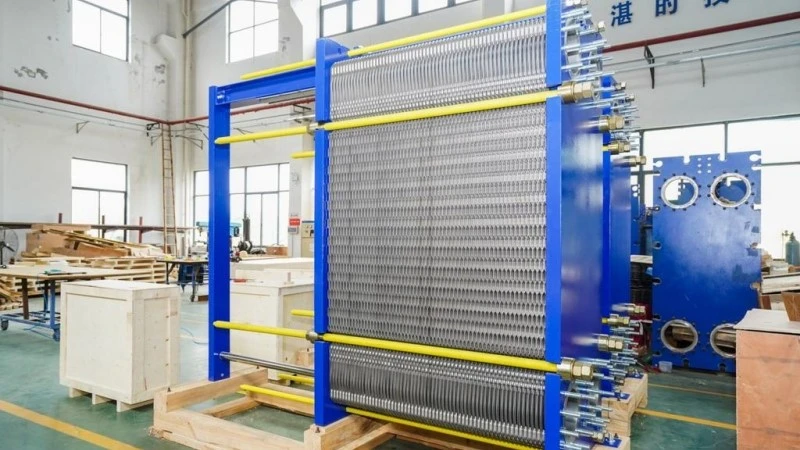
Heat Exchangers
Heat exchanger tube sheets
Shell-side structural components
Corrosion-resistant partition plates
Equipment plates and internal components
Why Grade 12? Its improved strength and crevice corrosion resistance can be useful in selected heat exchanger services involving hot chloride-containing liquids.
Chemical Processing Equipment
Reactor components
Corrosion-resistant vessel sections
Equipment linings
Internal plates and partitions
Why Grade 12? It offers corrosion resistance in many oxidizing and mildly reducing chemical environments, subject to the actual process chemistry.
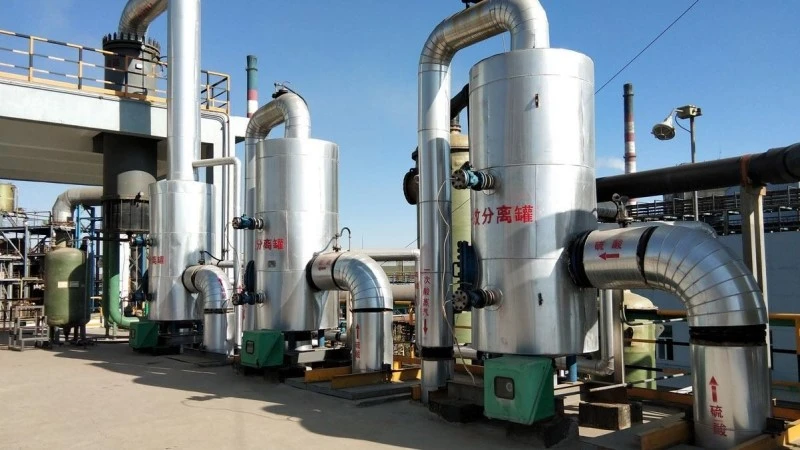
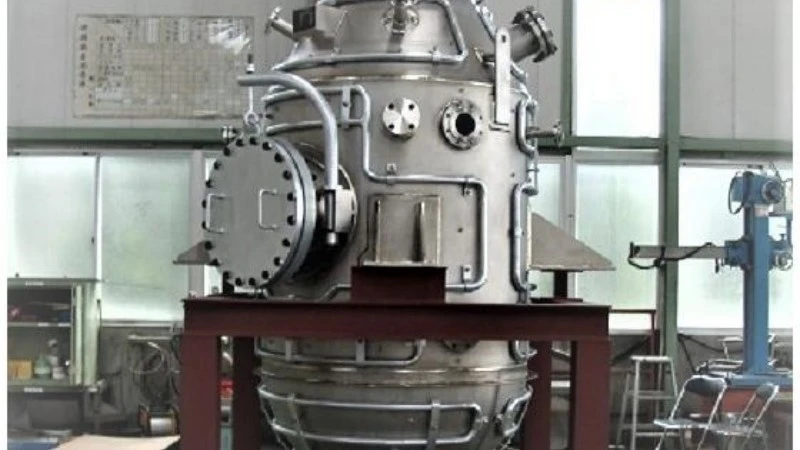
Pressure Vessels
Vessel shells
Vessel heads
Internal partitions
Corrosion-resistant structural sections
Why Grade 12? Its strength and corrosion resistance make it a material option for selected pressure equipment. Design and fabrication must comply with the applicable pressure vessel code.
Seawater and Desalination Equipment
Desalination equipment plates
Heat exchanger components
Corrosion-resistant internal sections
Equipment panels
Why Grade 12? Its improved resistance to certain hot chloride and brine conditions can make it suitable for selected desalination and seawater-related equipment.
Industrial Corrosion-Resistant Equipment
Tank sections
Process equipment linings
Internal baffles
Corrosion-resistant panels
Why Grade 12? It provides a combination of corrosion resistance and mechanical strength for industrial equipment exposed to demanding chemical conditions.
Manufacturing Process of UNS R53400 Titanium Plate
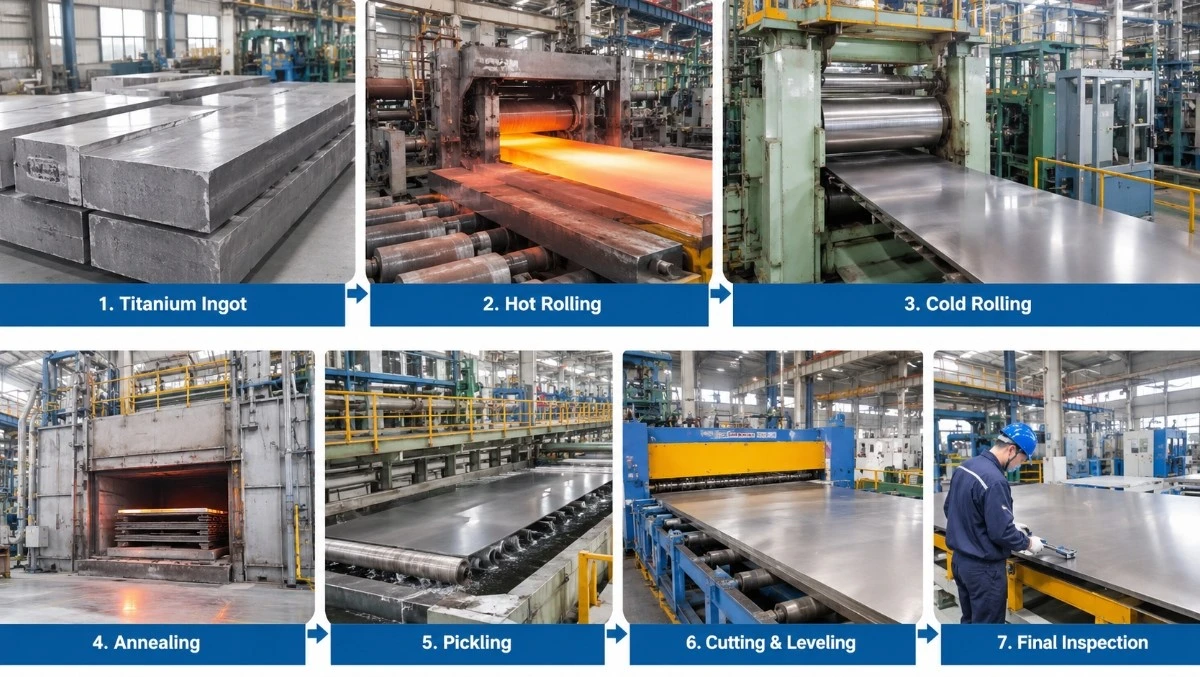
| Process | Description |
|---|---|
| Alloy Preparation | Titanium raw materials and alloying elements are prepared according to the required composition. |
| Vacuum Melting | Vacuum melting is used to produce a controlled titanium alloy ingot. |
| Ingot Preparation | The ingot is inspected and prepared for subsequent hot working. |
| Hot Rolling | The ingot is heated and rolled into plate or intermediate stock. |
| Cold Rolling | Additional rolling is used where thinner gauges and improved dimensional control are required. |
| Annealing | Heat treatment is applied to achieve the specified material condition and mechanical properties. |
| Pickling | Oxide scale and surface contamination are removed using a controlled process. |
| Cutting and Leveling | Plates are cut, leveled, and prepared to the required dimensions. |
| Final Inspection | Dimensions, surface quality, and required material properties are checked. |
Quality Inspection and Testing of Gr12 Titanium Plate
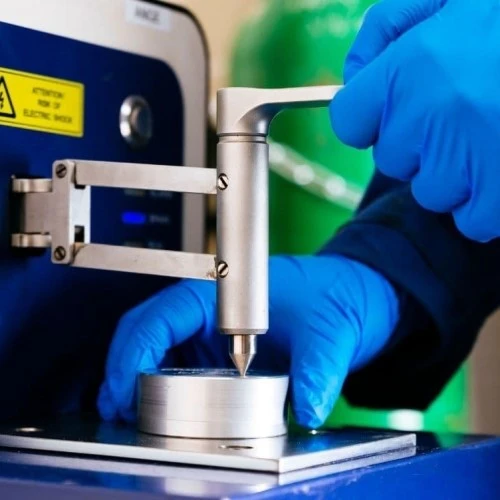
Chemical Analysis
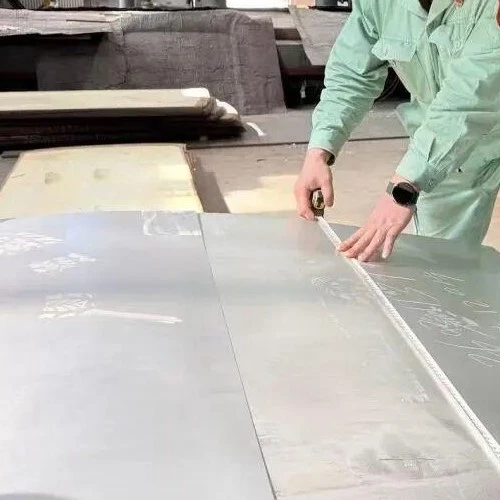
Dimensional Inspection
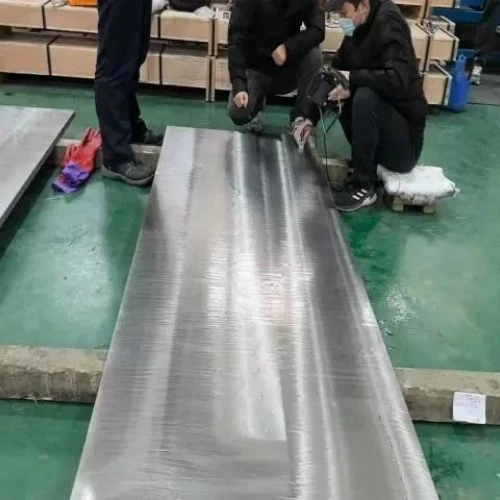
Surface Inspection
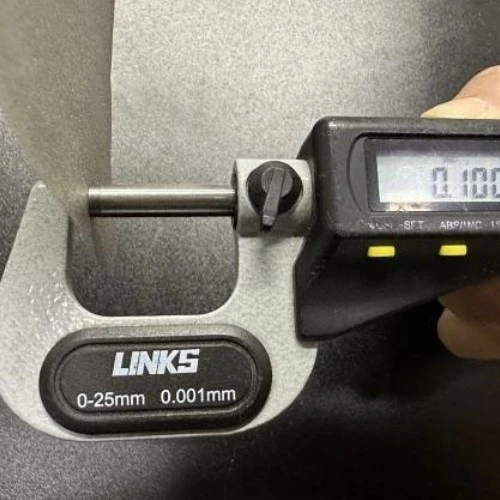
Thickness Tolerance
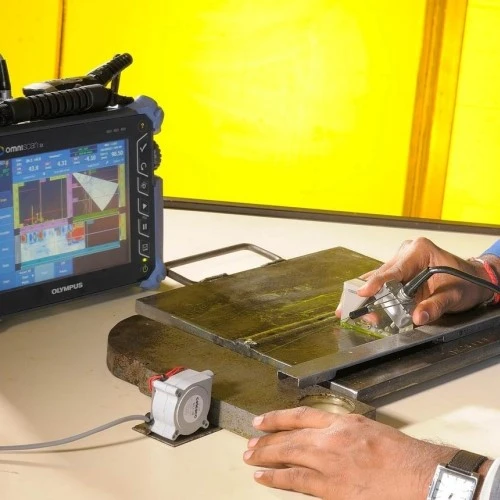
Ultrasonic Testing
| Inspection Item | Purpose |
|---|---|
| Chemical Composition Analysis | Verifies titanium alloy composition, including Mo and Ni content |
| Tensile Test | Measures tensile strength and yield strength |
| Elongation Test | Evaluates material ductility |
| Hardness Test | Checks hardness when required |
| Bend Test | Evaluates bending performance where specified |
| Ultrasonic Testing (UT) | Checks internal discontinuities when required |
| Surface Inspection | Checks for cracks, scratches, scale, and other visible defects |
| Dimensional Inspection | Verifies thickness, width, length, and flatness |
| Visual and Marking Inspection | Checks product identification and traceability |
Packaging and Delivery of UNS R53400 alloy Plate
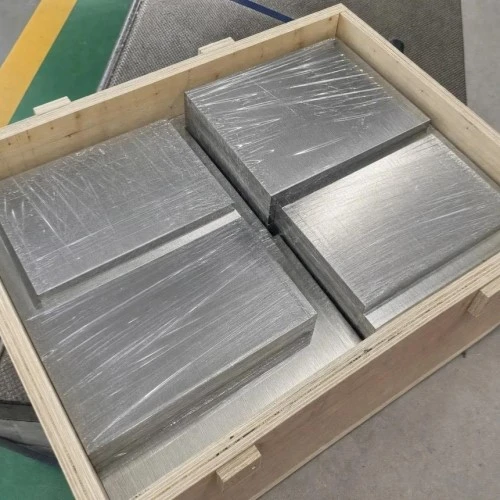
Titanium Plates Stacked Inside Wooden Crates
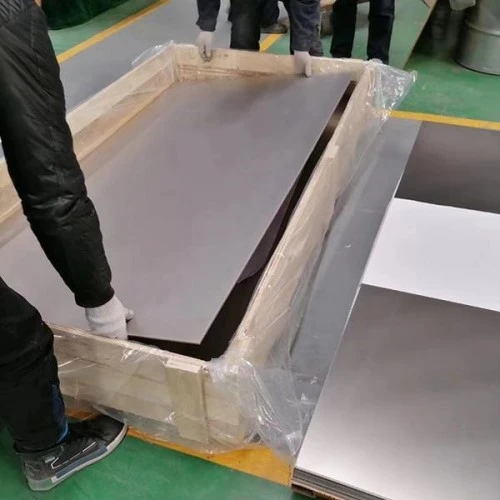
Protective Packaging for Titanium Plates Inside Wooden Crates
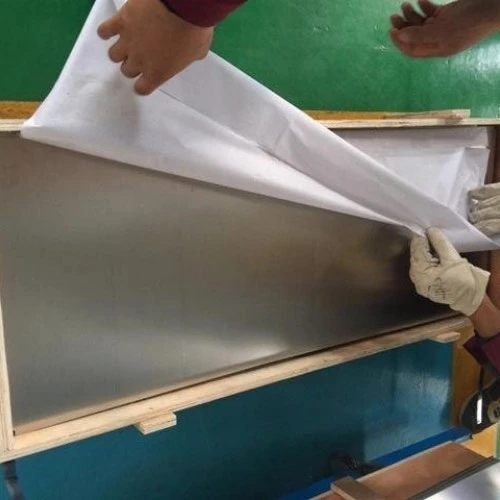
Titanium Plates Wrapped with Protective Paper
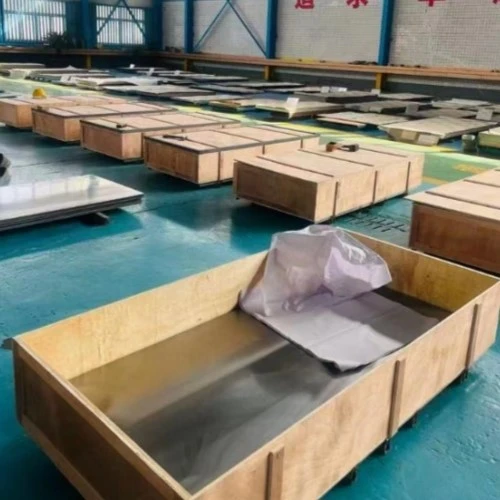
Titanium Plates Stored in Wooden Crates
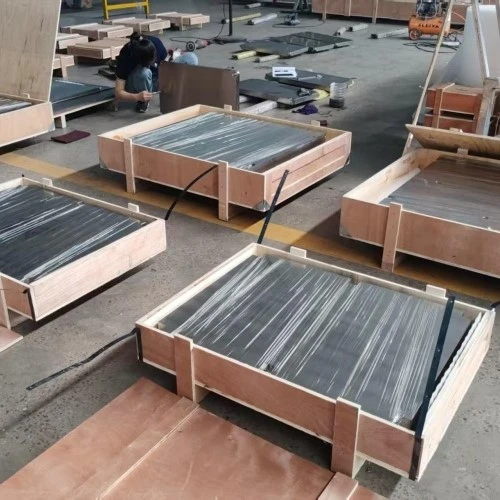
Titanium Plates Packed into Wooden Export Crates
1. Protective Paper Between Plates
Protective paper or suitable interleaving material can be placed between plates to reduce direct metal-to-metal contact and surface scratches.
2. Waterproof Plastic Wrapping
Plates are wrapped with protective plastic materials to reduce exposure to moisture, dust, and external contamination during transportation.
3. Edge and Corner Protection
Suitable edge and corner protection helps reduce damage caused by lifting, stacking, and handling.
4. Wooden Export Cases
Titanium plates are packed in strong wooden cases or other suitable export packaging to support safe loading and international shipment.
5. Product Identification
Package labels can include:
Product name and grade
Material specification
Dimensions
Quantity and weight
Heat number or batch identification
Order or package number
FAQ
Q: 1. What Is Grade 12 Titanium Plate?
A: Grade 12 titanium plate is a corrosion-resistant titanium alloy product with the nominal composition Ti-0.3Mo-0.8Ni. It is designated UNS R53400 and covered by ASTM B265 for titanium sheet, strip, and plate products.
Q: 2. What Is the Difference Between Grade 12 and Grade 2 Titanium?
A: Grade 12 contains molybdenum and nickel, which improve its mechanical strength and resistance to crevice corrosion in certain environments. Grade 2 is commercially pure titanium and is suitable for many general corrosion-resistant applications.
Q: 3. Is Grade 12 Titanium Resistant to Seawater?
A: Grade 12 titanium has good corrosion resistance in many seawater and chloride-containing environments. Its improved crevice corrosion resistance can be beneficial in certain hot brine conditions. Actual suitability depends on temperature, chemistry, deposits, and equipment design.
Q: 4. Is Grade 12 Better Than Grade 7 Titanium?
A: Not in every environment. Grade 12 offers higher minimum mechanical strength and improved crevice corrosion resistance in certain hot chloride conditions. Grade 7, which contains palladium, can provide better performance in many reducing acidic environments. The correct choice depends on the process chemistry.
Q: 5. Can Grade 12 Titanium Plate Be Welded?
A: Yes. Grade 12 titanium plate has good weldability. Welding should use suitable procedures and adequate inert gas shielding to protect the weld metal and heat-affected areas from atmospheric contamination.
Q: 6. What Is the Standard for Grade 12 Titanium Plate?
A: The main product specification is ASTM B265, which covers titanium and titanium alloy strip, sheet, and plate. The required edition and supplementary inspection requirements should be stated in the purchase order.
Q: 7. What Is the Density of Grade 12 Titanium?
A: The typical density of Grade 12 titanium is approximately 4.51 g/cm³.
Q: 8. What Information Is Needed to Quote Grade 12 Titanium Plate?
A: To prepare a quotation, buyers should provide:
Material grade: Grade 12 / UNS R53400
Standard: ASTM B265
Thickness, width, and length
Required quantity
Surface finish and delivery condition
Inspection and certification requirements
Application and operating environment, if relevant
Request a Quote for Grade 12 Titanium Plate
We supply titanium plate materials for industrial buyers, equipment manufacturers, fabricators, and engineering projects.
If you are sourcing Grade 12 titanium plate for chemical processing, heat exchangers, pressure vessels, or corrosion-resistant equipment, send us your material requirements for a quotation.
Please include the following information:
| Required Information | Example |
|---|---|
| Material Grade | Grade 12 / UNS R53400 |
| Standard | ASTM B265 |
| Thickness | 10 mm |
| Width × Length | 1,500 × 3,000 mm |
| Quantity | 5 tons |
| Surface Finish | Pickled |
| Delivery Condition | Annealed |
| Certification | MTC / EN 10204 3.1 |
| Application | Chemical processing equipment |
For corrosion-critical applications, please also provide the chemical medium, concentration, operating temperature, and service conditions. This information helps evaluate whether Grade 12 is suitable for your project.
Send us your specifications, drawings, or RFQ to discuss Grade 12 titanium plate supply.
Hot Tags: grade 12 titanium plate, China grade 12 titanium plate manufacturers, suppliers, factory, titanium, 6Al 4V Industrial Titanium Sheet, Gr12 Industrial Titanium Sheet, Gr5 titanium alloy plate, marine titanium plate, pure Gr4 titanium plate, Titanium Gr23 Sheet Metal


