
Grade 5 Titanium Plate
Material Grade: Grade 5 Titanium
Common Designation: Ti-6Al-4V
UNS Number: R56400
Material Type: Alpha-Beta Titanium Alloy
Applicable Plate Standard: ASTM B265
European Material Number: 3.7164 (commonly associated with Ti-6Al-4V)
Density: Approximately 4.43 g/cm³
Description
What is a Grade 5 titanium plate?
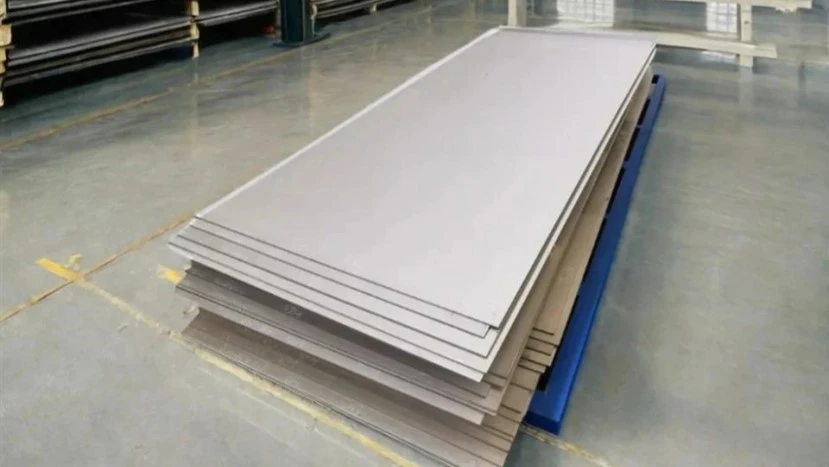
Grade 5 Titanium Plate, also known as Ti-6Al-4V Plate, is a high-strength alpha-beta titanium alloy containing approximately 6% aluminum and 4% vanadium. It is one of the most widely used titanium alloys because it combines high mechanical strength, low density, good fatigue resistance and excellent corrosion resistance in many environments.
Compared with commercially pure titanium grades such as Grade 1 and Grade 2, Grade 5 offers significantly higher strength, making it suitable for structural components and demanding industrial applications where weight reduction and mechanical performance are important.

Grade 5 titanium plates are available in different processing and surface conditions. The suitable option depends on the required thickness, dimensional tolerance, surface quality and subsequent fabrication process.

Hot Rolled Grade 5 Titanium Plate
Produced through high-temperature rolling. Commonly used for thicker plate applications, structural components and industrial fabrication.

Cold Rolled Grade 5 Titanium Sheet
Offers improved thickness control and surface uniformity. Suitable for precision parts, forming and further machining.

Pickled Ti-6Al-4V Titanium Plate
Has surface oxide and scale removed through chemical treatment. Suitable for applications requiring a clean surface before further processing.

Cut-to-Size Ti-6Al-4V Titanium Plate
Supplied in specified dimensions through cutting or machining, helping reduce material waste and simplify downstream production.
Grade 5 Titanium Plate Specifications
|
Parameter |
Specification |
|---|---|
|
Material Grade |
Grade 5 Titanium / Ti-6Al-4V |
|
UNS Number |
R56400 |
|
Material Type |
Alpha-Beta Titanium Alloy |
|
Applicable Standard |
ASTM B265 |
|
Thickness |
0.5–100 mm |
|
Width |
500–2000 mm |
|
Length |
1000–6000 mm |
|
Density |
4.43 g/cm³ |
|
Surface Finish |
Hot Rolled, Pickled, Ground, Machined, Polished |
|
Supply Condition |
Annealed, Solution Treated and Aged |
|
Processing Services |
Cutting, Grinding, Machining |
|
Inspection Documents |
MTC, Chemical Analysis, Mechanical Test Reports |
Ordering Information: Please provide the required thickness, width, length, quantity, surface finish and delivery condition. For special applications, include the applicable technical standard and inspection requirements.
Chemical Composition of Grade 5 Titanium
Grade 5 is an alpha-beta titanium alloy. Aluminum stabilizes the alpha phase, while vanadium stabilizes the beta phase, giving the alloy its characteristic balance of strength and processing properties.
Typical ASTM B265 Grade 5 composition limits are shown below. The final acceptance values must be checked against the applicable standard edition and material certificate.
|
Element |
Composition (wt. %) |
|---|---|
|
Aluminum (Al) |
5.50–6.75 |
|
Vanadium (V) |
3.50–4.50 |
|
Iron (Fe) |
0.40 max. |
|
Oxygen (O) |
0.20 max. |
|
Carbon (C) |
0.08 max. |
|
Nitrogen (N) |
0.05 max. |
|
Hydrogen (H) |
0.015 max. |
|
Titanium (Ti) |
Balance |
Aluminum and vanadium are the principal alloying elements responsible for the alloy's alpha-beta structure. Interstitial elements such as oxygen, nitrogen and hydrogen also need to be controlled because they influence ductility and material performance.
Mechanical Properties of Grade 5 Titanium Plate
Grade 5 titanium is selected for applications requiring high strength without the weight of conventional steel components.
For annealed Grade 5 plate, commonly referenced ASTM B265 minimum room-temperature tensile properties include the following baseline values. The applicable thickness-dependent requirements and current standard edition should be confirmed before placing an order.
|
Property |
Typical Specification Reference |
|---|---|
|
Tensile Strength |
895 MPa min. |
|
Yield Strength (0.2% offset) |
828 MPa min. |
|
Elongation |
10% min. |
|
Density |
Approx. 4.43 g/cm³ |
|
Elastic Modulus |
Approx. 110–115 GPa |
|
Hardness |
Depends on delivery condition and processing |
The values above are not a substitute for the acceptance table in the purchase specification. Actual results can vary with product thickness, heat treatment and testing requirements.
What buyers should check:
Whether the required strength values apply to the specified plate thickness.
Whether the material is supplied in the annealed or heat-treated condition.
Whether elongation and other mechanical requirements are included in the purchase specification.
Whether the MTC reports actual test results for the supplied material.
Key Properties of Grade 5 Titanium
High Strength-to-Weight Ratio
Grade 5 provides high mechanical strength at approximately 4.43 g/cm³ density, making it useful for lightweight structural components.
Fatigue Resistance
Offers good fatigue performance when the alloy, surface condition, design and manufacturing process are properly controlled.
Corrosion Resistance
Performs well in many atmospheric, marine and industrial environments. Actual suitability depends on the chemical medium, temperature and operating conditions.
Elevated Temperature Performance
Retains useful mechanical strength at moderately elevated temperatures. Long-term operating temperature and service life must be assessed for each application.
Formability and Fabrication
Can be formed, welded and machined using suitable titanium processing procedures, although its high strength requires careful process control.
Biocompatibility
Ti-6Al-4V is used in selected medical applications. Implant applications generally require specific ELI material grades and medical standards rather than ordinary Grade 5 plate.
Surface Finishes of Grade 5 Titanium Plate
Surface condition affects appearance, dimensional preparation and the amount of additional work required before fabrication.
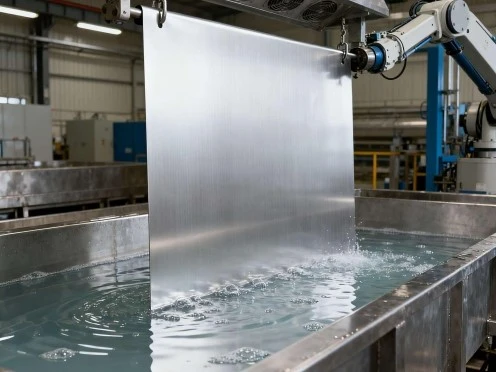
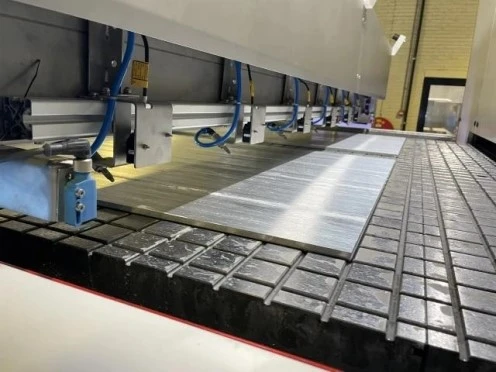
Pickled Titanium Plate
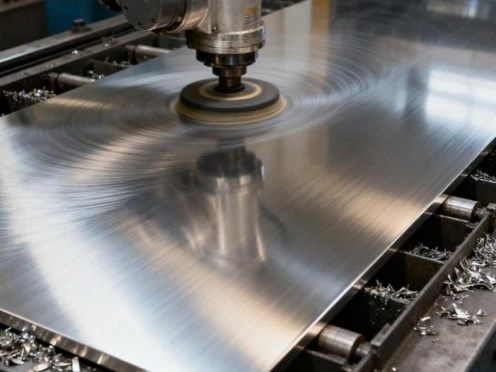
Ground Titanium Plate
Polished Titanium Plate
Hot Rolled Surface: Retains the surface condition produced during hot rolling. Often selected for further machining or industrial fabrication.
Pickled Surface: Removes oxide scale formed during hot processing and provides a cleaner metallic surface.
Ground Surface: Mechanically removes surface irregularities and can improve surface consistency.
Machined Surface: Produced by machining to achieve specified dimensions, flatness or surface requirements.
Polished Surface: Provides a smoother and more refined finish for applications with specific surface appearance or roughness requirements.
When ordering, specify whether surface condition is required on one side or both sides, and state any surface roughness, flatness or defect acceptance criteria that apply.
Applications of Grade 5 Titanium Plate
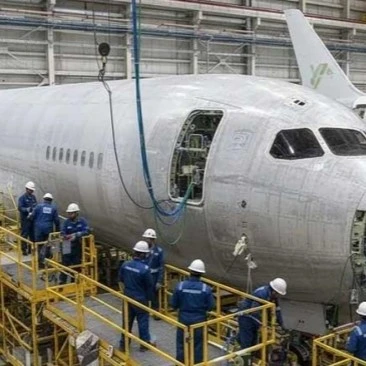
Aerospace Industry
Used for aircraft structural parts, brackets, fittings, fasteners and selected engine components where high strength-to-weight ratio is essential.
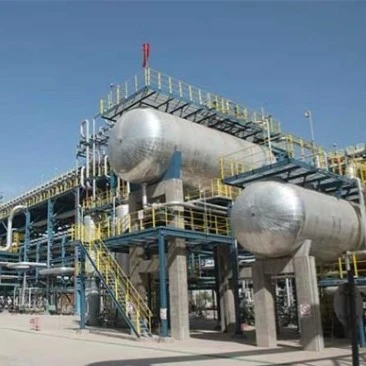
Chemical Processing
Applied in process equipment components, pressure vessel parts, pump components and corrosion-resistant structures, subject to the process medium.
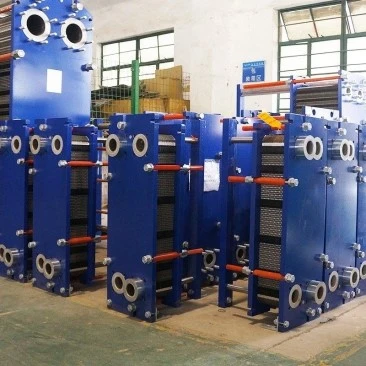
Marine Engineering
Used for marine equipment components, lightweight structural parts and selected seawater-handling equipment.
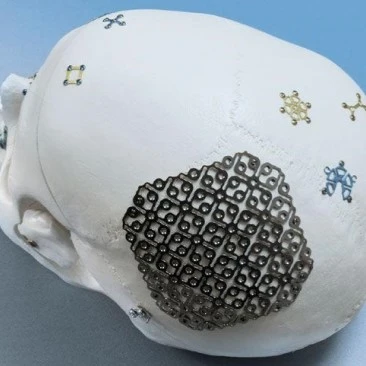
Medical & Biomedical
Used for orthopedic fixation components, bone plates, surgical implants and medical device components, subject to the required medical material standard.
Heat Treatment of Grade 5 Titanium Plate
Unlike commercially pure titanium grades, Grade 5 can be strengthened through solution treatment and aging. Heat treatment changes the alloy's microstructure and can improve strength, but the final properties depend on the treatment cycle, section thickness and cooling rate.
1. Annealing
Annealing is used to obtain a balanced combination of strength, ductility and toughness. It is a common delivery condition for Grade 5 titanium plate and can help relieve stresses from previous processing.
2. Stress Relief Annealing
Stress relief treatment reduces residual stresses introduced by forming, welding or machining. It is useful when dimensional stability is important during subsequent manufacturing.
3. Solution Treatment
The material is heated into a specified solution-treatment temperature range and then rapidly cooled. This creates a microstructure suitable for subsequent aging.
4. Aging Treatment
Aging is performed after solution treatment to increase strength through controlled microstructural changes.
A typical supplier reference schedule for Ti-6Al-4V includes annealing around 691–760°C, stress relief around 538–649°C, solution treatment around 913–954°C and aging around 524–552°C. These are process reference ranges, not universal ASTM B265 requirements. The actual schedule must be selected according to the plate thickness, target properties and applicable specification.
Important: Thick sections may not achieve the same response to solution treatment and aging as thinner sections because cooling rates differ. Heat treatment should be qualified for the actual product dimensions.
Discuss Material and Heat Treatment Requirements
Grade 5 vs Grade 2 vs Grade 23 Titanium Plate
Choosing the correct titanium grade depends on the balance between strength, ductility, corrosion resistance, fracture toughness and project requirements.
|
Comparison |
Grade 2 |
Grade 5 |
Grade 23 |
|---|---|---|---|
|
Material Type |
Commercially Pure Titanium |
Ti-6Al-4V |
Ti-6Al-4V ELI |
|
UNS Number |
R50400 |
R56400 |
R56407 |
|
Main Feature |
Corrosion resistance and formability |
High strength and low weight |
High strength with lower interstitial content |
|
Strength Level |
Lower |
High |
High |
|
Ductility |
Generally higher |
Good |
Improved relative to standard Grade 5 in many applications |
|
Typical Focus |
Chemical and industrial equipment |
Aerospace and high-strength components |
Critical applications requiring enhanced toughness and ductility |
Grade 2 vs Grade 5
Choose Grade 2 when corrosion resistance, formability and ease of fabrication are the main priorities. Choose Grade 5 when the component needs higher mechanical strength or weight reduction.
Grade 5 vs Grade 23
Both are Ti-6Al-4V alloys. Grade 23 has tighter limits on interstitial elements such as oxygen, nitrogen and iron. It is often selected for applications requiring improved fracture toughness and ductility, including certain medical and critical engineering uses.
Grade 5 vs Grade 9
Grade 9 (Ti-3Al-2.5V) generally offers better formability than Grade 5 while retaining higher strength than commercially pure titanium. It is often considered for formed tubing and components where a balance of strength and formability is needed.
For plate procurement, compare the actual product-form standard, thickness-specific mechanical requirements and certification requirements rather than selecting by grade name alone.
Manufacturing Process of Grade 5 Titanium Plate
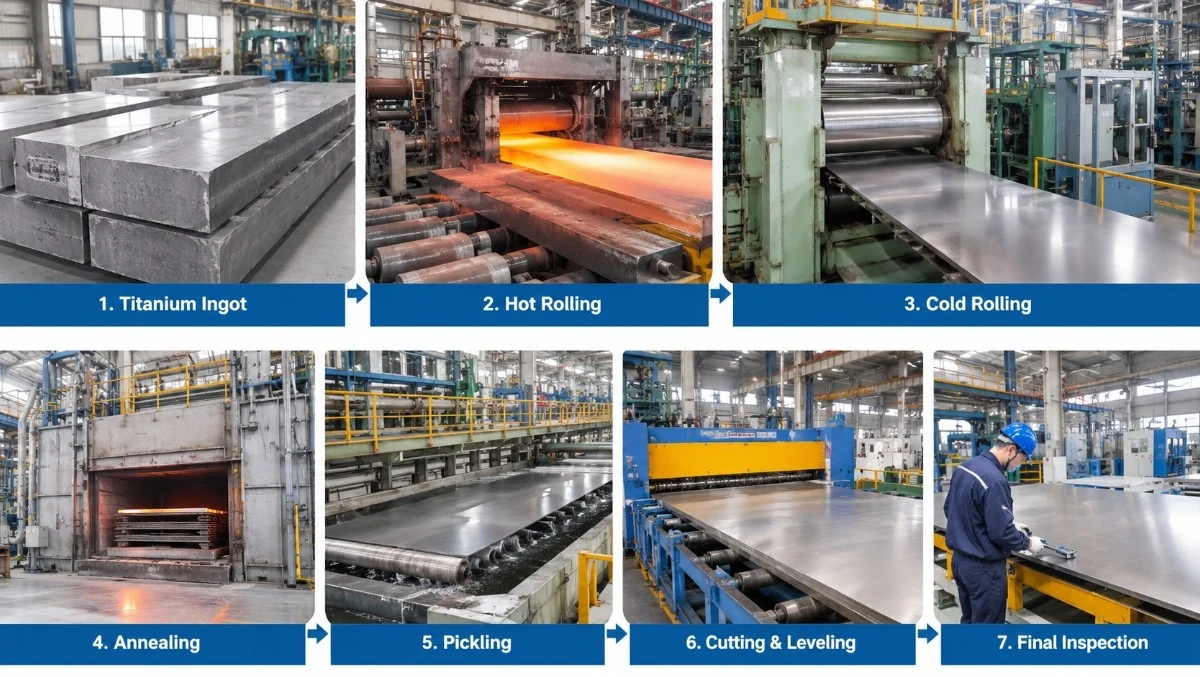
1. Raw Material and Alloy Preparation
Titanium raw materials and alloying elements are prepared according to the required Ti-6Al-4V chemical composition. Aluminum and vanadium content must be controlled accurately.
2. Titanium Alloy Melting
The prepared materials are melted under controlled conditions, commonly using vacuum-based melting processes, to achieve chemical uniformity and reduce contamination.
3. Ingot Breakdown and Hot Working
The titanium alloy ingot undergoes breakdown processing and hot working to refine the structure and prepare the material for plate rolling.
4. Hot Rolling
The material is heated and rolled through controlled passes to achieve the required plate thickness and dimensions.
5. Heat Treatment
Annealing or other specified heat treatment is performed to obtain the required mechanical properties and microstructure.
6. Surface Treatment
Oxide scale and surface defects are removed through suitable processes such as pickling, grinding or machining.
7. Cutting and Final Inspection
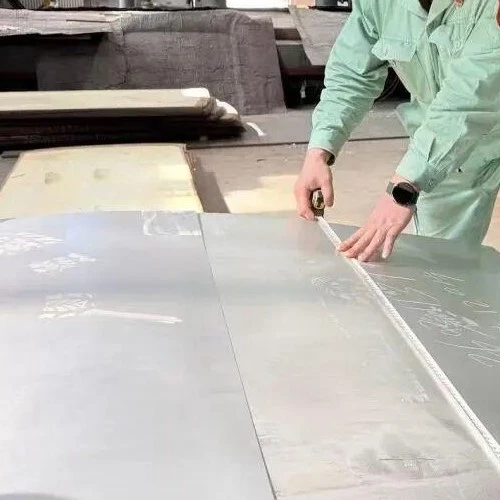
The plate is cut to the ordered dimensions and inspected for thickness, width, length, surface quality and required mechanical properties.
Quality Inspection and Testing of Gr5 6Al-4V Titanium Plate
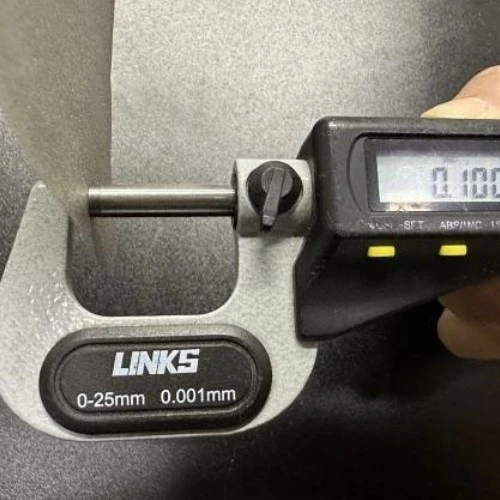
Quality inspection helps verify that the supplied plate meets the purchase specification and is suitable for its intended application.
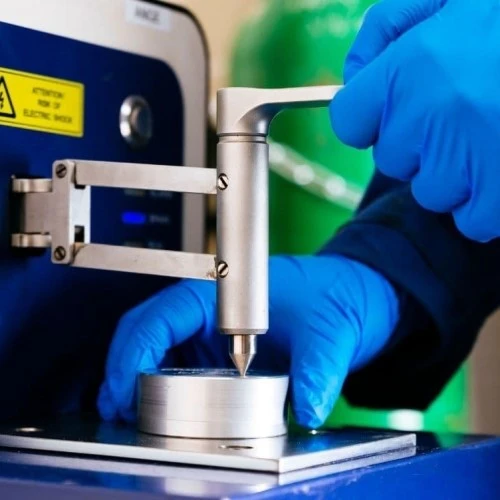
Chemical Analysis
Dimensional Inspection
Surface Inspection
Thickness Tolerance
Ultrasonic Testing
|
Inspection Item |
Purpose |
|---|---|
|
Chemical Composition Analysis |
Verify aluminum, vanadium and impurity element content |
|
Tensile Test |
Check tensile strength, yield strength and elongation |
|
Hardness Test |
Evaluate material hardness and consistency |
|
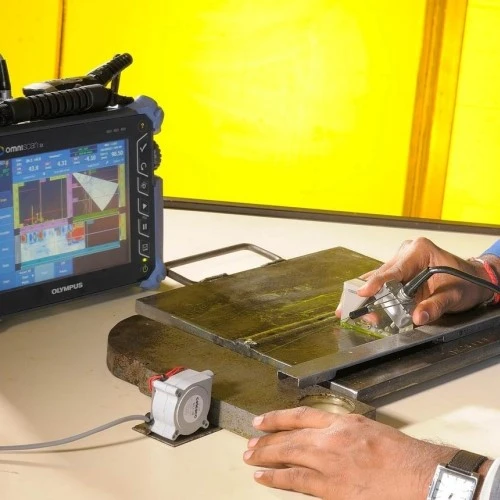
Ultrasonic Testing |
Check for internal discontinuities when required |
|
Dimensional Inspection |
Verify thickness, width, length and flatness |
|
Surface Inspection |
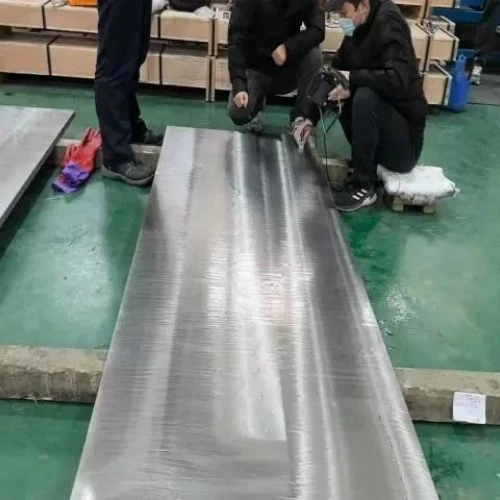
Identify cracks, scratches, pits and other visible defects |
|
Microstructure Examination |
Evaluate the material's metallurgical structure when specified |
Inspection documents may include:
Mill Test Certificate (MTC)
Chemical composition test results
Mechanical test results
Dimensional inspection records
Non-destructive testing reports, when required
If your project requires EN 10204 3.1 inspection documents, third-party inspection or specific ultrasonic testing acceptance criteria, please include these requirements in the inquiry so they can be confirmed before production.
Packaging and Delivery of Grade 5 Titanium Plate
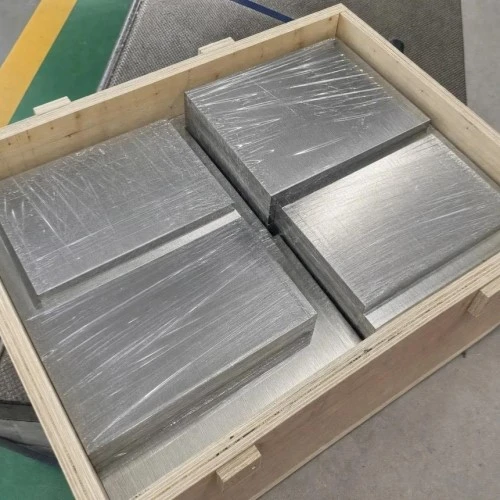
Titanium Plates Stacked Inside Wooden Crates
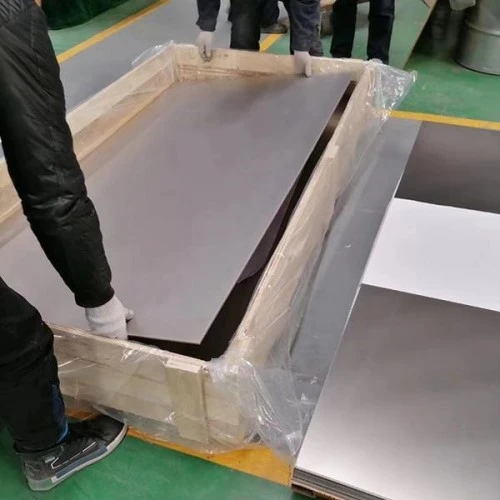
Protective Packaging for Titanium Plates Inside Wooden Crates
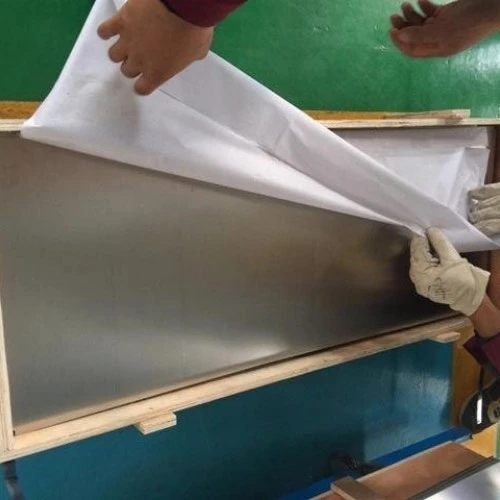
Titanium Plates Wrapped with Protective Paper
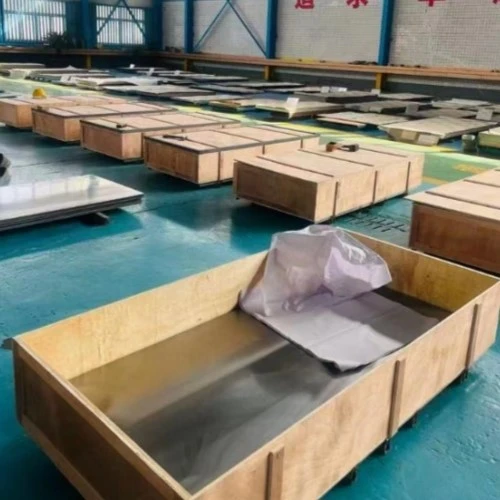
Titanium Plates Stored in Wooden Crates
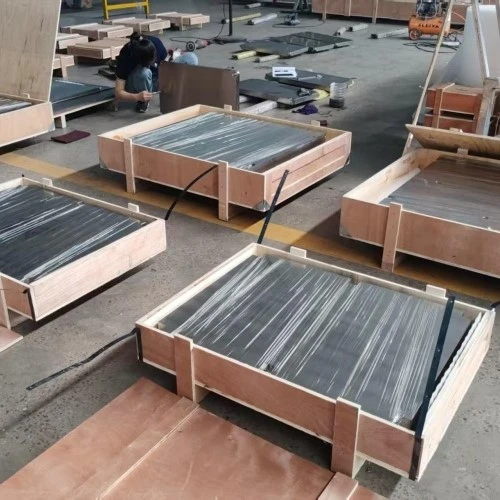
Titanium Plates Packed into Wooden Export Crates
1. Protective Interleaving
Protective paper or suitable separators are placed between titanium plates to prevent scratches and surface damage during stacking and transportation.
2. Surface Protection
Plates are wrapped with protective film or moisture-resistant materials to reduce exposure to dust, moisture and handling damage.
3. Wooden Crate Packaging
Titanium plates are secured in suitable wooden crates to provide protection during loading, unloading and international transportation.
4. Package Marking
Each package can be marked with material grade, dimensions, quantity, net weight, gross weight and order identification for easier receiving and inventory management.
5. Export Documentation
Shipping documents can be prepared according to the order requirements, including the commercial invoice, packing list, bill of lading and material test certificate.
FAQ
Q: What is Grade 5 titanium plate?
A: Grade 5 titanium plate is a Ti-6Al-4V titanium alloy product containing approximately 6% aluminum and 4% vanadium. It is known for its high strength-to-weight ratio and is widely used in aerospace and industrial applications.
Q: Is Grade 5 titanium stronger than Grade 2?
A: Yes. Grade 5 has significantly higher tensile and yield strength than commercially pure Grade 2 titanium. Grade 2 is often preferred for formability and corrosion-focused applications, while Grade 5 is selected for high-strength components.
Q: Can Grade 5 titanium plate be heat treated?
A: Yes. Grade 5 can undergo annealing, stress relief, solution treatment and aging. Solution treatment followed by aging can increase strength, although the achievable properties depend on section thickness and cooling conditions.
Q: Is Grade 5 titanium plate weldable?
A: Yes. Grade 5 can be welded using suitable procedures, commonly with inert gas shielding. The weld area, heat-affected zone and cooling weld bead need adequate protection against oxygen, nitrogen and hydrogen contamination.
Q: Is Grade 5 titanium corrosion resistant?
A: Grade 5 offers good corrosion resistance in many environments, including atmospheric and marine conditions. However, suitability depends on the specific chemicals, temperature, concentration and operating conditions.
Q: What is the difference between Grade 5 and Grade 23 titanium?
A: Both are Ti-6Al-4V alloys. Grade 23 has lower interstitial element limits, particularly oxygen, nitrogen and iron, and is selected where enhanced ductility and fracture toughness are important.
Q: What information is needed to quote Grade 5 titanium plate?
A: Please provide the material standard, thickness, width, length, quantity, delivery condition, surface finish and inspection requirements. Drawings or technical specifications are helpful for cut-to-size or machined plate orders.
Request a Grade 5 Titanium Plate Quote
Hot Tags: grade 5 titanium plate, China grade 5 titanium plate manufacturers, suppliers, factory, titanium, Gr12 pure titanium plate, Gr12 titanium alloy sheet, Gr23 pure titanium plate, Gr7 Titanium plate Metal, Titanium Sheet Gr23 Metal, Titanium Sheet Metal