
Titanium Clad Plate
Cladding Material: Grade 1, Grade 2, Grade 7, Grade 12
Base Metal: Carbon Steel, Low Alloy Steel, Stainless Steel
Titanium Cladding Thickness: 1–10 mm
Base Metal Thickness: 6–100 mm
Total Plate Thickness: 7–110 mm
Plate Width: 1,000–3,000 mm
Plate Length: 2,000–12,000 mm
Cladding Type: Single-Side Cladding, Double-Side Cladding
Bonding Process: Explosive Bonding, Roll Bonding
Surface Condition: As-Clad, Pickled, Ground
Applicable Standards: ASTM B898, GB/T 8547
Description
What Is Titanium Clad Plate?
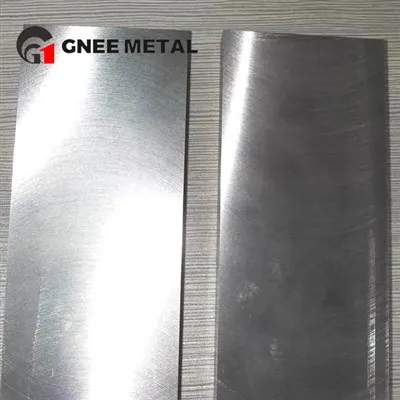
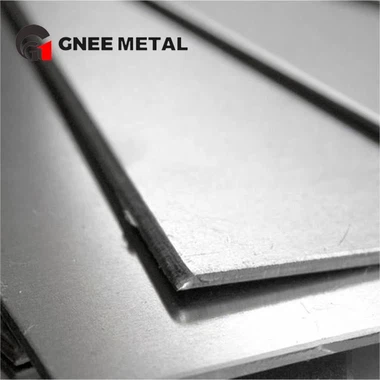
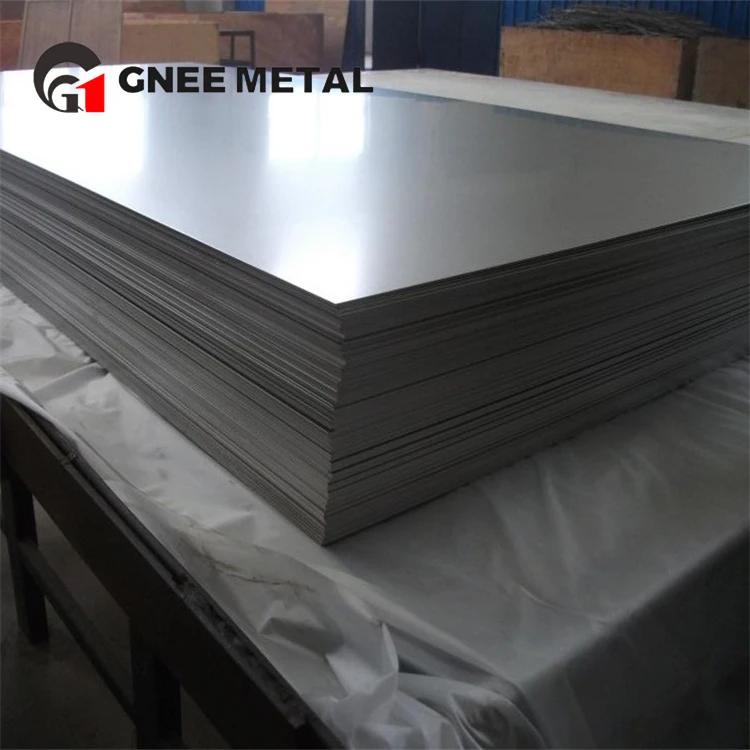
Titanium clad plate is a metallurgically bonded composite plate consisting of a titanium cladding layer and a base metal substrate. The titanium layer provides corrosion protection, while the base metal supplies the main structural strength.
The two materials are joined through a controlled manufacturing process to form an integrated plate. It is not simply a titanium sheet mechanically attached to a steel plate.
The most common product is titanium clad steel plate, which combines a titanium corrosion-resistant surface with a carbon steel or alloy steel substrate.
Titanium Clad Plate vs. Solid Titanium Plate
| Comparison | Titanium Clad Plate | Solid Titanium Plate |
|---|---|---|
| Material structure | Titanium layer bonded to a base metal | Entire plate made of titanium |
| Corrosion resistance | Provided mainly by the titanium cladding | Provided throughout the plate |
| Structural support | Mainly provided by the base metal | Provided by the titanium material |
| Material consumption | Uses titanium only for the cladding layer | Uses titanium throughout the section |
| Material cost | Often more economical for large structural sections | Generally higher for equivalent thick sections |
| Typical applications | Pressure vessels, chemical equipment, storage tanks | Equipment requiring solid titanium construction |
The main advantage of titanium clad plate is combining a corrosion-resistant titanium surface with a more economical structural substrate. It is especially suitable when solid titanium construction is not necessary.
Request a Titanium Clad Plate Quotation
Structure of Titanium Clad Plate
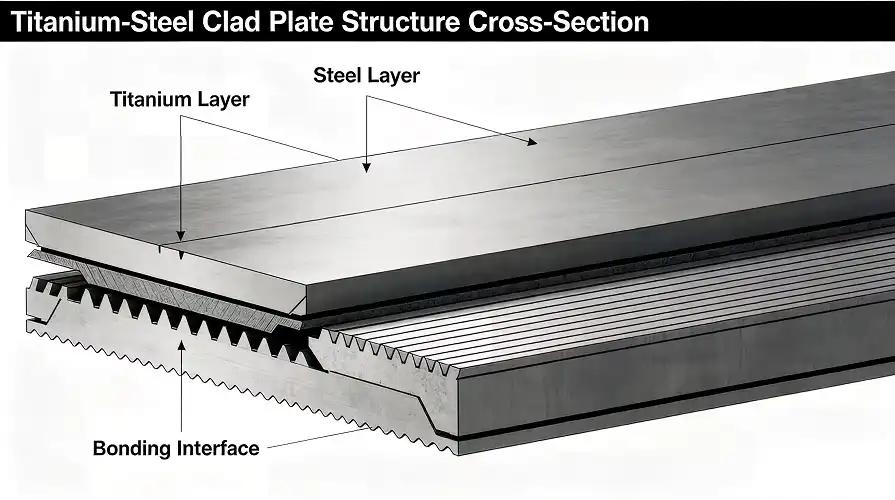
A typical titanium clad steel plate consists of three functional regions: the titanium cladding layer, the bonding interface, and the base metal. Each part has a different role in the final product.
Titanium Cladding Layer
The titanium layer is the corrosion-resistant surface exposed to the process medium. Its grade and thickness should be selected according to the chemical composition, concentration, temperature, and operating conditions of the equipment.
Common titanium cladding materials include:
| Titanium Grade | Main Characteristics | Typical Selection Considerations |
|---|---|---|
| Grade 1 | High ductility and good formability | Applications requiring good forming characteristics |
| Grade 2 | Balanced strength, ductility, and corrosion resistance | General industrial corrosion-resistant equipment |
| Grade 7 | Palladium-added titanium | Certain reducing acidic environments |
| Grade 12 | Titanium alloy containing molybdenum and nickel | Selected industrial corrosion-resistant environments |
Bonding Interface
The bonding interface connects the titanium layer to the substrate. It is a critical region because the two materials must remain securely bonded during cutting, forming, welding, and equipment operation.
The interface should be evaluated for bonding integrity, unbonded areas, and other defects according to the applicable product specification and inspection agreement.
Base Metal
The base metal provides the main structural support. Carbon steel is commonly selected for pressure vessels and industrial equipment because of its strength, availability, and cost efficiency.
Depending on the project, stainless steel or other suitable alloy steels may also be considered.
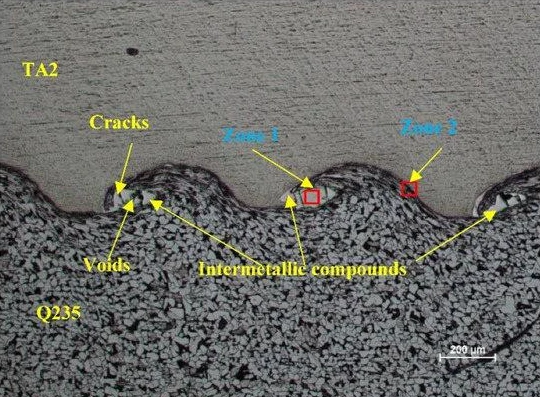
Cross-section of an explosively welded titanium-steel clad plate
Manufacturing Processes of Titanium Clad Plate
The manufacturing process directly affects the bonding interface, mechanical performance, dimensional accuracy, and production feasibility of titanium clad plate.
Two major manufacturing methods are explosive bonding and roll bonding. The appropriate method depends on the material combination, plate dimensions, cladding thickness, and required performance.
Explosive Bonding
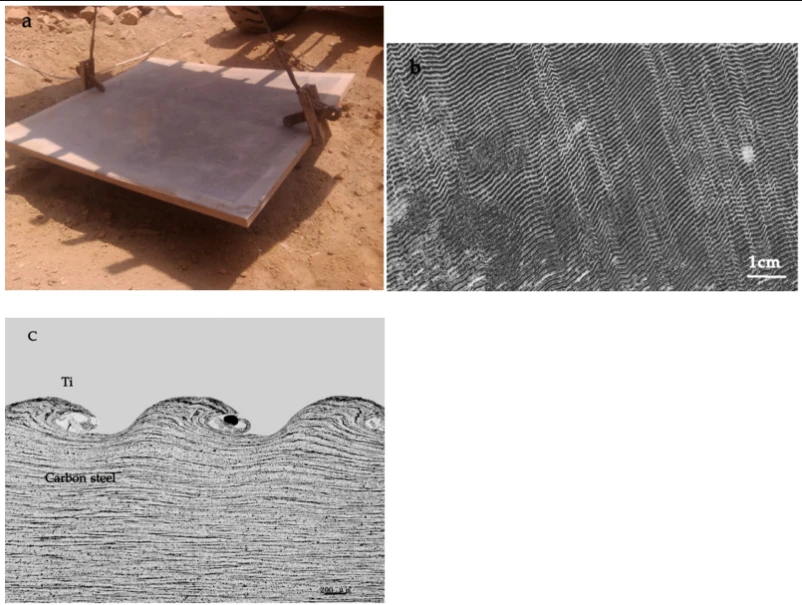
Explosive bonding uses controlled explosive energy to accelerate the cladding plate toward the base metal at high velocity. The impact creates a metallurgical bond between the two prepared surfaces.
Typical process stages include:
Surface preparation: Cleaning and preparing the titanium and base metal surfaces.
Plate assembly: Arranging the cladding and base plates with a controlled gap.
Explosive bonding: Applying controlled explosive energy to create the bond.
Post-bonding processing: Removing residual materials and carrying out additional processing when required.
Flattening and cutting: Processing the bonded plate to the required dimensions.
Inspection: Evaluating bonding integrity and dimensional quality.
Key characteristics of explosive bonding:
Suitable for many titanium-to-steel material combinations.
Can produce strong metallurgical bonding over large plate areas.
Commonly considered for thick cladding plates and heavy industrial applications.
Requires strict control of the bonding process and subsequent inspection.
Explosive Bonding Process for Titanium Clad Steel Plate
Roll Bonding
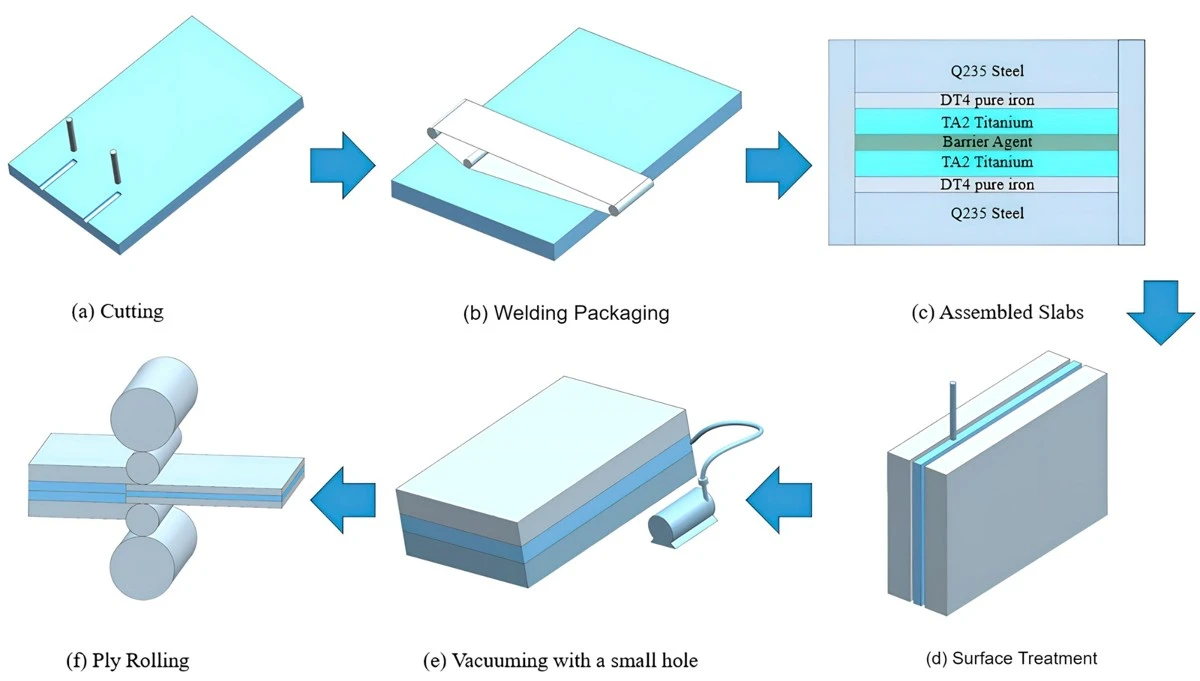
Roll bonding joins titanium and base metal through controlled pressure and deformation between rolling mills. Surface preparation and rolling parameters are important for achieving a reliable bond.
Typical process stages include:
Surface preparation: Cleaning and preparing the surfaces to be bonded.
Plate assembly: Arranging the titanium and base metal layers.
Heating: Applying controlled heating when required by the selected process.
Rolling: Passing the assembled materials through rolling mills under controlled reduction and pressure.
Further processing: Carrying out additional rolling or heat treatment when specified.
Final inspection: Checking dimensions, surface condition, and bonding quality.
Key characteristics of roll bonding:
Suitable for production routes requiring controlled plate thickness and dimensions.
Can provide good dimensional consistency.
Requires careful control of temperature, reduction, and interface conditions.
Material combinations and thickness limitations depend on production equipment and process qualification.
Roll Bonding
Explosive Bonding vs. Roll Bonding
| Item | Explosive Bonding | Roll Bonding |
|---|---|---|
| Bonding mechanism | High-velocity impact | Pressure and plastic deformation |
| Main process controls | Explosive parameters and plate assembly | Rolling temperature, pressure, and reduction |
| Production considerations | Often considered for large and relatively thick clad plates | Often considered where controlled thickness and dimensions are important |
| Interface formation | Impact-induced metallurgical bonding | Pressure-induced bonding |
| Main quality concerns | Bonding uniformity and post-bonding processing | Interface quality and prevention of undesirable intermetallic phases |
Neither process is automatically better for every project. The selection should be based on the required material combination, dimensions, mechanical requirements, production feasibility, and applicable standard.
Titanium Clad Plate Specifications
Titanium clad plate specifications include the titanium cladding thickness, base metal thickness, total plate thickness, dimensions, material grades, and delivery condition.
Unlike solid titanium plate, the thickness of each layer must be specified separately. This is important for material costing, equipment design, and fabrication planning.
Typical Titanium Clad Plate Specifications
| Parameter | Typical Reference Range / Options |
|---|---|
| Product | Titanium Clad Plate / Titanium Clad Steel Plate |
| Cladding material | Grade 1, Grade 2, Grade 7, Grade 12 |
| Base metal | Carbon steel, low-alloy steel, selected stainless steel |
| Titanium cladding thickness | Approximately 1–10 mm |
| Base metal thickness | Approximately 6–100 mm |
| Total thickness | Approximately 7–110 mm |
| Plate width | Approximately 1,000–3,000 mm |
| Plate length | Approximately 2,000–12,000 mm |
| Cladding arrangement | Single-side or double-side cladding |
| Bonding process | Explosive bonding, roll bonding, or qualified combined processes |
| Surface condition | As-clad, cleaned, pickled, or mechanically finished as specified |
| Inspection | Visual inspection, ultrasonic testing, and agreed mechanical tests |
| Relevant standards | ASTM B898, GB/T 8547, and applicable base metal specifications |
Single-Side and Double-Side Cladding
Titanium clad plate can be designed with titanium cladding on one side or both sides, depending on the equipment structure and corrosion exposure.
Single-side cladding: Titanium is bonded to one surface of the base metal. It is commonly considered when only one side contacts the corrosive medium.
Double-side cladding: Titanium is bonded to both sides of the substrate. It may be selected when both surfaces require corrosion protection.
The cladding arrangement should be determined by the equipment design and operating environment.
Titanium Cladding Materials and Base Metals
| Titanium Cladding | Base Metal | Typical Application Considerations |
|---|---|---|
| Grade 1 | Carbon steel | Equipment requiring high cladding ductility |
| Grade 2 | ASTM A516 Grade 70 | Chemical processing and pressure vessel equipment |
| Grade 7 | Carbon steel | Selected acidic chemical environments |
| Grade 12 | Carbon steel | Selected industrial corrosion-resistant equipment |
| Grade 2 | Stainless steel | Special equipment requiring a stainless steel substrate |
Mechanical Properties of Titanium Clad Plate
The mechanical performance of titanium clad plate depends on both the titanium cladding and the base metal. However, the two layers do not have the same function.
The base metal generally provides the primary structural strength, while the titanium layer provides corrosion protection and must maintain sufficient integrity during fabrication and service.
Mechanical Properties of the Titanium Layer
The titanium cladding grade affects ductility, strength, and forming behavior.
| Grade | Material Type | Main Mechanical Consideration |
|---|---|---|
| Grade 1 | Commercially pure titanium | High ductility and good formability |
| Grade 2 | Commercially pure titanium | Balanced strength and ductility |
| Grade 7 | Palladium-added titanium | Mechanical properties generally similar to commercially pure titanium grades |
| Grade 12 | Titanium alloy | Higher strength than commercially pure grades in many product conditions |
The actual mechanical properties must be confirmed against the relevant titanium material specification, product form, and delivery condition.
Mechanical Properties of the Base Metal
The substrate is normally selected according to the structural design requirements.
For example, ASTM A516 Grade 70 is commonly used in pressure vessel construction. Its specified mechanical properties are determined by the applicable base metal standard and plate thickness.
Mechanical Performance of the Composite Plate
The complete clad plate should be evaluated for the requirements relevant to its intended use, including:
Base metal tensile properties: Verify the substrate's strength and ductility.
Bond shear strength: Evaluate resistance to separation between the layers where required.
Bend performance: Assess bonding performance during specified deformation.
Impact properties: Verify impact requirements where required by the design.
Post-fabrication bond integrity: Confirm that forming or other fabrication operations have not compromised the bond where inspection is specified.
Corrosion Resistance of Titanium Clad Plate
Titanium clad plate is mainly selected when equipment needs a corrosion-resistant process-contact surface combined with a structural metal substrate.
The titanium layer acts as a protective barrier between the process medium and the base metal. This can reduce the need to manufacture the entire equipment wall from solid titanium.
Corrosion Resistance of Different Titanium Grades
| Titanium Grade | General Corrosion Characteristics | Selection Considerations |
|---|---|---|
| Grade 1 | Good resistance in many oxidizing environments | Suitable for applications requiring high ductility |
| Grade 2 | Broad corrosion resistance in many industrial environments | Common general-purpose selection |
| Grade 7 | Enhanced resistance in certain reducing acidic environments | Consider for specific chemical service |
| Grade 12 | Improved resistance in selected reducing and hot chloride environments | Consider where its alloy characteristics are required |
Titanium is not resistant to every chemical environment. Strong reducing acids, certain fluoride-containing solutions, and specific high-temperature conditions may require additional evaluation.
What Affects Corrosion Performance?
The corrosion performance of titanium clad plate depends on several factors:
Titanium grade: The selected grade must match the process medium.
Cladding thickness: The titanium layer must provide the required corrosion allowance and remain suitable for fabrication.
Surface condition: Surface contamination and damage should be controlled.
Weld quality: Welded joints must maintain the required corrosion-resistant material at the process-contact surface.
Operating conditions: Temperature, concentration, flow velocity, and impurities can change corrosion behavior.
Edge and opening protection: Exposed base metal must be addressed through suitable design and fabrication procedures.
For chemical equipment, material selection should be based on actual process data, including chemical composition, concentration, temperature, pressure, and operating conditions.
Cutting, Welding and Fabrication of Titanium Clad Plate
Titanium clad plate can be fabricated into pressure vessels, storage tanks, heat exchangers, and other industrial equipment. However, fabrication requires attention to both the titanium cladding and the base metal.
The main objective is to preserve the bonded interface and prevent the base metal from becoming exposed to the process medium.
Cutting
Cutting methods should be selected according to the total plate thickness, required dimensional accuracy, and fabrication procedure.
Common methods include:
Plasma cutting.
Waterjet cutting.
Mechanical cutting.
Machining for precision edges and openings.
Cutting parameters should minimize damage to the titanium layer and avoid unnecessary separation or deformation near the bonding interface.
Welding
Welding titanium clad plate requires procedures suitable for both materials.
The titanium cladding and steel substrate are generally welded separately using compatible welding procedures. Directly melting titanium and carbon steel together should be avoided unless a specifically qualified procedure is designed for the application, because iron-titanium reactions can create brittle phases.
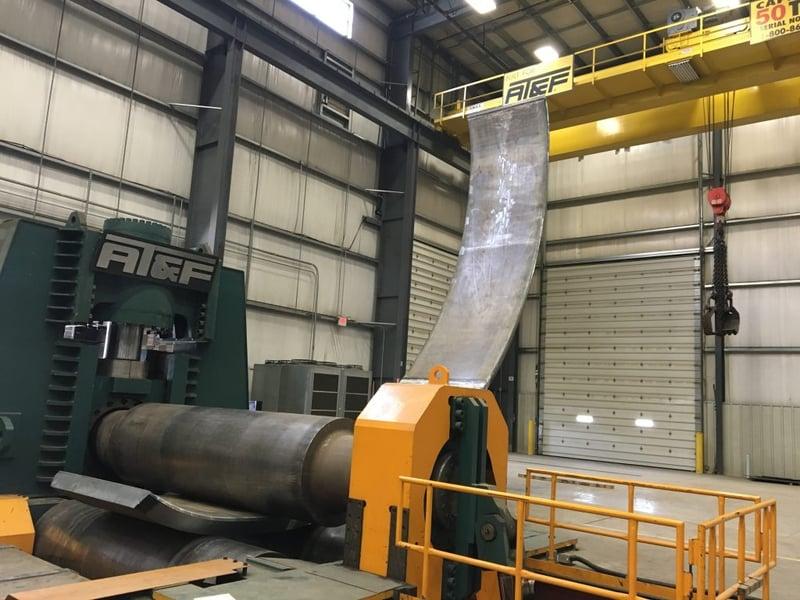
Forming and Bending
Clad plate forming should consider the ductility of both materials and the strength of the bonding interface.
Before rolling or bending, the fabricator should confirm:
Minimum bend radius.
Forming direction.
Plate thickness and material combination.
Required preheating or heat treatment, if applicable.
Post-forming bond inspection requirements.
A trial forming procedure may be appropriate for demanding equipment designs, especially when the plate is thick or the forming geometry is complex.
Titanium Clad Plate for Pressure Vessel Fabrication
Applications of Titanium Clad Plate
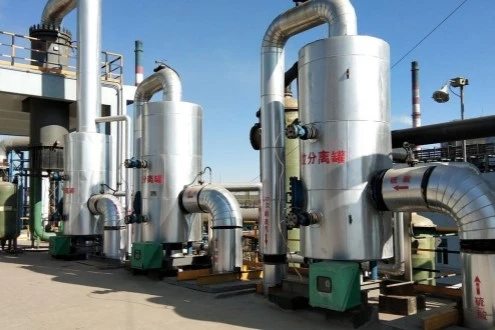
Chemical Processing
Chemical Reactors, Reaction Vessels, Acid Storage Tanks, Distillation Columns
Common Titanium Grades: Grade 2, Grade 7, Grade 12
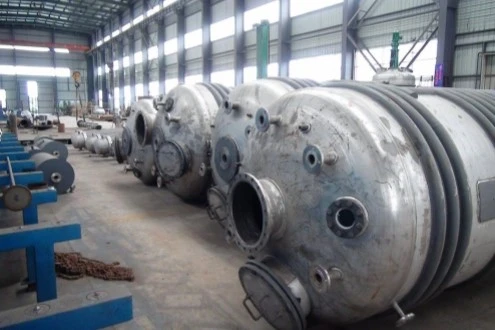
Pressure Vessels & Storage Tanks
Pressure Vessel Shells, Vessel Heads, Storage Tank Walls, Process Vessels
Common Titanium Grades: Grade 2, Grade 7
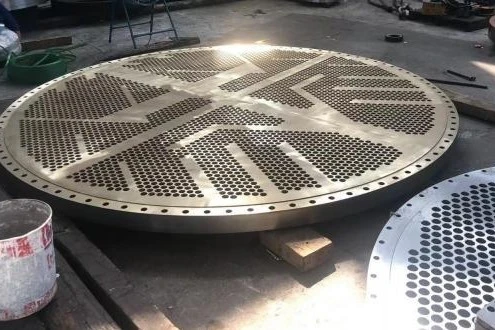
Heat Exchangers
Tube Sheets, Shell Plates, Channel Covers, Heat Exchanger Heads
Common Titanium Grades: Grade 2, Grade 7
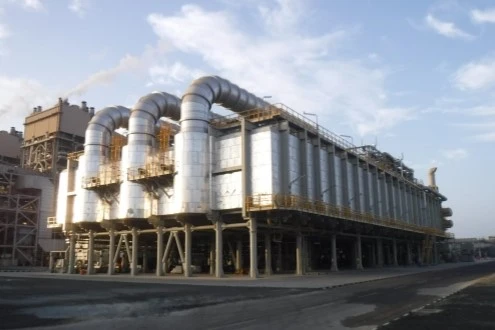
Seawater & Desalination
Desalination Equipment, Seawater Evaporators, Brine Heaters, Seawater Treatment Vessels
Common Titanium Grades: Grade 2
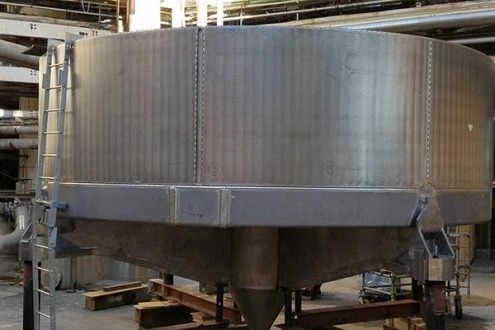
Pulp & Paper Industry
Bleaching Towers, Chemical Storage Tanks, Pulp Digesters, Process Vessels
Common Titanium Grades: Grade 2, Grade 7
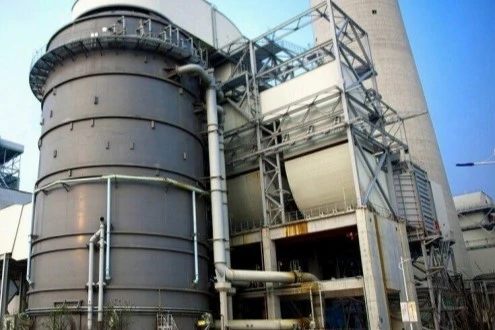
Flue Gas Desulfurization (FGD)
Absorber Towers, Scrubber Vessels, Reaction Tanks, Corrosion-Resistant Linings
Common Titanium Grades: Grade 2, Grade 7
Quality Inspection and Testing
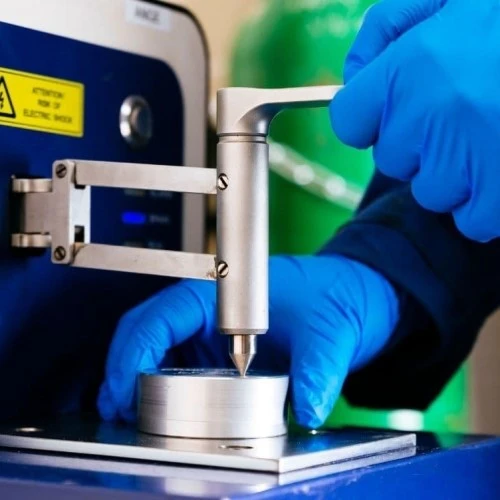
Chemical Analysis
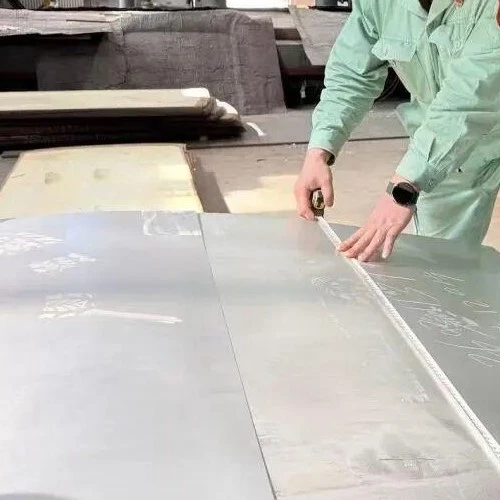
Dimensional Inspection
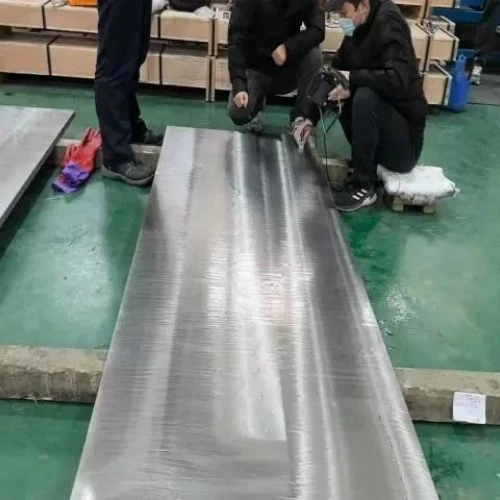
Surface Inspection
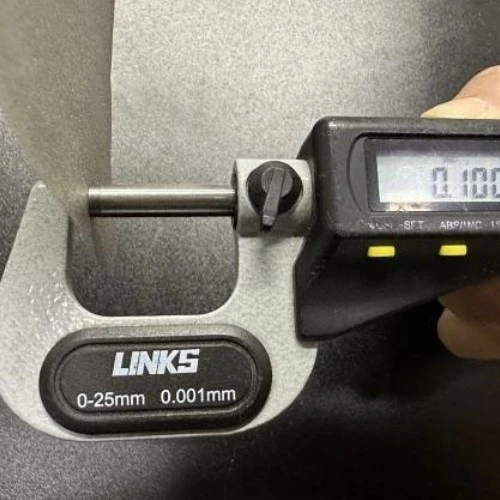
Thickness Tolerance
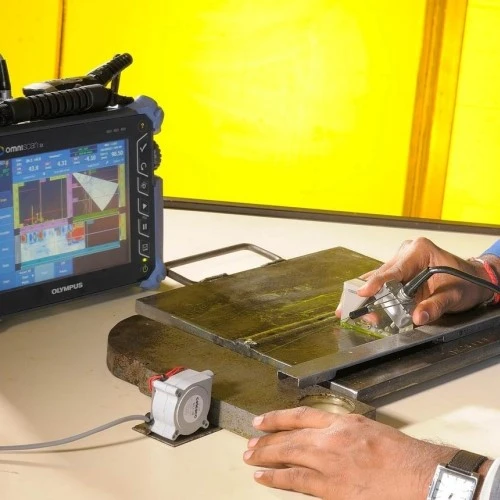
Ultrasonic Testing
| Inspection Item | Method | Purpose |
|---|---|---|
| Surface inspection | Visual examination | Checks surface condition and visible defects |
| Dimensional inspection | Thickness, width, length, and flatness measurement | Verifies plate dimensions |
| Titanium chemical analysis | Chemical composition analysis | Confirms the titanium grade |
| Base metal chemical analysis | Chemical composition analysis | Confirms substrate material |
| Ultrasonic testing (UT) | Ultrasonic examination | Evaluates bonding integrity and detects unbonded areas |
| Shear test | Mechanical shear testing | Evaluates bond strength |
| Bend test | Specified bending test | Evaluates bonding performance during deformation |
| Tensile test | Tensile testing of specified material or specimens | Verifies applicable mechanical properties |
Packaging and Delivery of Titanium Clad Plate
Titanium clad plate requires suitable packaging to protect the titanium surface, plate edges, and bonded structure during storage and international transportation.
The packaging method should be selected according to plate dimensions, surface condition, transportation distance, and handling requirements.
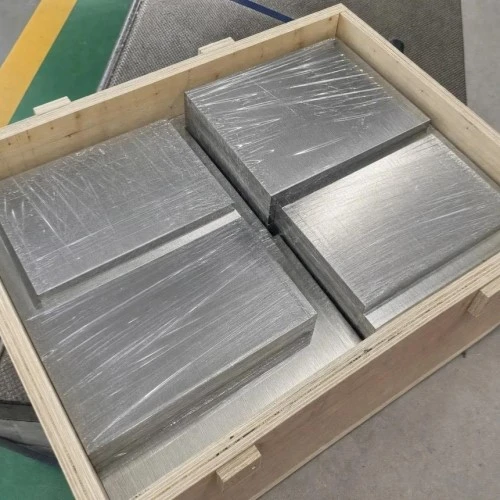
Titanium Plates Stacked Inside Wooden Crates
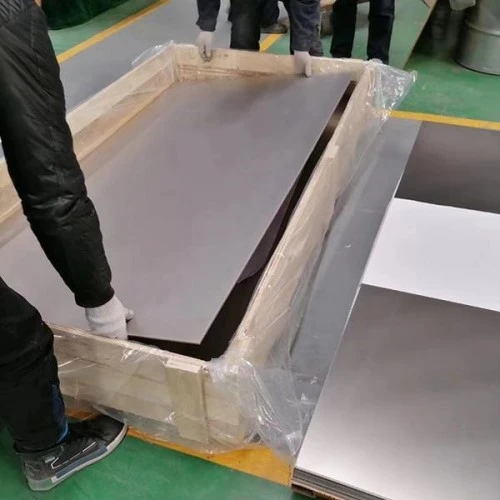
Protective Packaging for Titanium Plates Inside Wooden Crates
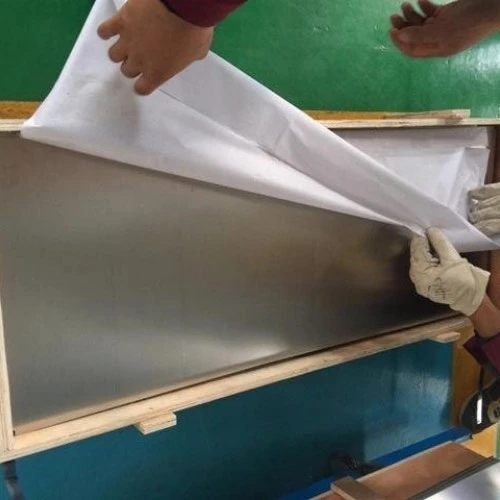
Titanium Plates Wrapped with Protective Paper
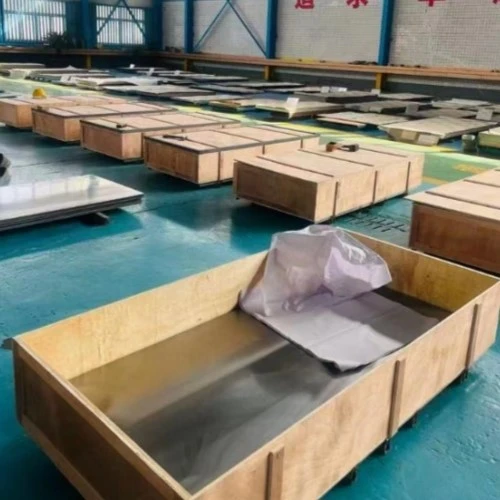
Titanium Plates Stored in Wooden Crates
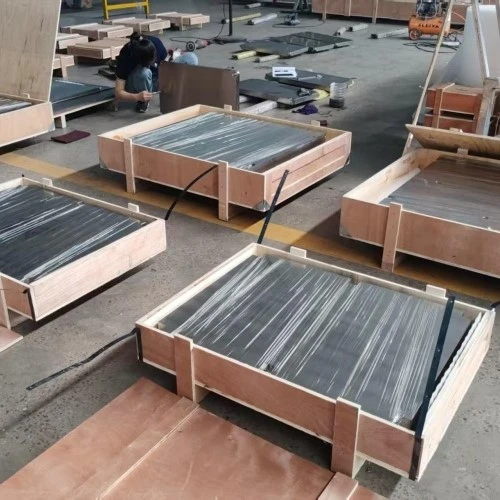
Titanium Plates Packed into Wooden Export Crates
Typical packaging considerations include:
Surface protection: Use suitable protective materials to reduce scratches and contamination on the titanium surface.
Plate separation: Place protective sheets or separators between plates where required.
Edge protection: Protect plate edges from impact and handling damage.
Wooden case or pallet: Use suitable export packaging for the plate weight and dimensions.
Moisture protection: Apply appropriate wrapping and moisture protection for sea transportation.
Identification: Mark material grades, dimensions, quantities, order numbers, and handling information.
FAQ
Q: What is the difference between titanium clad plate and titanium steel plate?
A: Titanium clad plate is a bonded composite plate consisting of a titanium layer and a steel substrate. The titanium layer provides corrosion resistance, while the steel provides structural support.
The term titanium steel plate is sometimes used informally to describe this product, but buyers should confirm that the required material is a metallurgically bonded clad plate, rather than a loose or mechanically attached lining.
Q: What is the difference between explosive bonding and roll bonding?
A: Explosive bonding uses controlled high-velocity impact to create a metallurgical bond. Roll bonding uses pressure and plastic deformation through rolling mills.
The suitable method depends on the material combination, thickness, dimensions, and required bonding performance.
Q: Which titanium grade is commonly used for titanium clad steel plate?
A: Grade 2 is a common choice for general industrial applications because of its balanced corrosion resistance, strength, and availability.
Grade 1, Grade 7, and Grade 12 may also be considered when the application requires different forming or corrosion-resistance characteristics.
Q: What is the typical thickness of titanium cladding?
A: Titanium cladding thickness depends on the corrosion allowance, fabrication requirements, and operating environment. Approximately 1–10 mm is a useful preliminary reference range for engineering discussions, but the available range depends on the manufacturing process and material combination.
Q: Can titanium clad plate be welded?
A: Yes. Titanium clad plate can be welded using suitable fabrication procedures. The titanium layer and base metal generally require separate welding procedures and appropriate joint preparation.
The corrosion-resistant titanium layer must be properly restored at the process-contact side after welding.
Q: How is the bonding quality of titanium clad plate inspected?
A: Ultrasonic testing (UT) is commonly used to evaluate bond integrity and identify unbonded areas. Shear tests and bend tests may also be required to assess bonding performance.
The required methods and acceptance criteria should be specified in the purchase agreement.
Q: Which standards apply to titanium clad plate?
A: ASTM B898 is an important specification for reactive and refractory metal clad plate, including products with titanium cladding. GB/T 8547 is another relevant standard for titanium clad steel plate.
The base metal must also comply with its applicable material specification, while pressure vessel projects may require additional design and construction code compliance.
The standard edition, product scope, testing requirements, and acceptance criteria should be confirmed when preparing the purchase specification.
Q: What information is needed to request a quotation?
A: Please provide the following information:
Titanium grade and cladding thickness.
Base metal grade and thickness.
Total plate thickness.
Plate width and length.
Single-side or double-side cladding.
Applicable standard and inspection requirements.
Quantity and intended application.
Request a Titanium Clad Plate Quotation
We support titanium clad plate inquiries for chemical processing, pressure vessels, heat exchangers, seawater equipment, and other industrial applications.
To help us evaluate your requirements, please send:
Required titanium grade and base metal grade.
Cladding thickness and substrate thickness.
Plate dimensions and quantity.
Applicable standards and inspection requirements.
Application or equipment drawings, if available.
Hot Tags: titanium clad plate, China titanium clad plate manufacturers, suppliers, factory, titanium, Gr4 Medical Titanium Sheet, Gr5 pure titanium plate, Gr5 titanium sheet plate, Gr7 Titanium plate Metal, pure Gr23 titanium sheet, titanium alloy plate