


Specifically Introduce The Welding Mechanism And Physicochemical Properties Of Titanium Coiled Tubing
Jan 24, 2024
Near the region without the protective effect and the weld and its vicinity of the titanium coiler in this state still has a strong ability to absorb nitrogen and oxygen. Oxygen is absorbed from 400 ℃, nitrogen is absorbed from 600 ℃, and the air contains a large amount of nitrogen and oxygen. As the degree of oxidation increases, the weld color of titanium coiler changes and the weld plasticity decreases.
Titanium and titanium alloys are relatively stable, but in the welding process at room temperature. Droplets and molten metal have a strong absorption of hydrogen, oxygen and nitrogen, and in the solid state, these gases act on them. As the temperature rises, the absorption capacity of titanium and titanium alloys for hydrogen, oxygen and nitrogen rises significantly. Titanium begins to absorb hydrogen at about 250°C, oxygen at 40O°C, and nitrogen at 600°C. These gases are absorbed, will directly cause the embrittlement of welded joints, which is a very important factor affecting the quality of titanium coil welding.


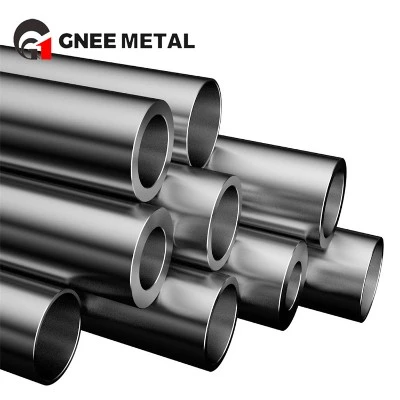
The main reason is that with the increase in the elastic content of hydrogen in the weld, hydrogen is a very serious factor affecting the mechanical properties of titanium. Changes in its content in the weld have a greater impact on the impact properties of the weld. Increased precipitation of flaky or acicular TiH2 in the weld. the strength of TH2 is very low, the gap obviously reduces the impact properties of flaky or acicular hih2, while the change in its content in the weld has no significant effect on its strength and plasticity.
The weld hardness and tensile strength of titanium coiled tubes increased significantly, and the weld oxygen content increased linearly with the argon oxygen content. However, the plasticity obviously decreases. In order to safeguard the performance of welded joints, the oxidation of the weld and heat-affected zone should be strictly avoided in the welding process.


