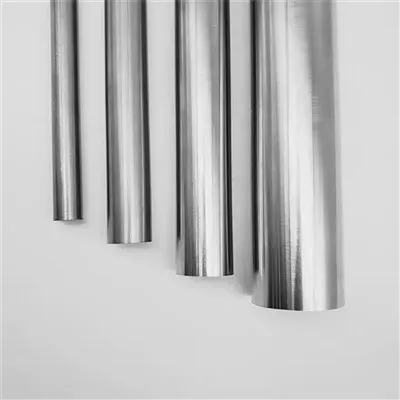
Analysis Of The Surface Color Of Welded Gr9 Titanium Alloy
Apr 09, 2024
Analysis of Gr9 titanium alloy welding weld and heat affected zone surface color description! Titanium and titanium alloy commonly used welding methods are: argon arc welding, submerged arc welding, vacuum electron beam welding and so on. The thickness of 3 mm or less with tungsten argon arc welding, more than 3 mm with fused pole argon arc welding. The purity of argon gas is not less than 99.99 ﹪, and the content of air and water vapor in argon gas is strictly controlled.
Before welding, remove oil, remove oxide skin, remove oxide film surface treatment. Due to the chemical activity of titanium and titanium alloy, easy to be contaminated by oxygen, nitrogen, hydrogen, so can not be used electrode arc welding, oxyacetylene (or oxypropane, etc.) gas welding, C02 welding, atomic hydrogen welding and other ways of welding.
1,Welding seam area
Silver white, light yellow (one, two, three welds are allowed); dark yellow (two, three welds are allowed); gold purple (three welds are allowed); dark blue (one, two, three welds are not allowed).
2,Heat-affected zone
Silver white, light yellow (one, two, three welds are allowed); dark yellow, golden purple (two, three welds are allowed); dark blue (three welds are allowed).


Chemical Composition
The chemical composition of grade 9 Ti 3Al 2.5V alloy is outlined in the following table.
| Element | Content (%) |
|---|---|
| Titanium, Ti | 92.755 - 95.5 |
| Aluminum, Al | 2.5 - 3.5 |
| Vanadium, V | 2-3 |
| Iron, Fe | ≤ 0.20 |
| Oxygen, O | ≤ 0.15 |
| Carbon, C | ≤ 0.050 |
| Nitrogen, N | ≤ 0.030 |
| Hydrogen, H | ≤ 0.015 |
| Other, each | ≤ 0.050 |
| Other, total | ≤ 0.30 |