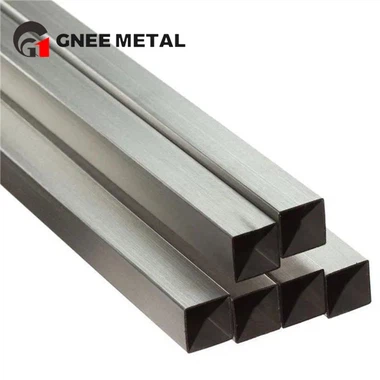
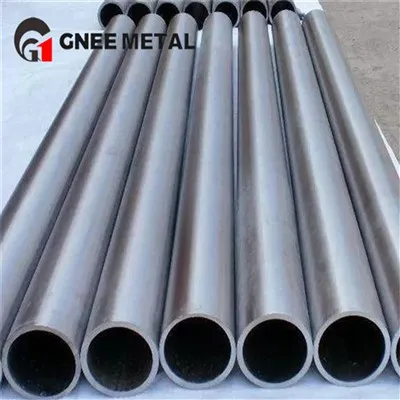
GR1 Titanium Pipes
GR1 titanium pipe & tube to ASTM B861/B338 and AMS 4942/4943. Seamless and welded, 1/8\"-6\" OD, mill test reports per heat. Get a quote with OD, wall, length and quantity.
Description
What are GR1 titanium pipes?
Gr1 titanium pipes is a high-quality unalloyed commercially pure titanium pipe product, which is produced by advanced cold rolling and drawing technology. Gr1 Titanium Tubes/Pipes are a kind of pure titanium product with low strength and low oxygen content. Grade 1 pure titanium tube is lightweight, has good corrosion resistance, and has low density. It is a very high-quality metal material. Gr1 titanium tube is widely used in tube and tube heat exchangers, coil heat exchangers, serpentine tube heat exchangers, condensers, evaporators, and conveying pipes.
The GR1 Titanium Tubes is a high-quality product that is widely used in various industries due to its excellent properties and versatile applications.
With its remarkable corrosion resistance, the GR1 Titanium Pipe is highly resistant to various corrosive environments, including seawater, chemicals, and acids.
In addition to its corrosion resistance, the GR1 pure titanium tube boasts an impressive strength-to-weight ratio, providing exceptional strength while keeping the overall weight of the structure low.
Moreover, the Gr1 pure Titanium Tube exhibits excellent biocompatibility, making it suitable for medical applications such as implants and surgical instruments.
Whether it is for industrial, aerospace, medical, or other applications, the GR1 Titanium Tube continues to set new standards in terms of performance and quality. Its excellent performance and quality will provide strong material support for the development of various industries.
Discuss Your Project Requirements


Grade 1 Titanium Tube Features
The GR1 Titanium Tube is widely recognized for its unique combination of physical, mechanical, and chemical properties, including:
Superior Ductility – Capable of deep drawing, cold forming, and spinning without risk of cracking.
High Corrosion Resistance – Performs exceptionally in seawater, chlorinated media, and most oxidizing acids.
Excellent Weldability – Supports TIG, MIG, plasma arc, and electron beam welding with minimal post-weld stress.
Lightweight Structure – Density of 4.51 g/cm³ ensures high strength-to-weight ratios.
Non-toxic and Biocompatible – Fully safe for food and medical-grade applications.
Chemical Composition (Typical)
| Element | Content (%) |
|---|---|
| Titanium (Ti) | ≥ 99.5 |
| Oxygen (O) | ≤ 0.18 |
| Carbon (C) | ≤ 0.08 |
| Nitrogen (N) | ≤ 0.03 |
| Hydrogen (H) | ≤ 0.015 |
| Iron (Fe) | ≤ 0.20 |
Mechanical Properties
| Property | Value |
|---|---|
| Tensile Strength (MPa) | ≥ 240 |
| Yield Strength (MPa) | ≥ 170 |
| Elongation (%) | ≥ 24 |
| Modulus of Elasticity | ~105 GPa |
| Hardness (HB) | ~80 |
Specifications and Standards
GR1 titanium tube is manufactured to several industry standards. When specifying or purchasing, it is important to reference the correct standard for your application.
| Specification | Description | Typical Applications |
|---|---|---|
| ASTM B338 grade 1 | Seamless and welded titanium tube for condensers and heat exchangers | Heat exchangers, surface condensers, evaporators |
| ASME SB338 grade 1 | Same as ASTM B338, adopted by ASME | Pressure vessel and heat exchanger applications |
| ASTM B861 grade 1 | Seamless titanium pipe | Process piping, industrial fluid handling |
| ASTM B862 grade 1 | Welded titanium pipe | Fabricated pipe systems, ductwork |
| AMS 4942 grade 1 | Seamless titanium tube, hydraulic | Aerospace hydraulic systems |
| AMS 4943 grade 1 | Welded titanium tube, hydraulic | Aerospace hydraulic systems |
For most industrial heat exchanger and condenser applications, ASTM B338 grade 1 is the standard specification. For process piping, ASTM B861 grade 1 (seamless) or ASTM B862 gr1 (welded) is typically used.
Applications for GR1 Titanium Tube
Chemical Processing
In chemical plants, GR1 titanium tube is used for heat exchangers, condensers, evaporators, and process piping. It handles aggressive chemicals such as wet chlorine, chlorides, and organic acids that would quickly attack stainless steel or nickel alloys.
Marine and Offshore
Seawater systems-cooling water, firewater, ballast, and hydraulics-are a natural application for GR1 titanium. The material resists pitting, crevice corrosion, and erosion corrosion in high-velocity seawater. Offshore platforms, desalination plants, and shipbuilding are common end-use markets.
Heat Exchangers and Condensers
ASTM B338 titanium tube is widely used in shell-and-tube heat exchangers, surface condensers, and cooling coils. The combination of corrosion resistance and thin-wall capability allows for efficient heat transfer with long service life.
Aerospace
AMS 4942 and AMS 4943 cover GR1 titanium tube for aerospace hydraulic and instrumentation systems. The material's light weight, corrosion resistance, and reliability make it a standard choice for aircraft hydraulic lines.
Medical and Pharmaceutical
The biocompatibility of titanium makes it suitable for pharmaceutical manufacturing equipment and medical devices. GR1 tube is used in sterile processing systems, bioreactors, and other applications requiring clean, corrosion-resistant surfaces.
GR1 vs. GR2 vs. GR3 Titanium: What Is the Difference?
Commercially pure titanium grades are distinguished primarily by oxygen content, which affects strength and ductility.
| Grade | UNS | Oxygen (max) | Tensile Strength (min) | Yield Strength (min) | Characteristics |
|---|---|---|---|---|---|
| GR1 | R50250 | 0.18% | 35 ksi | 25 ksi | Highest ductility, best formability, maximum corrosion resistance |
| GR2 | R50400 | 0.25% | 50 ksi | 40 ksi | Moderate strength, good formability, most widely used |
| GR3 | R50550 | 0.35% | 65 ksi | 55 ksi | Higher strength, reduced formability |
For most tube and pipe applications, GR1 is chosen when maximum formability and corrosion resistance are required. GR2 is the workhorse grade-stronger than GR1 but still formable. GR3 is used when higher strength is needed and forming requirements are minimal.
Titanium Tube Manufacturing Process
Our GR1 titanium tube is produced through a controlled cold-working route:
1) Hot extruded or pierced hollow shells;
2) Cold pilger rolling and draw bench reduction to target OD and wall;
3) Vacuum or inert-gas annealing to restore ductility;
4) Straightening, cutting and end preparation;
5) 100% inspection (UT/ECT/hydrostatic) and dimensional verification before packing.
Every heat is tracked by heat number for full traceability to the mill test report.

Grade 1 Titanium Tube Surface Finish

| Surface Finish | Key Characteristics | Typical Applications |
|---|---|---|
| Pickled & Cleaned (AP) | Clean matte surface, excellent corrosion resistance, free from scale | Heat exchangers, condensers, seawater cooling systems |
| Bright Annealed (BA) | Smooth, bright surface, improved cleanliness, reduced contamination risk | High-efficiency heat exchangers, chemical processing equipment |
| Polished Finish (Mechanical Polishing) | Very smooth surface, lower fouling tendency, improved heat transfer efficiency | Pharmaceutical, food-grade, precision heat exchangers |
| As-Drawn / Mill Finish | Economical option, may contain minor surface marks | Structural applications, non-critical heat exchange systems |
| Sand Blasted (Optional) | Uniform matte texture, improved coating adhesion | Special corrosion protection systems, engineered equipment |
Why Choose Us as Your GR1 Titanium Tube Supplier?
We specialize in GR1 titanium pipe and GR1 titanium tube for demanding industrial applications. Whether you need customized GR1 titanium tube or standard sizes, we have you covered.
- In-house production: cold pilger mills, draw benches and annealing furnaces cover 1/8" to 6" OD.
- Full quality control: 100% ultrasonic testing, eddy current inspection and hydrostatic testing on every length before dispatch.
- Full traceability: Mill Test Reports (chemical analysis + mechanical properties) issued per heat number.
- Flexible supply: seamless (ASTM B861) and welded (ASTM B862) forms, custom sizes on request.
- Export experience: ISPM 15 fumigated crating for ocean freight, with packing lists per crate.
Looking for a complete technical overview? Read our comprehensive guide: [GR1 Titanium: Complete Technical Guide]
Quality and Certifications


Flaring Test

Flattening Test

Hydrostatic Testing


Spectrographic / PMI Test

Ultrasonic Testing (UT)

Straightness & Ovality Check
When sourcing GR1 titanium tube, quality documentation is essential. Reputable suppliers provide:
Mill Test Reports (MTRs): Chemical analysis and mechanical properties for each lot
Certification of Compliance: Documentation that the material meets the specified standard
Traceability: Material markings and documentation linking the product to the mill
Third-Party Inspection: When required, independent inspection can be arranged
For critical applications-aerospace, nuclear, medical-additional testing and documentation may be required.
FAQ
What is the difference between GR1 titanium and GR2 titanium?
GR1 has lower oxygen content, which makes it softer, more ductile, and more formable than GR2. GR2 has higher strength and is more widely used for general applications. GR1 is preferred when maximum formability and corrosion resistance are required.
Is GR1 titanium tube suitable for seawater applications?
Yes. GR1 titanium offers exceptional resistance to seawater corrosion, including resistance to pitting, crevice corrosion, and erosion corrosion. It is widely used in marine and offshore applications.
What is the standard specification for titanium heat exchanger tube?
ASTM B338 grade 1 is the standard specification for seamless and welded titanium tube for condensers and heat exchangers. It covers GR1, GR2, GR3, GR7, GR9, GR11, and GR12 alloys.
Can GR1 titanium tube be welded?
Yes. GR1 titanium can be welded using gas tungsten arc welding (GTAW/TIG) with proper shielding. The weld area must be protected from atmospheric contamination to prevent embrittlement. Titanium tube is often welded to titanium tubesheets in heat exchanger fabrication.
What is the maximum operating temperature for GR1 titanium?
GR1 titanium is suitable for continuous service up to approximately 600°F (316°C) in oxidizing environments. Above this temperature, oxidation becomes a concern. For higher-temperature applications, specialized titanium alloys may be required.
Does GR1 titanium require corrosion protection?
No. GR1 titanium does not require coatings, cathodic protection, or other corrosion protection methods. Its natural oxide layer provides exceptional corrosion resistance in most environments.
What sizes are available in GR1 titanium tube?
GR1 titanium tube is available in a range of outside diameters and wall thicknesses. For heat exchanger applications, common sizes range from 1/2 inch to 2 inches OD, with wall thicknesses from 0.028 inches to 0.120 inches. Process pipe is available in larger diameters. Custom sizes can be ordered from manufacturers.
Packaging
We cap both ends of every titanium tube with heavy-duty plastic caps that fit snugly to keep interior surfaces clean and free from debris during handling and transit. Tubes are grouped in bundles by size and heat number, with woven straps and corner protectors to prevent shifting. Each bundle is placed in a plywood crate or on a steel-framed pallet, depending on the order size and destination. For export shipments, crates are built to ISPM 15 standards with fumigated wood and reinforced corners. We include a packing list inside each crate and a weatherproof copy attached to the outside. No loose tubes, no plastic wrap as the primary protection-just crates that hold up to forklifts and freight stacking.

Factory Equipment
Our manufacturing facility is equipped with a full range of precision tube processing equipment, including cold pilger mills, draw benches, and annealing furnaces capable of handling titanium tube from 1/8 inch up to 6 inches in diameter. We maintain strict process control throughout production, with in-house ultrasonic testing, eddy current inspection, and hydrostatic testing to ensure every length of tube meets ASTM specifications before it leaves the shop. Our team has decades of experience working with commercially pure and alloyed titanium, and we take pride in producing tube that consistently passes the most demanding quality inspections.

Get Fast Quote & Logistics Plan
Hot Tags: gr1 titanium pipes, China gr1 titanium pipes manufacturers, suppliers, factory, titanium, Alloy Gr9 Titanium Tube, Seamless Grade 5 Titanium Pipe, 5 inch titanium pipe, Titanium Grade 2 Seamless Tube, Titanium Round Pipe, Gr5 Titanium Straight Piping