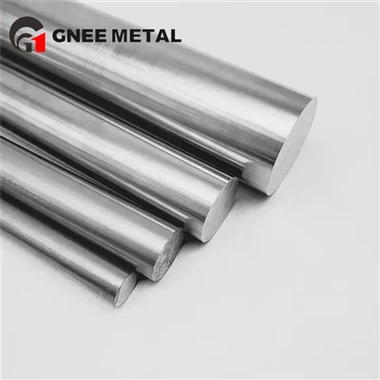


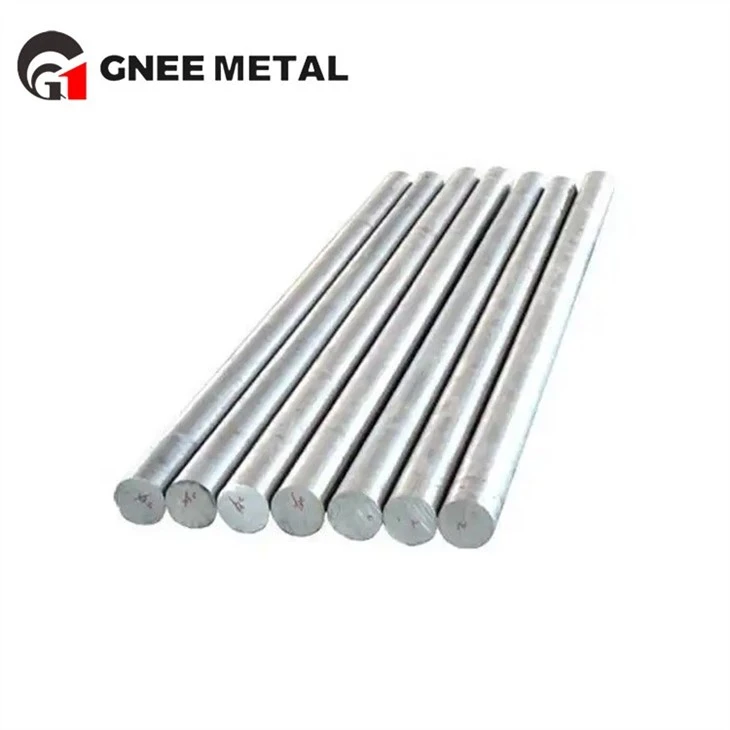


Alpha-Beta Titanium Alloys
α+ β alloys contain both α- and β-phase stabilizing elements. The properties of such alloys can be improved by heat treatment and/or thermomechanical processing. They are characterized by a martensitic transformation during rapid cooling from the β-region to room temperature. The well-known Ti-6Al-4V is found in this combination of alloys.
Description
α-β alloys have higher strength and respond to heat treatment, but they are less formable than α alloys. Welding efficiency can be as high as 100%. These alloys account for over 70% of all commercially available titanium alloys. Some important α-β alloys include Ti-3Al-2.5V, Ti-5Al-2Sn-2Zr-4Mo-4Cr (Ti-17), Ti-6Al-2Sn-2Zr-2Mo-2Cr-0.25 Si, Ti-6Al-2Sn-4Zr-6Mo and Ti-6Al-6V-2Sn.
Products Description
Industry-leading titanium production technology

Mechanical properties of α+β titanium alloys
| Alloy designation (wt%) | Tensile strength (MPa) | Yield strength (MPa) | Elongation (%) | Elastic modulus (GPa) |
|---|---|---|---|---|
| Ti-6Al-4V ELI (annealed) | 860–965 | 795–875 | 10–15 | 101–110 |
| Ti-6Al-4V (annealed) | 895–930 | 825–869 | 6–10 | 110–114 |
| Ti-6Al-7Nb (wrought) | 900–1050 | 880–950 | 8.1–15 | 114 |
| Ti-5Al-2.5Fe (cast) | 1020 | 895 | 15 | 112 |
| Ti-5Al-2Sn-2Zr-4Mo-4Cr (STA) | 1105–1240 | 1035–1075 | 8–15 | 114 |
| Ti-6Al-2Sn-4Zr-6Mo (STA) | 1170 | 1100 | 6 | 114 |
| Ti-6Al-6V-2Sn (air-cooled annealed) | 993–1013 | 903–937 | 8 | 110 |
| Ti-7Al-4Mo (annealed) | 1000 | 930 | 10 | 111 |
| Ti-8Mn (annealed) | 1000 | 930 | 15 | 113 |
α/β alloys with higher β stabilizer content and [Mo] equivalents in the range of 5%-10% have improved formability and malleability due to the higher number of slip systems in the BCC β phase. These β-rich α/β alloys have lower T β, better hardenability, good heat treatment response, and higher strength in the room to medium temperature range compared to Ti-6Al-4V. Two alloys processed as forgings and used in engine components are Ti-6Al-2Sn-4Zr-6Mo and Ti-5Al-2Zr-2Sn-4Mo-4Mo-4Mo. -2Sn-4Mo-4Cr (Ti-17).
Alpha/beta alloys contain one or more alpha and beta stabilizers. These alloys retain more β-phase after final heat treatment than near-α alloys and can be strengthened by solid solution treatment and aging, although they are usually used in the annealed condition. Solid solution treatments are usually carried out at high α/β phase fields, followed by aging at lower temperatures to precipitate the α-phase, resulting in a mixture of relatively coarse incipient α-phase and fine α-phase in the α/β matrix. Solid solution treatment and aging can increase the strength of these alloys by up to 80%. Alloys with low beta stabilizer content (e.g., Ti-6Al-4V (wt%) alloys) have poor hardenability and must be quenched rapidly for subsequent strengthening. Water quenching of Ti-6Al-4 V will only sufficiently harden cross-sections smaller than 25 mm (1 inch). The β stabilizer in α/β alloys improves hardenability.
Product Packaging

about us
We have been producing and supplying quality metals for many years and are constantly striving to improve our production processes and product quality. We aim to be the world's leading supplier of metals and are constantly investing in advanced production facilities and technology, improving service quality and transportation solutions, and prioritizing customer satisfaction.
Highly reliable team

Customer visits

Pre-shipment testing

Hot Tags: alpha-beta titanium alloys, China alpha-beta titanium alloys manufacturers, suppliers, factory, titanium, Ti Alloy Bar, Ti 6Al 4V Titanium Bar, Gr5 Titanium Rec Bar, Gr6 Titanium Round Bar, Titanium Hexagon Bar, Pure Titanium Rod