


Titanium Materials for Structured Packing and Column Internals
Nov 20, 2026
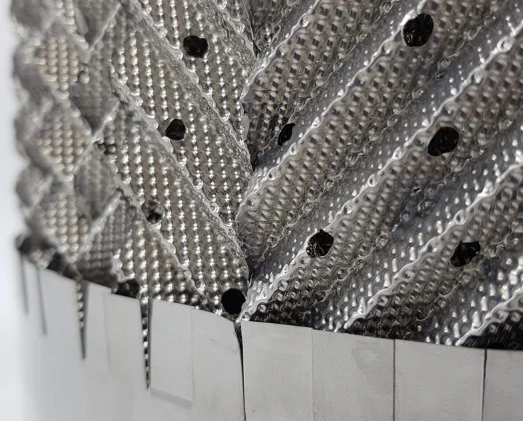
Titanium is used in selected chemical processing applications where corrosion resistance, low weight, and reliable material performance are important. In distillation columns, absorption towers, and other mass transfer equipment, titanium can be used to manufacture structured packing sheets and various column internal components.
We supply Grade 1, Grade 2, Grade 7, and Grade 12 titanium materials in foil, sheet, plate, and strip forms for industrial equipment manufacturing.
What Are Structured Packing and Column Internals?
Structured packing and column internals are important components of industrial separation equipment. They are installed inside distillation columns, absorption towers, and stripping columns to support gas-liquid contact and improve mass transfer.
Structured Packing
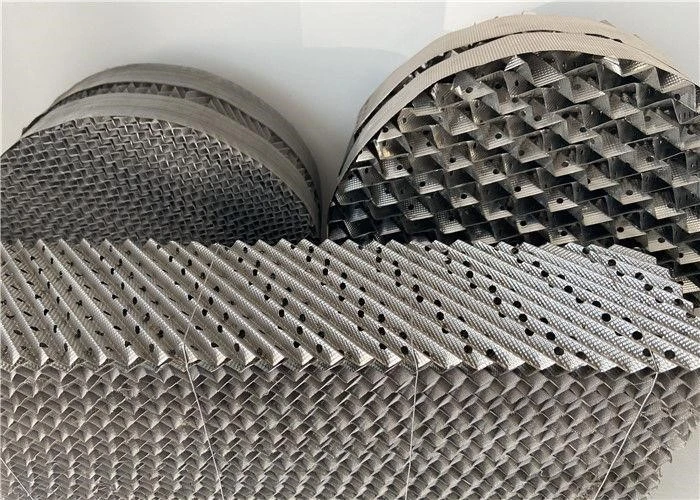
Structured packing consists of regularly arranged metal sheets, usually formed into corrugated layers. The sheets are assembled in a specific arrangement to create channels through which vapor and liquid flow.
Compared with random packing, structured packing provides an organized flow path and can offer advantages in pressure drop, separation efficiency, and liquid distribution when properly designed.
Metal structured packing is commonly manufactured from stainless steel and other corrosion-resistant materials. Titanium can also be specified for applications where its corrosion resistance is required.
Typical features include:
Corrugated metal sheets arranged in layers.
Perforations or surface texturing to influence liquid distribution.
Defined geometric channels for vapor and liquid flow.
Modular construction for installation and maintenance.
Corrugated Metal Structured Packing
Other Types of Column Internals
Besides structured packing, industrial columns contain several internal components that control liquid distribution, support packing, and manage gas-liquid flow.
| Component | Main Function | Potential Titanium Material Form |
|---|---|---|
| Liquid Distributor | Distributes liquid evenly across the column | Titanium Sheet / Plate |
| Liquid Collector | Collects liquid from the packing section | Titanium Sheet / Plate |
| Packing Support | Supports the weight of packing materials | Titanium Plate / Sheet |
| Mist Eliminator | Removes entrained liquid droplets from gas streams | Titanium Wire / Mesh |
| Bed Limiter | Keeps packing within its designed section | Titanium Sheet / Plate |
| Gas Distributor | Distributes gas flow within the column | Titanium Sheet / Plate |
The required material form depends on the component design. For example, thin sheets may be suitable for certain formed structures, while packing supports generally require a thickness determined by mechanical loading and structural calculations.
Where Is Titanium Used in Structured Packing and Column Internals?
Titanium is not necessarily required for every component inside a chemical column. It is generally selected for specific sections where the operating environment justifies the use of a corrosion-resistant material.
The following applications illustrate where titanium materials may be used in column internal manufacturing.
Corrugated Sheets for Structured Packing
This is one of the most direct applications for thin titanium materials.
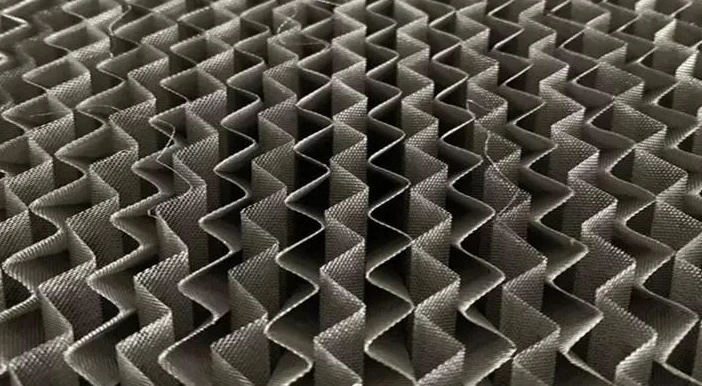
Structured packing manufacturers use thin metal sheets to produce corrugated layers. Depending on the design, these sheets may undergo perforation, surface texturing, and corrugation before being assembled into packing modules.
Grade 2 titanium sheet or thin strip can be considered when the process environment is compatible with commercially pure titanium.
Corrugated Titanium Sheets for Structured Packing
Titanium Components for Liquid Distributors
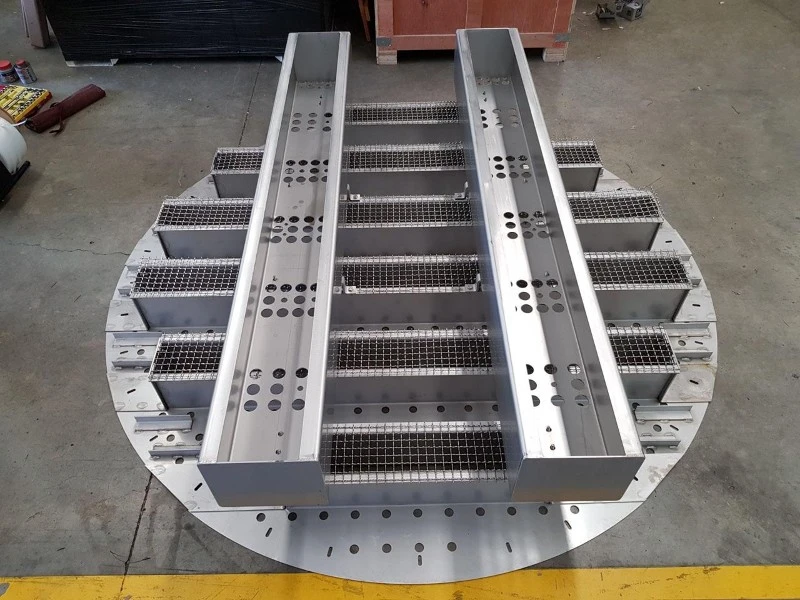
Liquid distributors are designed to spread liquid evenly across the column cross-section before it enters the packing section.
Depending on the design, distributors may contain perforated plates, troughs, channels, and other formed metal components.
Titanium sheet and plate can be selected for liquid-contacting components when the process fluid requires titanium's corrosion resistance.
Industrial Liquid Distributor for Distillation Columns
Titanium Packing Supports and Internal Structures
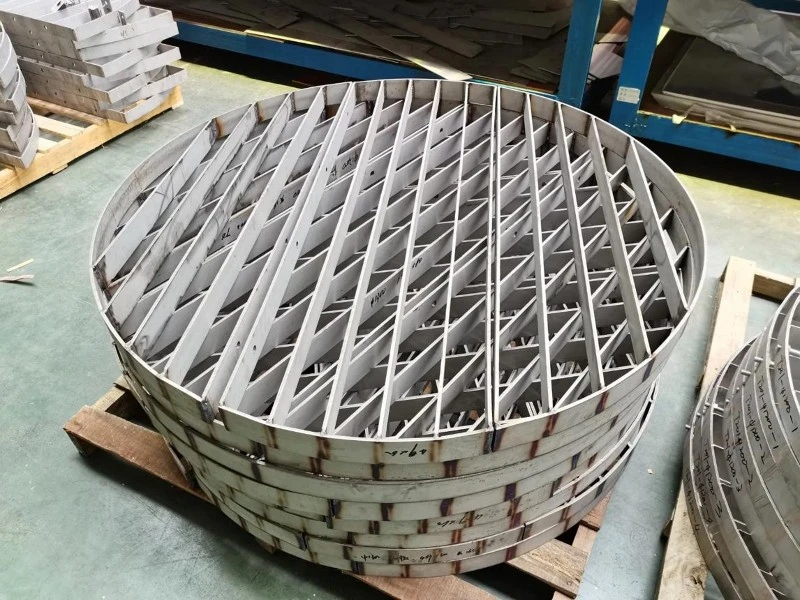
Packing supports carry the load of the packing bed and transfer it to the column structure.
Unlike corrugated packing sheets, support components are generally subject to greater mechanical loading.
Titanium plate or thicker titanium sheet may be considered for selected packing support components, depending on the required load capacity, span, structural arrangement, and operating conditions.
Column Packing Support Grid
Titanium Components for Mist Eliminators
Mist eliminators remove liquid droplets carried by gas as it moves through a column.
Some designs use knitted wire mesh, while others use vane-type structures or other separation elements.
For wire-mesh mist eliminators, titanium wire is generally a more relevant raw material than titanium foil. Titanium sheet or plate may be used for supporting frames and other structural parts when required by the design.
This distinction is important when selecting the raw material:
Titanium Wire: For knitted mesh structures.
Titanium Sheet: For certain formed components.
Titanium Plate: For heavier supporting structures.
Industrial Wire Mesh Mist Eliminator

Why Choose Titanium for Column Internals?
Corrosion Resistance in Chemical Environments
Titanium forms a stable, protective oxide film on its surface, which contributes to its corrosion resistance in many environments.
This makes commercially pure titanium useful in selected chemical processing applications, particularly where chloride-containing or other corrosive process fluids are involved.
01
Lightweight Construction
Titanium has a density of approximately 4.51 g/cm³, considerably lower than many common stainless steel grades.
This lower density can help reduce the weight of thin-sheet components and assembled internal structures.
02
Formability for Thin-Wall Components
Structured packing requires metal sheets to undergo forming operations such as corrugation, bending, and sometimes perforation.
Commercially pure titanium grades, particularly Grade 1 and Grade 2, offer useful forming characteristics.
03
Long-Term Service Performance
In a suitable operating environment, titanium components can provide reliable corrosion performance and help reduce the frequency of material replacement.
For equipment manufacturers and plant operators, this can contribute to lower maintenance requirements over the service life of the equipment.
04
Which Titanium Grade Is Suitable for Column Internals?
Different titanium grades offer different combinations of strength, ductility, and corrosion resistance. The correct grade should be selected according to the chemical environment and mechanical requirements of the component.
| Titanium Grade | Material Characteristics | Potential Applications |
|---|---|---|
| Grade 1 | High ductility and relatively low strength | Thin formed components requiring high formability |
| Grade 2 | Balanced strength, ductility, and corrosion resistance | General-purpose corrosion-resistant packing and column components |
| Grade 7 | Commercially pure titanium with palladium addition | Selected chemical environments requiring enhanced corrosion resistance |
| Grade 12 | Titanium alloy containing molybdenum and nickel | Selected chemical processing equipment requiring improved corrosion performance |
Grade 1 Titanium
Grade 1 is commercially pure titanium with relatively low strength and high ductility.
It may be considered for thin components requiring substantial forming, provided its mechanical properties meet the design requirements.
Grade 2 Titanium
Grade 2 is one of the most widely used commercially pure titanium grades for industrial applications.
It offers a useful combination of:
Moderate strength.
Good formability.
Good weldability with suitable procedures.
Corrosion resistance in many suitable environments.
For structured packing manufacturers, Grade 2 is a practical material to evaluate when producing thin corrugated sheets or other formed components.
Grade 7 Titanium
Grade 7 contains a small addition of palladium, which improves corrosion resistance in certain reducing and acidic environments.
It may be considered for chemical processing equipment operating in conditions where commercially pure Grade 2 is insufficient.
Grade 12 Titanium
Grade 12 is a titanium alloy containing molybdenum and nickel.
It offers improved resistance in certain reducing and crevice-corrosion environments compared with commercially pure titanium.
For column internal applications, its suitability must be evaluated against the specific process medium, concentration, temperature, and mechanical requirements.
Titanium Foil, Sheet and Strip for Column Internals
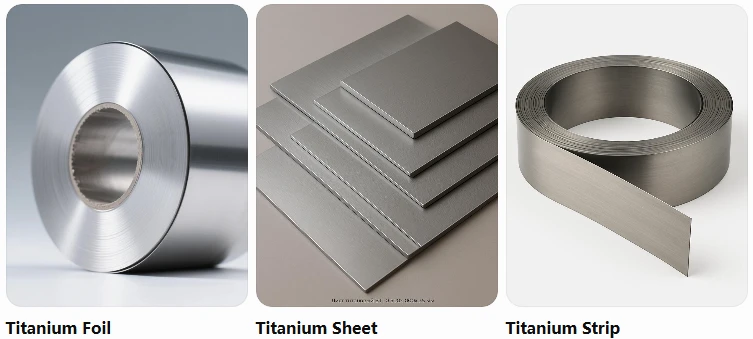
Titanium materials are available in different product forms. For column internal manufacturers, the choice between foil, sheet, and strip depends mainly on component geometry, forming methods, and material thickness.
| Material Form | Typical Characteristics | Potential Applications |
|---|---|---|
| Titanium Foil | Very thin titanium material | Thin formed components and specialized packing structures |
| Titanium Sheet | Flat titanium material in sheet form | Corrugated packing, distributors, and formed internal components |
| Titanium Strip | Narrow titanium material supplied in slit or coil form | Continuous processing and narrow-width components |
Titanium Foil for Corrugated Packing
Titanium foil may be considered for structured packing designs that require very thin metal material.
Before ordering, buyers should confirm whether the required product is commercially classified and supplied as foil, sheet, or strip.
Important purchasing details include:
Thickness and thickness tolerance.
Width and length or coil weight.
Grade and applicable material specification.
Surface finish.
Material condition.
Forming requirements.
For corrugated packing applications, thickness consistency and surface condition are particularly important, because variations may affect forming behavior and the geometry of the finished sheets.
Titanium Sheet for Column Internals
Titanium sheet is suitable for a wider range of fabricated column components.
Depending on the engineering design, it may be used for:
Corrugated structured packing.
Liquid distribution plates.
Liquid collection components.
Formed channels and troughs.
Selected support and structural parts.
The required thickness should be determined by the component's structural and fabrication requirements.
Titanium Strip for Precision Components
Titanium strip is useful when manufacturers require narrow-width material or continuous feed for further processing.
It may be supplied in coil form or cut to specified lengths, depending on the production requirements.
Buyers should confirm:
Strip width and thickness.
Coil inner and outer diameter.
Coil weight.
Edge condition.
Surface quality.
Required material temper or condition.
Request a Grade 2 Titanium Quote
Manufacturing Considerations for Titanium Column Internals
The performance of titanium column internals depends not only on the selected grade but also on material quality and subsequent fabrication.
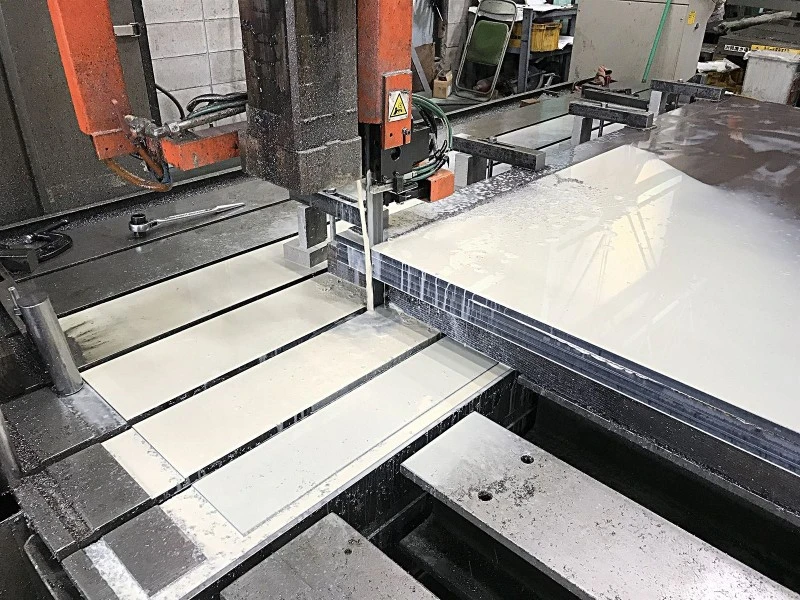
For manufacturers processing titanium sheets into packing modules or other column components, several manufacturing factors deserve attention.
| Manufacturing Process | Key Material Requirements | Important Checks |
|---|---|---|
| Perforation | Consistent thickness and surface quality | Hole diameter, spacing, burrs |
| Corrugation | Suitable forming properties | Wave height, pitch, dimensional consistency |
| Bending | Appropriate ductility and material condition | Bend radius and surface cracking |
| Welding | Suitable material compatibility and clean surfaces | Weld quality and contamination control |
| Assembly | Consistent dimensions and component fit | Alignment and dimensional accuracy |
Perforation
Perforation is used in certain structured packing designs to create openings in the metal sheets.
The quality of the incoming titanium material can influence processing stability.
Uniform thickness and a clean surface help reduce inconsistencies during perforation.
Corrugation
Corrugation creates the wave-shaped geometry used in structured packing.
The sheet must have suitable forming properties to achieve the required wave profile without excessive cracking or surface damage.
Manufacturers should evaluate material thickness, condition, tooling, and forming parameters together.
Bending
Liquid distributors, channels, and other internal components may require bending operations.
The minimum bend radius depends on the titanium grade, material condition, thickness, and forming direction.
Trial forming may be necessary for critical or unusually thin components.
Welding
Titanium welding requires careful protection from atmospheric contamination, particularly at elevated temperatures.
Oxygen, nitrogen, and hydrogen pickup can adversely affect weld quality and material properties.
Clean surfaces, suitable shielding gas protection, and controlled welding procedures are essential for titanium fabrication.
Assembly
During final assembly, manufacturers should check component dimensions, alignment, and fit.
For structured packing, consistent corrugation geometry and module dimensions are important for maintaining the intended installation arrangement.
Titanium Sheet Forming and Fabrication
Industries Using Titanium Structured Packing and Column Internals
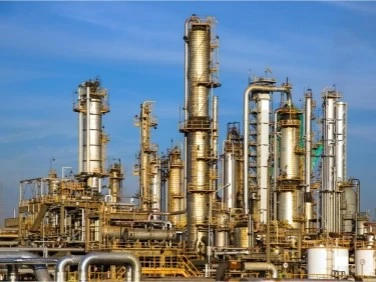
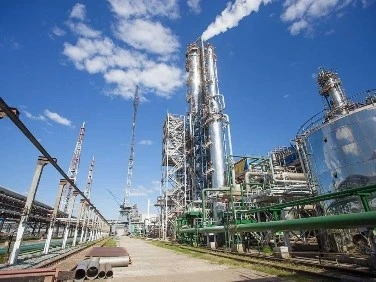
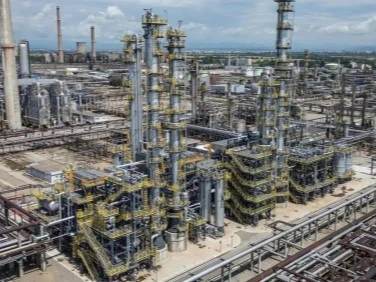
Titanium structured packing and other titanium column components may be used in several industries where the process environment requires suitable corrosion-resistant materials.
Chemical Processing
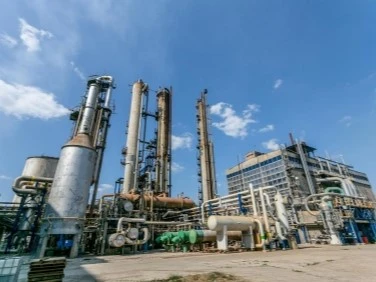
Chemical processing plants use distillation, absorption, and stripping equipment for separating and recovering chemical products.
Titanium may be specified for selected internal components exposed to corrosive process fluids.
Petrochemical Industry
Petrochemical facilities use separation columns and other mass transfer equipment in various processing operations.
Titanium can be considered for specific corrosive service conditions where its material properties justify its use.
Fertilizer Industry
Fertilizer production involves several chemical processes, including gas absorption and separation.
Depending on the process chemistry, titanium may be selected for certain internal components exposed to corrosive media.
Pharmaceutical Industry
Pharmaceutical manufacturing may involve purification, solvent recovery, and chemical separation operations.
Titanium materials may be considered where process compatibility, cleanliness, and corrosion resistance are important.
Titanium Material Specifications and Quality Requirements
For equipment manufacturers, purchasing titanium materials involves more than confirming the grade and price.
Applicable Standards
ASTM B265 is the main ASTM specification to consider for titanium and titanium alloy strip, sheet, and plate.
The standard covers annealed titanium and titanium alloy products and specifies requirements including chemical composition and mechanical properties.
Key Inspection Items
| Inspection Item | What Buyers Should Verify |
|---|---|
| Chemical Composition | Grade identification and chemical analysis |
| Mechanical Properties | Tensile strength, yield strength, and elongation |
| Thickness Tolerance | Actual thickness and permitted deviation |
| Width and Length | Compliance with ordered dimensions |
| Surface Quality | Scratches, cracks, dents, and other visible defects |
| Flatness | Suitability for subsequent processing |
| Material Traceability | Heat number and material identification |
| Material Test Certificate | Inspection results and applicable standard |
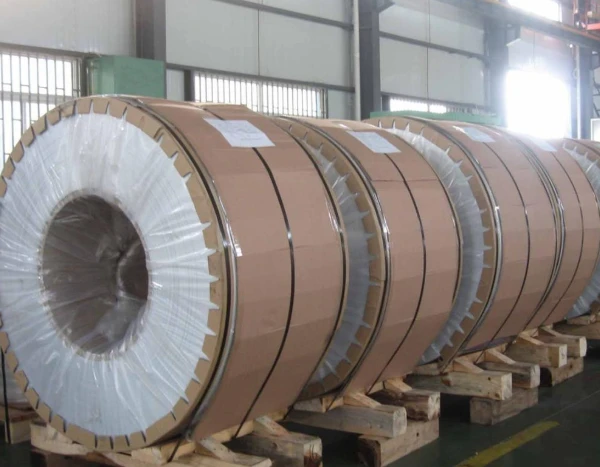
Packaging and Export Protection
Titanium foil, sheet, and strip should be protected against mechanical damage and contamination during handling and transportation.
Depending on product form and order requirements, export packaging may include:
Protective interleaving between sheets.
Moisture-resistant wrapping.
Secure packing for titanium coils.
Edge and surface protection.
Wooden cases or crates suitable for export transportation.
Titanium Sheet and Foil Export Packaging
How to Select Titanium Materials for Column Internals?
Selecting the right titanium material requires coordination between the equipment design, operating conditions, and raw material specifications.
For procurement teams, the following steps can help avoid material mismatches and unnecessary purchasing costs.
1. Identify the Chemical Environment
First, identify the process medium and operating conditions.
Important information includes:
Chemical composition.
Concentration of the process medium.
Operating temperature.
Chloride or fluoride content.
Oxidizing or reducing conditions.
Flow velocity and possible deposits.
Do not select Grade 2 titanium based on the general description of the chemical alone. The actual operating conditions must be evaluated.
2. Determine the Component Type
Identify which component will be manufactured.
For example:
Corrugated packing sheets.
Liquid distribution plates.
Packing support structures.
Mist eliminator frames.
Other fabricated internal components.
Different components have different thickness, strength, and forming requirements.
3. Select the Titanium Grade
Compare the corrosion environment with the mechanical requirements.
Grade 2 is a common starting point for general industrial applications, while Grade 7 and Grade 12 may be considered for certain more demanding chemical environments.
For critical applications, consult corrosion data and qualified materials engineers before finalizing the grade.
4. Choose the Material Form
Determine whether the component requires titanium foil, sheet, plate, strip, or wire.
The material form should match the intended manufacturing process.
For example, corrugated packing sheets and knitted wire mesh mist eliminators require different raw material forms.
5. Confirm Dimensions and Tolerances
Specify:
Thickness.
Width.
Length or coil form.
Dimensional tolerances.
Surface finish.
Material condition.
For thin-sheet forming applications, thickness consistency and surface quality deserve particular attention.
6. Verify Quality and Documentation
Before ordering, confirm the applicable standard, inspection requirements, and certificate documentation.
For project orders, drawings and technical specifications can help suppliers evaluate material availability and processing requirements more accurately.
Send Your Titanium Material Requirements
Titanium Materials Supplier for Chemical Equipment Manufacturers
We supply titanium materials for industrial manufacturers and engineering procurement projects.
Our product range includes titanium foil, sheet, plate, and strip in commercially pure and selected alloy grades.
Available Titanium Materials
| Product | Available Grades | Applicable Standard |
|---|---|---|
| Titanium Foil | GR1, GR2 and other available grades | Confirmed according to product form and order specification |
| Titanium Sheet | GR1, GR2, GR7, GR12 | ASTM B265 |
| Titanium Plate | GR1, GR2, GR7, GR12 | ASTM B265 |
| Titanium Strip | GR1, GR2 and other available grades | ASTM B265 |
Actual grades, dimensions, surface conditions, and supply forms should be confirmed against current production and inventory availability.
What Information Should You Include in Your Inquiry?
To help us evaluate your requirements and prepare an accurate quotation, please provide:
| Required Information | Example |
|---|---|
| Titanium Grade | GR2 / Grade 2 |
| Product Form | Foil / Sheet / Strip |
| Thickness | Required thickness in mm |
| Width | Required width in mm |
| Length or Coil | Sheet length or coil requirements |
| Quantity | kg / tons / pieces |
| Standard | ASTM B265, if applicable |
| Surface Condition | As agreed in the purchase specification |
| Application | Structured packing / column internals |
If available, please also provide your technical drawing or material specification.


