


Grade 2 vs Grade 7 vs Grade 12 Titanium for Chemical Processing
Nov 20, 2026
Where Are These Titanium Grades Used in Chemical Processing?
Titanium materials are used in chemical processing equipment where corrosion resistance, service life, and equipment reliability are important.
Grade 2, Grade 7, and Grade 12 can all be considered for chemical equipment, but the appropriate choice depends on the actual operating environment.
| Equipment | Typical Titanium Applications | Main Material Considerations |
|---|---|---|
| Heat Exchangers | Tubes, tube sheets, plates, and shell components | Cooling medium, process fluid, temperature, and corrosion resistance |
| Pressure Vessels | Shell plates, heads, and internal components | Design pressure, temperature, and chemical compatibility |
| Chemical Reactors | Linings, vessel components, and heat transfer surfaces | Reaction medium, concentration, and operating conditions |
| Evaporators | Heating surfaces, tubes, and plates | Temperature, concentration changes, and localized corrosion |
| Condensers | Condenser tubes and tube sheets | Condensate composition and cooling water quality |
| Piping Systems | Pipes, tubes, fittings, and valves | Fluid composition, flow velocity, and erosion-corrosion conditions |
| Chemical Storage Tanks | Tank plates, linings, and connections | Stored chemical composition and long-term exposure |
Grade 2 is often considered for general chemical and heat-transfer equipment, while Grade 7 and Grade 12 are considered when the process environment requires additional corrosion resistance or higher mechanical strength.
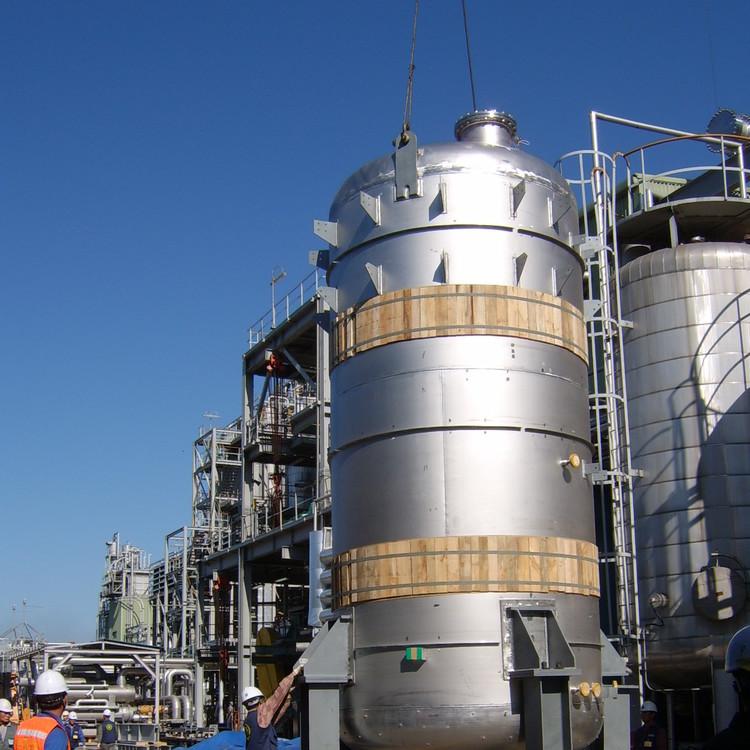
Titanium pressure vessels
Overview of Grade 2, Grade 7 and Grade 12 Titanium
Before comparing their properties, it is important to understand how these three grades differ in composition and material characteristics.
Grade 2 Titanium: Commercially Pure Titanium
Grade 2 titanium is a commercially pure titanium grade designated as UNS R50400.
It offers a practical balance of corrosion resistance, strength, ductility, and formability. Its relatively good weldability and availability in different product forms make it a common choice for industrial equipment.
Key characteristics include:
Good corrosion resistance in many oxidizing environments, chloride-containing solutions, and seawater applications.
Good formability and weldability, suitable for fabrication into tanks, heat exchangers, and piping components.
Moderate mechanical strength compared with alloyed titanium grades such as Grade 12.
Relatively straightforward fabrication and processing compared with some more highly alloyed materials.
Grade 2 is frequently used for heat exchanger tubes, pressure vessel components, chemical equipment, and industrial piping.
However, it is not suitable for every acid environment. In particular, reducing acids such as hydrochloric acid and sulfuric acid can cause rapid corrosion under certain concentration and temperature conditions.
Grade 7 Titanium: Palladium-Enhanced Titanium
Grade 7 titanium is a commercially pure titanium grade with a controlled addition of 0.12–0.25% palladium (Pd). Its UNS designation is R52400.
Palladium improves the ability of titanium to maintain its passive surface film in certain reducing environments. This gives Grade 7 better corrosion resistance than Grade 2 in a number of demanding chemical conditions.
Key characteristics include:
Improved resistance to crevice corrosion and localized corrosion in suitable chemical environments.
Better performance than Grade 2 in certain reducing acid conditions.
Mechanical properties generally comparable to Grade 2 under the same applicable product specification.
Good formability and weldability for industrial equipment fabrication.
Grade 7 is commonly considered for chemical reactors, heat exchangers, pressure vessels, and equipment handling corrosive process fluids.
The main reason to choose Grade 7 is not higher mechanical strength. It is the additional corrosion resistance provided by palladium.
Grade 12 Titanium: Molybdenum-Nickel Titanium Alloy
Grade 12 titanium is a titanium alloy designated as UNS R53400. It contains controlled additions of molybdenum and nickel.
Its typical alloying composition includes:
Molybdenum (Mo): 0.2–0.4%
Nickel (Ni): 0.6–0.9%
These additions improve its mechanical strength and corrosion performance in several chemical environments compared with commercially pure Grade 2 titanium.
Key characteristics include:
Higher minimum tensile and yield strength than Grade 2 and Grade 7 under ASTM B265 sheet, strip, and plate requirements.
Improved resistance in certain reducing and crevice-corrosion conditions.
Good performance in selected elevated-temperature chemical processing applications.
Suitable for equipment requiring a combination of corrosion resistance and higher mechanical strength.
Grade 12 is often considered for heat exchangers, pressure vessels, chemical processing equipment, and industrial components exposed to demanding service conditions.
It should not be treated as universally more corrosion-resistant than Grade 7. The better choice depends on the specific chemical environment.
Chemical Composition: Grade 2 vs Grade 7 vs Grade 12
Chemical composition is one of the main differences between these three grades.
Grade 2 is commercially pure titanium. Grade 7 contains palladium, while Grade 12 contains molybdenum and nickel.
| Element | Grade 2 (%) | Grade 7 (%) | Grade 12 (%) |
|---|---|---|---|
| Titanium (Ti) | Balance | Balance | Balance |
| Palladium (Pd) | - | 0.12–0.25 | - |
| Molybdenum (Mo) | - | - | 0.20–0.40 |
| Nickel (Ni) | - | - | 0.60–0.90 |
| Iron (Fe) | 0.30 max. | 0.30 max. | 0.30 max. |
| Oxygen (O) | 0.25 max. | 0.25 max. | 0.25 max. |
| Carbon (C) | 0.08 max. | 0.08 max. | 0.08 max. |
| Nitrogen (N) | 0.03 max. | 0.03 max. | 0.03 max. |
| Hydrogen (H) | 0.015 max. | 0.015 max. | 0.015 max. |
Grade 2: No intentional palladium, molybdenum, or nickel additions. Its properties mainly come from commercially pure titanium and controlled interstitial elements.
Grade 7: Palladium improves corrosion resistance by supporting passivation in certain reducing environments. This is especially important where Grade 2 may not provide sufficient corrosion resistance.
Grade 12: Molybdenum and nickel contribute to improved mechanical strength and corrosion performance in selected chemical conditions.
Mechanical Properties Comparison
Mechanical properties affect pressure design, structural strength, forming, welding, and fabrication.
Under ASTM B265 requirements for titanium strip, sheet, and plate, Grade 12 has higher minimum tensile and yield strength than Grade 2 and Grade 7.
| Mechanical Property | Grade 2 | Grade 7 | Grade 12 |
|---|---|---|---|
| Minimum Tensile Strength | 345 MPa | 345 MPa | 483 MPa |
| Minimum Yield Strength (0.2% offset) | 275 MPa | 275 MPa | 345 MPa |
| Minimum Elongation | 20% | 20% | 18% |
| Density | Approx. 4.51 g/cm³ | Approx. 4.51 g/cm³ | Approx. 4.51 g/cm³ |
What Do These Differences Mean for Equipment Buyers?
Grade 2 and Grade 7 have similar basic mechanical strength. Grade 7 is mainly selected for its improved corrosion resistance rather than higher tensile strength.
Grade 12 provides higher minimum tensile and yield strength. Its minimum tensile strength is 483 MPa, compared with 345 MPa for Grade 2 and Grade 7 in the cited ASTM B265 requirements.
However, higher material strength does not automatically mean that a pressure vessel can use thinner walls. Equipment design must still consider the applicable design code, allowable stress, temperature, weld joint efficiency, corrosion allowance, and other engineering requirements.
Grade 2 and Grade 7 also have higher minimum elongation requirements in this comparison, which can be relevant to forming operations.
Corrosion Resistance in Different Chemical Environments
Corrosion resistance is usually the most important factor when selecting titanium for chemical processing equipment.
Although all three grades have good corrosion resistance in suitable environments, their performance is not identical.
The most important distinction is how the material behaves in oxidizing and reducing environments.
Corrosion Resistance of Grade 2
Grade 2 titanium performs well in many oxidizing environments because it forms a stable passive oxide film on its surface.
Typical applications include:
Seawater and many chloride-containing cooling water systems.
Nitric acid under suitable concentration and temperature conditions.
Wet chlorine and other suitable oxidizing environments.
Many neutral aqueous salt solutions.
Selected chemical processing applications involving mildly reducing conditions.
Corrosion Resistance of Grade 7
Grade 7 is designed to provide improved corrosion resistance over commercially pure titanium in certain demanding environments.
Its palladium addition is particularly useful in reducing conditions where the passive film on ordinary titanium may become unstable.
Important characteristics include:
Improved resistance to certain reducing acids.
Better resistance to crevice corrosion in suitable environments.
Improved performance in selected chloride-containing and acidic process conditions.
Suitability for chemical equipment where Grade 2 has insufficient corrosion resistance.
Grade 7 is often considered for equipment handling sulfuric acid and other corrosive process fluids.
Corrosion Resistance of Grade 12
Grade 12 combines titanium with small additions of molybdenum and nickel.
This composition gives it improved performance in several reducing environments and crevice-corrosion conditions compared with commercially pure Grade 2 titanium.
It is often considered for:
Selected reducing acid environments.
Chemical equipment operating at elevated temperatures.
Heat exchangers exposed to demanding process conditions.
Components where both mechanical strength and corrosion resistance are important.
Grade 12 can be a practical option when the mechanical strength requirements are higher than those of commercially pure titanium.
Which Grade Is Suitable for Different Chemical Media?
The following table provides a preliminary material selection guide.
| Chemical Environment | Grade 2 | Grade 7 | Grade 12 |
|---|---|---|---|
| Seawater and many chloride solutions | Commonly suitable | Commonly suitable | Commonly suitable |
| Nitric acid | Often suitable under controlled conditions | Often suitable | Evaluate specific conditions |
| Hydrochloric acid | Generally limited; requires careful evaluation | Better option for certain conditions | Evaluate concentration and temperature |
| Sulfuric acid | Generally limited; requires careful evaluation | Often considered for suitable conditions | Often considered for suitable conditions |
| Reducing acid environments | Limited in many conditions | Improved resistance | Improved resistance in selected conditions |
| High-temperature chemical service | Evaluate carefully | Evaluate carefully | May be considered where its properties fit |
| Mixed chemical solutions | Requires process-specific evaluation | Requires process-specific evaluation | Requires process-specific evaluation |
Which Titanium Grade Is Best for Different Chemical Equipment?
The best titanium grade depends on the equipment's process conditions, fabrication requirements, and service life expectations.
Heat Exchangers
Grade 2: A common choice for seawater-cooled heat exchanger tubes and many general industrial applications.
Grade 7: Considered when the process-side fluid requires improved resistance to reducing acids or localized corrosion.
Grade 12: Considered for selected demanding service conditions where higher mechanical strength and corrosion resistance are required.
Pressure Vessels
Grade 2: Suitable for many general chemical vessel applications.
Grade 7: Considered when the vessel handles corrosive media that require improved corrosion resistance.
Grade 12: May be considered where higher material strength is useful, subject to code-based design calculations.
Chemical Reactors
Grade 2 may be suitable for relatively moderate chemical environments. Grade 7 and Grade 12 can be considered when the reaction medium creates more demanding corrosion conditions.
Evaporators and Condensers
Grade 2 is commonly considered for suitable heat-transfer environments. Grade 7 or Grade 12 may be evaluated where the concentrated process medium creates additional corrosion concerns.
Piping Systems
Grade 2 is commonly used in suitable industrial piping systems. Grade 7 and Grade 12 may be considered for more demanding chemical service.
Chemical Storage Tanks
Grade 2 can be suitable for many chemical storage applications, while Grade 7 and Grade 12 may be evaluated for more demanding media.
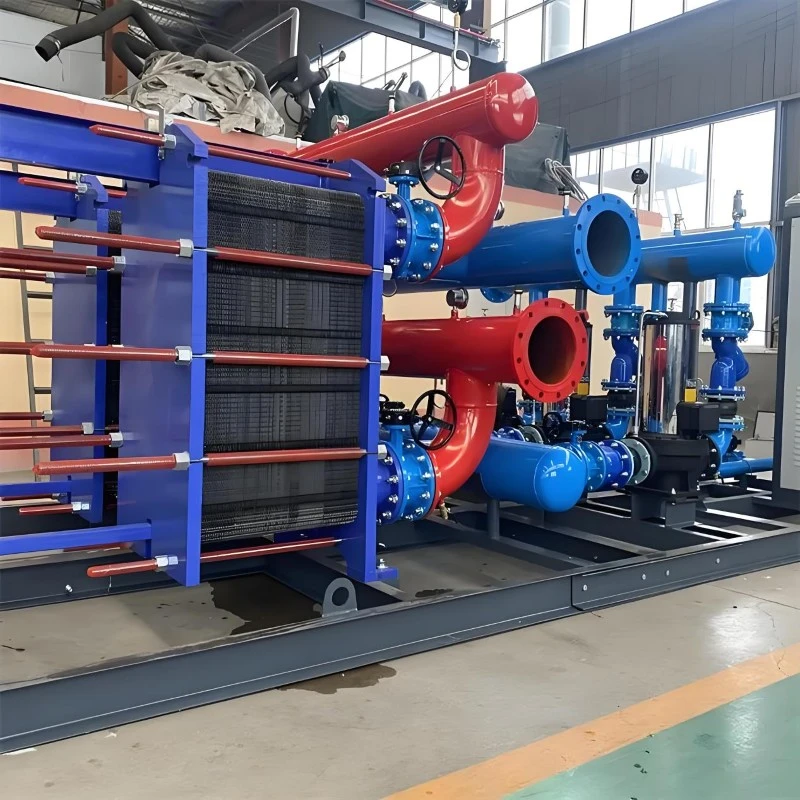
Titanium heat exchangers
Grade 2 vs Grade 7 vs Grade 12: Key Differences at a Glance
| Comparison Item | Grade 2 | Grade 7 | Grade 12 |
|---|---|---|---|
| UNS Number | R50400 | R52400 | R53400 |
| Material Type | Commercially pure titanium | Palladium-enhanced commercially pure titanium | Titanium-molybdenum-nickel alloy |
| Main Alloying Elements | None intentionally added | 0.12–0.25% Pd | 0.20–0.40% Mo; 0.60–0.90% Ni |
| Minimum Tensile Strength* | 345 MPa | 345 MPa | 483 MPa |
| Minimum Yield Strength* | 275 MPa | 275 MPa | 345 MPa |
| Minimum Elongation* | 20% | 20% | 18% |
| Corrosion Characteristics | Good in many oxidizing environments | Improved resistance in selected reducing environments | Improved resistance in selected reducing and crevice-corrosion conditions |
| Formability | Good | Generally comparable to Grade 2 | Depends on product form and fabrication requirements |
| Typical Applications | Heat exchangers, tanks, piping, and general chemical equipment | Chemical reactors, heat exchangers, and corrosive process equipment | Heat exchangers, pressure vessels, and demanding chemical equipment |
| Main Selection Advantage | Balanced properties and general industrial use | Enhanced corrosion resistance from palladium | Higher strength and selected corrosion advantages |
Which Grade Should You Choose?
Choose Grade 2 when:
The process environment is suitable for commercially pure titanium.
General corrosion resistance and good fabrication performance are priorities.
The equipment does not require the additional corrosion resistance of Grade 7.
Choose Grade 7 when:
The process involves reducing chemical conditions where Grade 2 may be insufficient.
Improved resistance to localized or crevice corrosion is important.
The project prioritizes corrosion performance over a higher mechanical strength level.
Choose Grade 12 when:
Higher minimum tensile and yield strength are required.
The chemical environment is suitable for its corrosion characteristics.
The equipment needs a combination of mechanical strength and corrosion resistance.
There is no universal ranking of Grade 2, Grade 7, and Grade 12. The right grade is the one that meets the project's corrosion, mechanical, fabrication, and service-life requirements without unnecessary material cost.
Available Titanium Products and Supply Forms
For chemical processing equipment manufacturers, the required titanium product form depends on the equipment design and fabrication process.
| Titanium Product | Typical Applications | Applicable Standards | Key Purchasing Specifications |
|---|---|---|---|
| Titanium Plates and Sheets | Pressure vessels, chemical storage tanks, reactor components, and heat exchanger parts | ASTM B265 | Grade, thickness, width, length, surface condition, and quantity |
| Titanium Tubes | Heat exchangers, condensers, and chemical process equipment | ASTM B338 | Grade, seamless or welded, outside diameter, wall thickness, length, and quantity |
| Titanium Pipes | Chemical transportation, process piping, and industrial fluid systems | ASTM B861 / ASTM B862 | Grade, seamless or welded, pipe size, wall thickness or schedule, length, and quantity |
| Titanium Bars and Rods | Machined components, equipment supports, fasteners, and structural parts | ASTM B348 | Grade, diameter, length, surface condition, and quantity |
| Titanium Forgings | Flanges, pressure-bearing components, and custom industrial parts | ASTM B381 | Grade, forging dimensions, heat treatment, mechanical properties, and quantity |
| Titanium CNC Machined Parts | Custom equipment components, connectors, fittings, and precision-machined parts | Based on material specification and engineering drawings | Material grade, drawings, dimensions, tolerances, surface finish, and quantity |
How to Choose the Right Titanium Grade for Your Project
Selecting a titanium grade based only on a general comparison table can lead to incorrect material choices.
1. Chemical Medium and Concentration
Provide the exact chemical name and concentration.
For mixed chemical solutions, list the main components and any known impurities. This is especially important for acid mixtures and reducing environments.
2. Operating Temperature
Specify the normal operating temperature and the maximum or abnormal operating temperature if applicable.
Corrosion behavior can change significantly with temperature.
3. Design Pressure
For pressure vessels and piping systems, provide the design pressure and relevant design code.
This information helps determine whether the mechanical properties of the selected grade are suitable for the design.
4. Required Product Form
Tell the supplier whether you need:
Titanium plate or sheet.
Seamless or welded titanium tubes.
Titanium pipes.
Titanium bars or rods.
Titanium forgings.
Machined titanium components.
5. Dimensions and Quantity
Provide the required thickness, diameter, wall thickness, width, length, and order quantity.
For cut-to-size materials or machined components, drawings are helpful.
6. Applicable Standard and Certification
Confirm the required ASTM or ASME specification and whether the project requires material test certificates, third-party inspection, or additional testing.
For pressure equipment, the material specification should match the applicable construction code and project requirements.
The more complete the technical information, the easier it is to evaluate the correct grade and avoid unnecessary material substitutions.
Send Your Titanium Project Requirements
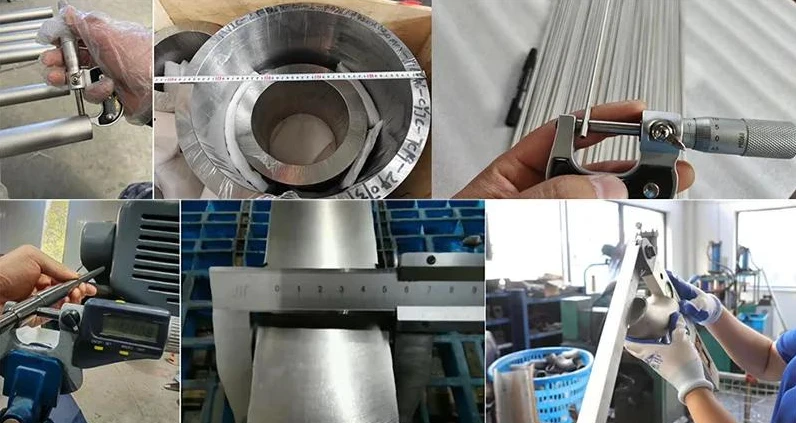
Titanium Material Inspection and Quality Requirements
| Inspection Item | Inspection Content |
|---|---|
| Chemical Composition | Verification of titanium and alloying elements, including Pd, Mo, and Ni where applicable |
| Tensile Strength | Tensile testing according to the applicable material specification |
| Yield Strength | 0.2% offset yield strength test |
| Elongation | Elongation after fracture |
| Hardness | Hardness testing when required by the purchase specification |
| Thickness and Dimensions | Measurement of thickness, width, length, diameter, and wall thickness as applicable |
| Surface Quality | Inspection for cracks, scratches, dents, and other surface defects |
| Flatness | Flatness inspection for plate and sheet products |
| Ultrasonic Testing | Testing where required by the product specification or purchase order |
| Material Traceability | Heat number, batch number, and product identification |
| Material Test Certificate | Review of chemical composition and mechanical test results |
Titanium Material Supply for Chemical Processing Equipment
Choosing the right titanium grade is an important part of building reliable chemical processing equipment.
Grade 2, Grade 7, and Grade 12 each have their own advantages:
Grade 2: A practical choice for many general chemical processing applications where its corrosion resistance is sufficient.
Grade 7: A suitable option to evaluate when improved resistance to certain reducing chemical environments is required.
Grade 12: An option for projects requiring higher mechanical strength together with corrosion resistance in selected chemical conditions.
As a titanium material supplier, we support industrial material requirements involving different titanium grades and product forms, including plates, sheets, tubes, pipes, bars, and other specified materials.
For a quotation, please provide the following information:
| Required Information | Example |
|---|---|
| Titanium Grade | Grade 2 / Grade 7 / Grade 12 |
| Product Form | Plate / Sheet / Tube / Pipe / Bar |
| Standard | ASTM B265 / ASTM B338 / ASTM B861 / ASTM B862 / ASTM B348 |
| Dimensions | Thickness, diameter, wall thickness, length |
| Quantity | Required weight or pieces |
| Application | Heat exchanger / Reactor / Pressure Vessel / Piping |
| Certification | MTC and additional inspection requirements |
We can review your material specifications and discuss the appropriate product form and supply requirements.


